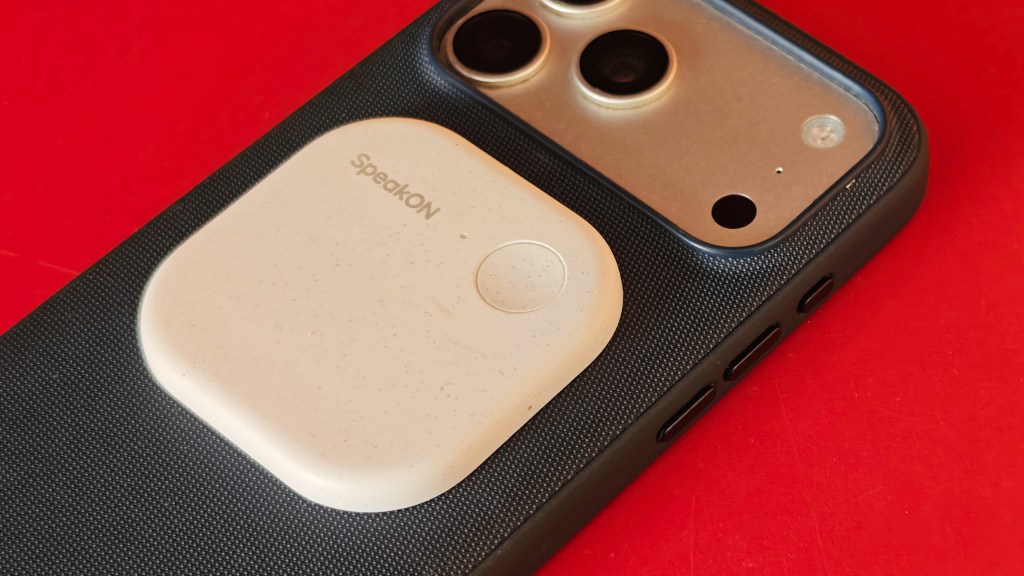
A dedicated microphone offers a reprieve from the unreliable audio capture of standard smartphone hardware, yet SpeakOn’s dictation device finds itself trapped within the very software constraints it seeks to bypass. The device presents a compelling paradox: it provides high-quality, independent audio input through specialized hardware, but its utility is strictly governed by the limitations of an iOS-centric ecosystem.
The Promise of Dedicated Hardware
The SpeakOn device arrives as a lightweight, pebble-like accessory designed to adhere to the back of an iPhone via MagSafe integration. Weighing a mere 25 grams, the hardware is virtually unnoticeable during daily use, even when carried separately in a pocket. This physical design allows users to bypass the often-frustrating experience of relying on built-in smartphone microphones or AirPods, which frequently struggle with environmental noise or distance.
By utilizing its own dedicated microphone, the device aims to provide a more stable transcription environment. The workflow is deceptively simple: pressing the device button initiates recording, and releasing it concludes the session. When functioning correctly, the hardware can capture audio within a two-foot radius, offering a level of focus that software-only solutions often lack.
Software Friction and Ecosystem Walls
While the hardware attempts to solve an audio problem, the accompanying software introduces new layers of complexity. The SpeakOn experience is currently tied to a companion app that functions as a custom iOS keyboard. This means transcription is only effective when this specific software interface is active, preventing seamless use across all system-level applications.
Furthermore, the device lacks any native compatibility for macOS, leaving a massive gap in utility for professionals who move between mobile and desktop workflows. Because of these ecosystem walls, many argue that SpeakOn’s dictation device faces significant hurdles regarding long-term productivity.
The "Attune" Problem: Over-Correction and Lost Authenticity
The intelligence of the app—specifically its "attune" feature—is perhaps its most divisive element. Designed to remove filler words and refine tone, the AI often engages in unnecessary linguistic over-correction. There are instances where natural phrasing is replaced with overly formal, robotic alternatives.
For example, a simple query like "Does this app work automatically?" might be transformed into "Does this application operate automatically?" Such aggressive editing can strip away the user's intended voice, forcing many to disable the feature entirely to maintain any semblance of authenticity.
Key Aspects of the SpeakOn Ecosystem
To understand the value proposition, users must consider the specific technical and financial commitments required:
- Multilingual Capabilities: Support for a wide array of languages including English, Japanese, Korean, Spanish, French, and Arabic.
- MagSafe Integration: A slim form factor designed to attach easily to the rear of modern iPhones.
- Rapid Charging: The ability to reach a full charge from 0% to 100% in approximately one hour.
- Subscription Tiers: A $129 entry point with a plan allowing for 5,000 words per week, alongside a $12 monthly unlimited option.
Performance Gaps and Economic Value
The gap between the device's marketing and real-world performance presents another challenge for adoption. While SpeakOn claims a 20-day standby time, actual battery longevity appears significantly shorter, likely due to the device remaining in an active state by default. Additionally, its ability to filter out ambient noise remains inconsistent when users move beyond the immediate two-foot range.
When compared to competitors like Wispr Flow, which offers a more generous free tier of 2,000 words per week, SpeakOn must justify its premium positioning through superior hardware reliability. The current iteration feels less like a finished product and more like an early-mover prototype. For the device to move beyond a niche novelty, it will need to expand its platform support and refine its AI to prioritize linguistic accuracy over forced formalization.