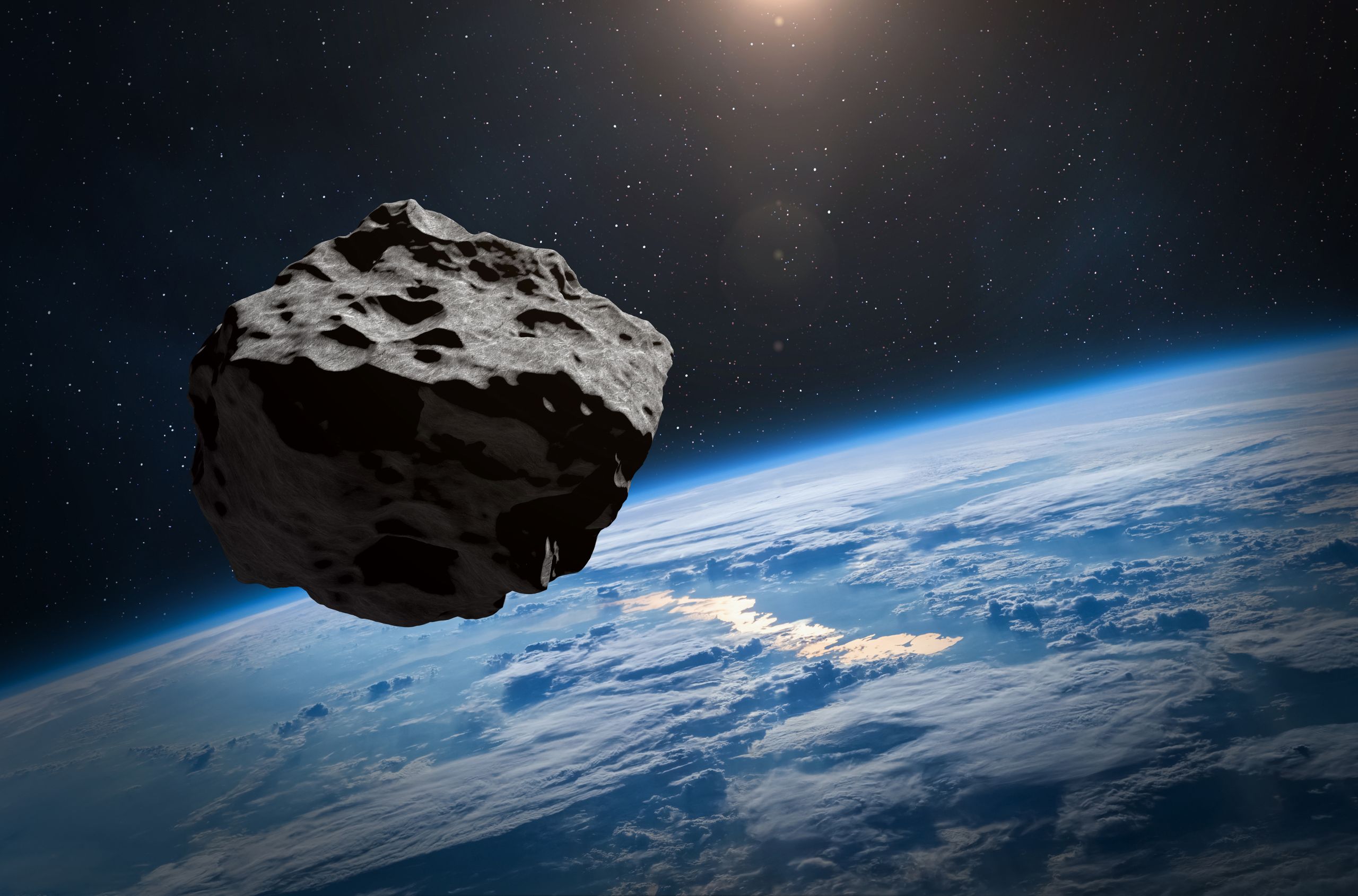
What if the most dramatic cosmic event of the month is also the least threatening one we know about? Asteroid 2026 JH2 will glide past Earth on May 18 at a distance measured not in light-years but in everyday scales. The object, roughly the size of Chicago’s Cloud Gate sculpture, spans about 20 meters in diameter and will approach at just 57,000 miles—roughly one-sixth the Earth-Moon distance. While the phrasing “four times closer than the moon” captures attention, the actual comparison underscores a subtle point: proximity is relative when dealing with astronomical scales.
The Context of Near-Earth Objects (NEOs)
Near-Earth objects populate a spectrum ranging from harmless rocks to planet-killers. Most NEOs remain under observation; fewer than a handful ever approach within a few hundred thousand miles without impact risk. 2026 JH2 sits firmly in the latter category—not because it’s dangerous, but because its orbit intersects Earth’s path at an unusually tight margin. Scientists classify such bodies by orbital parameters: semi-major axis greater than one astronomical unit and perihelion below 1.017 AU defines Apollo-type NEOs. This technical framing helps distinguish routine flybys from genuine threats that require mitigation strategies.
Why This Flyby Matters (Despite Being Routine)
- Scientific Value: Close approaches allow astronomers to refine orbital calculations, test detection algorithms, and improve planetary defense models.
- Public Engagement: Events like this spark curiosity and support for space programs, fostering a broader understanding of risk assessment and scientific progress.
- Operational Readiness: Observatories and agencies practice response protocols, ensuring readiness if any future object deviates from expected trajectories.
What Science Tells Us About 2026 JH2
The asteroid’s composition remains speculative without direct sampling, but spectral analyses suggest silicate-rich surface features consistent with S-type bodies commonly found in the inner solar system. Its velocity relative to Earth will peak near closest approach, yet atmospheric entry is unlikely given its size and trajectory. The event offers a natural experiment for studying light scattering, rotation, and potential tumbling behavior under minimal perturbation.
Future Outlook and Preparedness
Current monitoring systems maintain continuous tracking through the Minor Planet Center’s network. Automated alerts trigger if an object breaches predefined thresholds, enabling rapid coordination across global observatories. While 2026 JH2 is not a concern, its proximity exemplifies why early detection matters. Investments in telescope arrays, machine learning classification, and international data sharing form the backbone of modern planetary defense initiatives.
Conclusion
The impending passage of 2026 JH2 reminds us that space is both intimate and indifferent. Distances shrink dramatically when measured against human experience, yet actual danger remains low for well-characterized objects. By embracing precise terminology and contextualizing events scientifically, we avoid sensationalism while honoring the rigorous work that safeguards Earth. As telescopes turn toward this visitor, the data gathered will enhance predictive capabilities for the next generation of near-Earth encounters, whether they arrive in months or millennia.