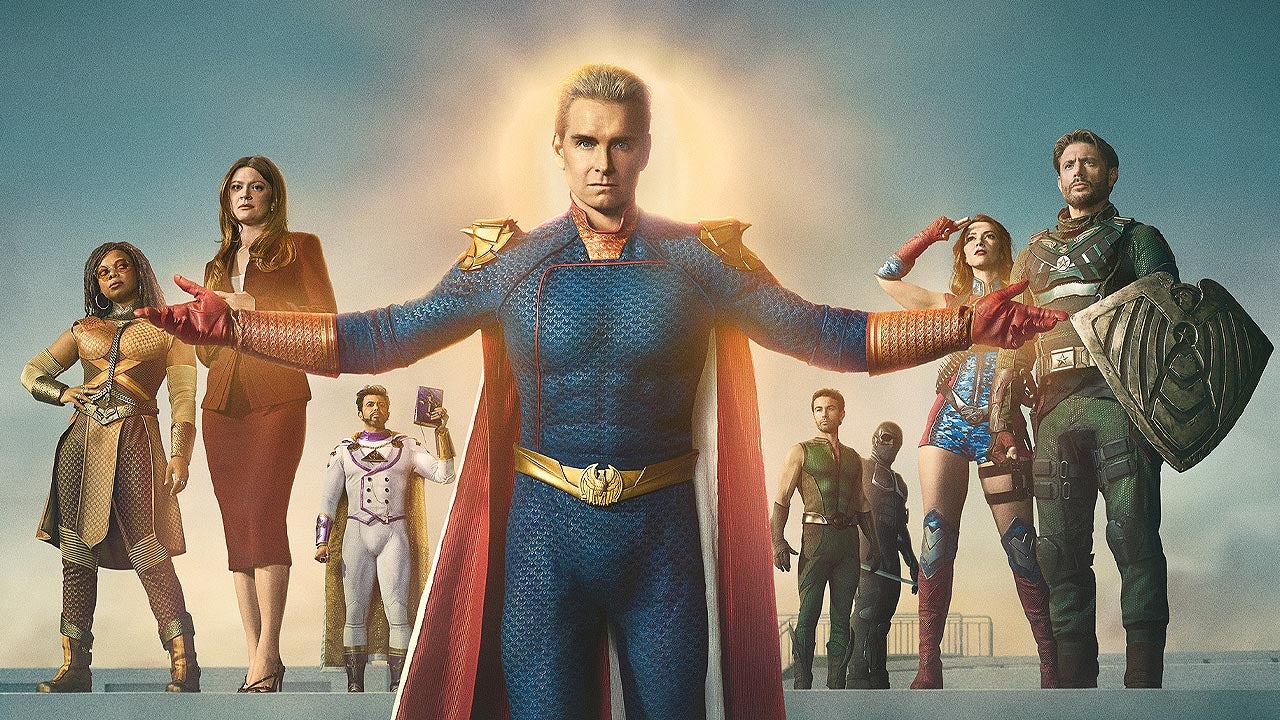
The Boys Season 5 Review: A Spoiler-Free Look at Episodes 1-7
The Boys Season 5 delivers a high-stakes, spoiler-free review of the first seven episodes of this eighth and final season's opening chapter. Premiering on Prime Video on Wednesday, April 8, these initial two episodes establish a tone that feels dangerously familiar yet unsettlingly new. The series now faces the same satirical crisis South Park encountered years ago: how do you parody a political climate so ridiculous that reality has surpassed fiction? For The Boys, the answer remains a volatile mix of righteous fury, gross-out humor, excessive violence, and a deep dive into the most sociopathic A-holes to ever don a cape. While this formula continues to serve the show well, the fifth season is currently wrestling with significant pacing problems that threaten its momentum.
Restoring the Status Quo: A Frustrating Pivot
The ending of Season 4 introduced a dark new status quo where Hughie (Jack Quaid), Mother’s Milk (Laz Alonso), Kimiko (Karen Fukuhara), and Frenchie (Tomer Capone) were imprisoned in Vought's "Freedom Camps," while Starlight (Erin Moriarty) led a desperate resistance from the shadows. Season 5 initially promised to explore this upheaval, but it quickly mirrors its sister series Gen V by walking back that change almost immediately. This is the biggest point of frustration for viewers: rather than committing to this new reality, the show rushes to restore a traditional setup where Billy Butcher (Karl Urban) leads his ragtag band against Homelander (Antony Starr).
This pivot makes the series feel like "business as usual," which feels ill-suited for the endgame of The Boys universe. Worse still, it takes a surprisingly long time to rebuild that palpable sense of dread required for a finale. The first few episodes feel like the show is spinning its wheels, establishing basic stakes—Homelander's absolute power versus Butcher's deadly supe virus—without moving the narrative forward at a satisfying pace. While the series eventually picks up steam, it does so far too slowly to fully justify its own length in this critical phase.
Character Triumphs Over Dragging Plots
Fortunately for fans of deep storytelling, the characters in The Boys Season 5 overshadow the dragging plotlines. The season focuses on a poignant theme: the struggle to maintain hope and optimism during a time of overwhelming despair. Characters react to this burden in varied ways, with some ready to crumble under the weight of current events while others display surprising resilience. Although the show heavily tackles relevant issues like the rise of internment camps and the crumbling wall between church and state, its most vital moments are character-driven scenes dealing with mortality.
The existence of the supe virus puts a target on characters like Starlight, Kimiko, and A-Train (Jesse T. Usher), forcing them to confront whether they are prepared to sacrifice themselves to destroy the Vought superhuman industrial complex. This memento mori element colors many interactions between our heroes, adding weight to every decision. When it comes to performance highlights:
- Laz Alonso (Mother’s Milk) shines brightest, delivering the most dramatically meaty material of the season as MM navigates a fragile psychology beneath his newfound freedom.
- Antony Starr (Homelander) provides a haunting foundation for the series, portraying an all-powerful man constantly on the verge of losing it despite his god-like status.
- Valorie Curry (Firecracker), along with The Deep, Oh Father, and Black Noir II, receives ample time to flesh out their characters in slow-burn vignettes that reveal deep tragedy beneath their villainy.
The Psychology of Evil and Cowardice
While the heroes fight for hope, the show's focus on "villains" explores how evil is constantly enabled by cowardice. Homelander himself is incapable of feeling joy or contentment; instead, every move he makes is geared toward filling that void and ushering in his final ascension. Starr’s performance convinces us that everyone in his orbit either fears him or pities him, often both simultaneously.
The slow ramp-up to the climax allows for fascinating explorations of the rest of The Seven. Episode 5, for instance, does little to advance the overall narrative but provides essential vignettes into the daily lives of Firecracker, The Deep, and others. We see characters like Firecracker evolve into a more tragic figure, though she remains no less despicable. Ultimately, the season posits that few if any of these villains are genuinely thrilled by Homelander's rise; rather, they are trapped in a system where their own cowardice empowers his descent into infallibility. As we await the resolution of The Boys Season 5, this exploration of human frailty remains the series' most compelling weapon against its pacing issues.