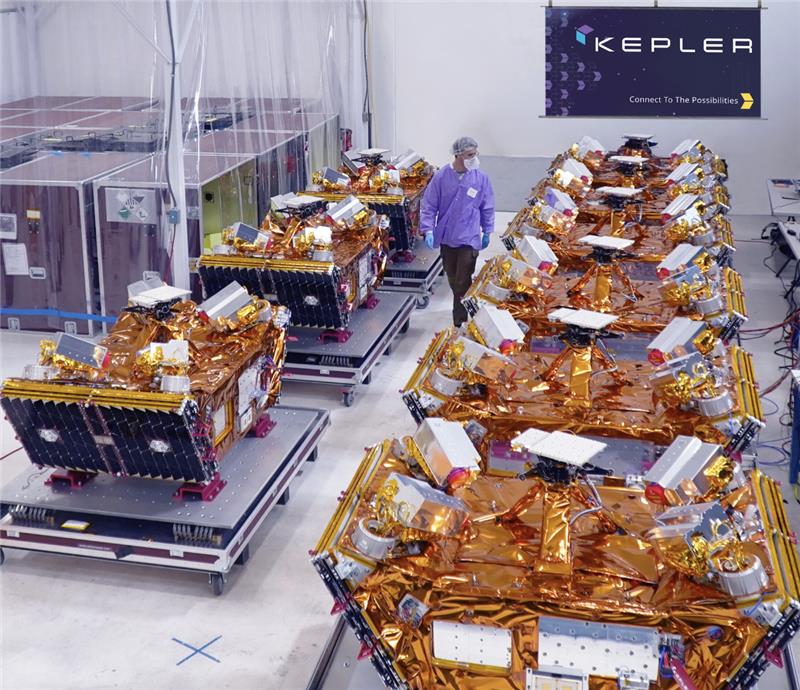
The Largest Orbital Compute Cluster is Open for Business
The largest orbital compute cluster is now officially open for business, marking a pivotal moment in space-based technology. Currently deployed, this revolutionary system comprises forty Nvidia Orin edge processors mounted across ten operational satellites, all interconnected via high-speed laser communication networks spanning hundreds of kilometers. Unlike traditional ground-based setups, these components utilize a passive-cooling architecture that eliminates the need for active cooling systems entirely. This engineering breakthrough ensures that all GPUs operate continuously at full capacity without any risk of overheating or thermal throttling during extended mission testing.
Edge Processing Redefines Space Applications and Latency
By processing data directly on-board, this cluster drastically reduces latency for ground-based applications, enabling real-time analytics within orbital timeframes ranging from seconds to minutes. The primary use cases currently include synthetic aperture radar data fusion, which is critical for high-resolution imaging and analysis. Military sensor networks now benefit from sub-minute decision cycles, a capability that was previously impossible with Earth-bound server constraints.
Key advantages of this distributed computing layer include:
- Reduced Latency: Drones and aircraft operating below receive real-time data processing without the delays associated with downlinking to Earth.
- Cost Efficiency: Offloading computation extends satellite mission lifespans by avoiding the need for massive ground-based infrastructure investments.
- Strategic Partnerships: Satellite-to-air laser links have already been successfully demonstrated with U.S. defense partners, validating the hardware's reliability in critical scenarios.
Kepler’s network functions as a distributed computing layer rather than bulk storage, fundamentally shifting the focus from raw data retention to active inference and decision-making. This approach aligns perfectly with rising global restrictions on terrestrial data center construction, evidenced by new building bans in Wisconsin and ongoing congressional debates regarding energy-intensive facilities.
The Economics of Space Computing and Future Horizons
The shift toward inference over training workloads is reshaping the economic landscape of space computing. Since thermal management is inherently simpler in orbit, current GPUs run at 100% capacity without the power-hungry cooling systems required on Earth. While competitors like SpaceX and Blue Origin aim for large-scale orbital data centers by the 2030s, companies like Kepler are prioritizing immediate commercial viability through software infrastructure and edge processing optimization.
A significant milestone was reached with the partnership with Sophia Space, representing the first attempt to deploy a full-space operating system across multiple GPUs in low Earth orbit. Scheduled for launch in late 2027, this mission aims to unlock new markets in real-time satellite coordination and autonomous decision-making. This model targets sensor network optimization rather than massive compute throughput, ensuring that the technology delivers immediate value to commercial and defense sectors alike.