The release of declassified UAP files represents one of the most consequential transparency moves by the U.S. government in recent decades, directly addressing decades of public skepticism and speculation about unexplained aerial phenomena.
The Scale and Content of the New Release
- Approximately 160 documents spanning multiple decades were made public via a dedicated portal.
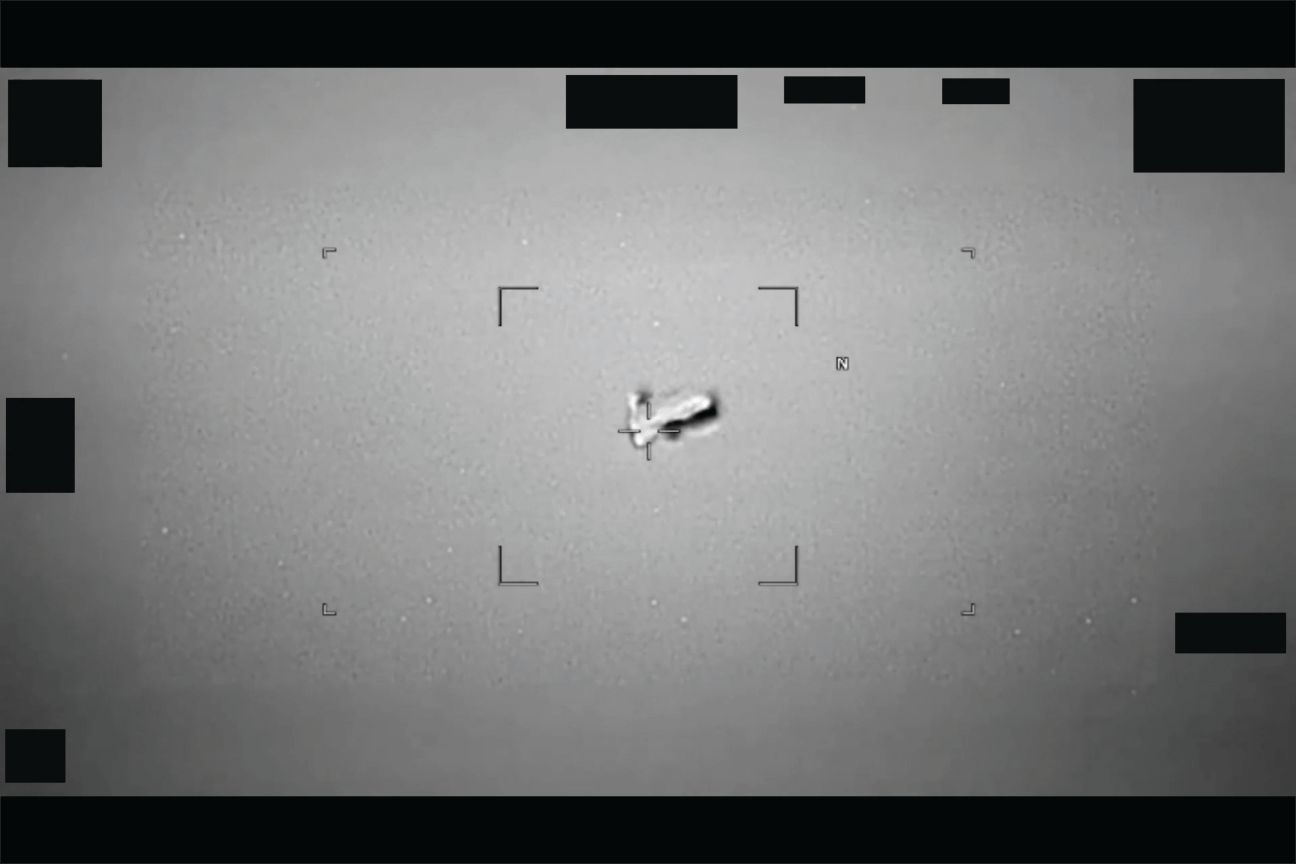
- Visual assets include video footage, still images, and handwritten or typewritten reports dating back to the 1940s.
- Highlights feature sightings such as "orbs" near federal facilities in the western U.S. (2023), a "misshapen ball of white light" over Syria (2024), and Apollo-era lunar flash reports.
- Newly surfaced materials also include historical program archives, public submissions from the late 1940s, and multi-command visual documentation.
Contextual Significance and Expert Reception
The Pentagon’s statement emphasized transparency as a driver for public trust, noting President Donald Trump’s directive to allow citizens to assess the evidence themselves. Defense Secretary Pete Hegseth framed the archives as an end to “justified speculation,” signaling a shift from secrecy toward accountability.
While many documents overlap with previously disclosed information, reduced redactions and expanded page counts reveal previously unseen perspectives, including official military communications and astronaut testimonies.
- Adam Frank (University of Rochester) cautioned that “blobby photos or heavily redacted pages” do not constitute robust scientific evidence; substantive analysis is required to evaluate extraordinary claims.
- Public sentiment remains polarized: over 60% of Americans believe the government conceals UAP details, while 40% suspect alien origins.
Media and Political Amplification
Recent headlines reflect heightened cultural focus:
- Stephen Colbert’s interview with Barack Obama underscored enduring public curiosity about extraterrestrial life.
- NASA’s Artemis II crew members openly questioned why alien discovery would threaten budgets or scientific legitimacy, reinforcing the idea that openness strengthens credibility.
Implications for Policy and Science
The release aligns with broader debates over government accountability, scientific rigor, and public engagement with complex data. It invites interdisciplinary scrutiny—from astrophysics to intelligence studies—while testing institutional capacity to manage sensitive disclosures responsibly.
Key terms such as UAP (Unidentified Aerial Phenomena), declassification protocols, and transparency initiatives dominate analysis. Moving forward, the quality of subsequent investigations and peer-reviewed interpretations will determine whether this moment transforms public understanding or remains a footnote in policy history.
The convergence of archival revelations, political rhetoric, and cultural fascination positions these files as both historical artifacts and living catalysts for discourse on government openness and the boundaries of known science.