There’s a Secret Ingredient to Making Luxury Ice at Home
The global luxury ice market has evolved from a novelty into a calculated exercise in sustainable absurdity, where carbon-intensive logistics replace basic thermodynamics. While companies ship massive glacier blocks or harvest ancient lake ice for single-malt enthusiasts, the science behind creating superior frozen water is now accessible to home users. By understanding the secret ingredient to making luxury ice at home, you can achieve crystal-clear results without importing glacial meltwater from Greenland. This guide reveals how simple thermodynamics and specific water treatments can replicate professional-grade clarity in your own kitchen.
The Physics of Purity vs. The Romance of Origin
The primary selling point for expensive, imported luxury ice is its perceived purity. Vendors claim that ancient glacial sources are free from modern industrial pollutants, offering a neutral canvas that supposedly enhances the flavor of aged spirits. However, the chemical reality challenges this marketing narrative significantly. Glacial ice forms over millennia through layers of snow compaction; while pressure creates larger crystals and reduces white opacity caused by grain boundaries, it does not eliminate gas inclusions or dissolved ionic impurities.
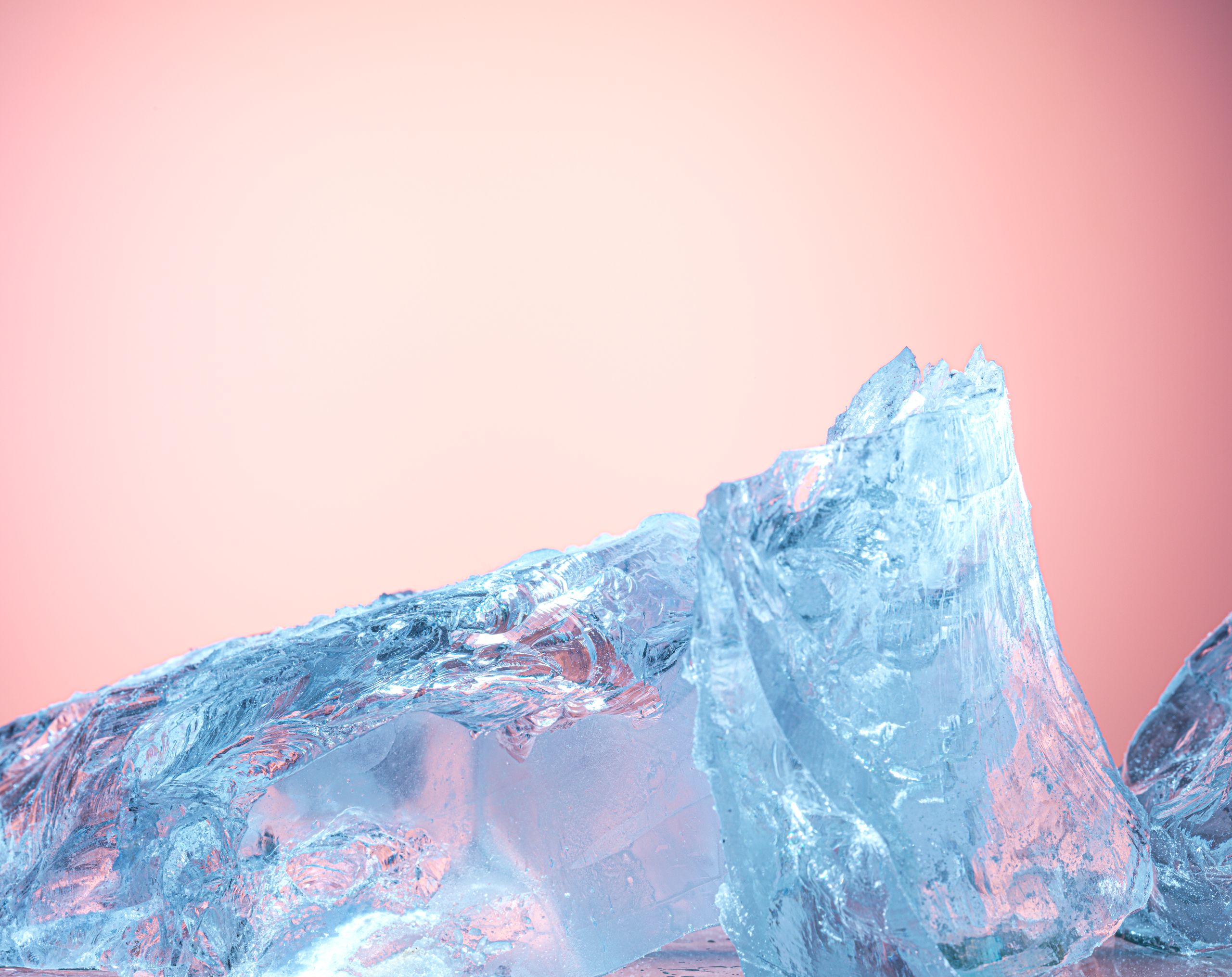
According to Christoph Salzmann, a professor at University College London who studies physical and materials chemistry, laboratory-grown ice can achieve a level of clarity and purity that nature simply cannot match on its own. The fundamental difference lies in the structure of the crystal lattice. Standard freezer ice forms rapidly from all directions simultaneously, trapping air bubbles and minerals in a chaotic matrix of small grains that scatter light, resulting in the familiar opaque white cube. In contrast, luxury ice requires directional freezing, a process where water is cooled from a single point—typically the top down or bottom up—forcing impurities to migrate away from the growing crystal front. This method allows for the creation of massive, singular crystals that are optically transparent and chemically uniform.
Home-Grown Crystallography and the Insulation Trick
Replicating the clarity of commercial luxury ice at home does not require importing equipment from Tokyo or paying for shipping costs that rival the value of the product itself. The secret ingredient is not a rare mineral but rather thermal insulation combined with specific water treatment protocols. By manipulating the rate and direction of heat loss, any household can manipulate the crystallization process to push impurities toward one end of the ice block.
The most effective home method involves creating a controlled environment where freezing initiates from the surface and progresses downward. This is achieved by placing water in a thermally insulating container, such as a polystyrene cooler or a specialized box, which prevents heat exchange through the sides and bottom. As the cold air from the freezer interacts only with the open top of the water column, freezing begins there and slowly migrates down. The impurities that would normally create cloudiness are pushed to the very bottom of the container, leaving a large block of crystal-clear ice above it.
Once frozen solid, the cloudy section at the base—which contains the concentrated impurities—is simply cut away. This process requires patience but yields results indistinguishable from high-end commercial cubes. The following steps outline the precise methodology for achieving professional-grade clarity:
- Select a directional freezing container: Use a hard-sided picnic cooler with the lid removed or an insulated polystyrene box to ensure heat loss occurs only from the top surface.
- Prepare ultra-pure water: Start with distilled, deionized, or reverse osmosis water to remove dissolved ionic impurities like calcium and sodium that cause cloudiness.
- Degas the liquid: Boil the water before freezing to force out dissolved gases, which otherwise form bubbles as the temperature drops.
- Execute slow cooling: Place the container in a standard freezer and allow it to freeze slowly over several hours or overnight; do not disturb the setup during this period.
- Harvest and refine: Remove the block and slice off the cloudy bottom portion using an ice saw or heavy knife, retaining only the crystal-clear upper section.
For those unwilling to manually cut their ice blocks, specialized countertop devices like the Klaris Mini now offer a streamlined solution. These appliances automate the directional freezing process, producing two 2-inch clear cubes in roughly three hours. While standalone units can be costly, they represent an accessible entry point for enthusiasts seeking consistency without the manual labor of block harvesting.
The Chemistry of Consumption and Future Trends
Achieving perfect clarity is only half the battle; the chemical composition of the water itself plays a critical role in both the quality of the ice and its safety profile. While deionized water produces the clearest results, it strips the liquid of dissolved minerals that contribute to osmotic balance in biological systems. Professor Salzmann notes that consuming excessive amounts of super-pure water can disrupt cellular osmotic pressure, though the quantity required to cause health issues is far beyond what one would ingest from a few cocktail cubes.
The irony of the luxury ice industry is that its most expensive products often contain more impurities than lab-grown equivalents, yet consumers pay a premium for the story rather than the science. As home brewing and mixology become more sophisticated, the gap between commercial marketing and physical reality continues to narrow. By mastering the techniques outlined here, you can finally enjoy luxury ice that is scientifically superior, environmentally conscious, and ready for your finest spirits without the absurd carbon footprint of global shipping.