Closing the Sim-to-Real Gap with Antioch
The gap between simulated robotics and physical reality remains the single largest bottleneck preventing the mass adoption of autonomous agents. While digital AI has evolved at breakneck speed, physical intelligence is still shackled by the prohibitive costs of real-world data collection and testing. A new contender in this space, Antioch, aims to close this disparity by providing a high-fidelity simulation environment that allows engineers to train and deploy robotic systems with the same ease as software developers write code today. This vision positions Antioch as the potential "Cursor for physical AI," democratizing access to tools previously reserved for tech giants.
Solving the Sim-to-Real Challenge Through High-Fidelity Simulation
The industry term "sim-to-real gap" describes a persistent failure mode where models trained in perfect digital environments crash upon encountering the chaos of the physical world. Without accurate physics engines and sensor fidelity, a robot might navigate a warehouse flawlessly in a simulator but fail to grasp an object that is slightly tilted or made of a different material texture. Antioch addresses this by leveraging existing high-end physics models from Nvidia and World Labs, then layering domain-specific libraries on top to refine the simulation for specific use cases like logistics, agriculture, or autonomous driving.
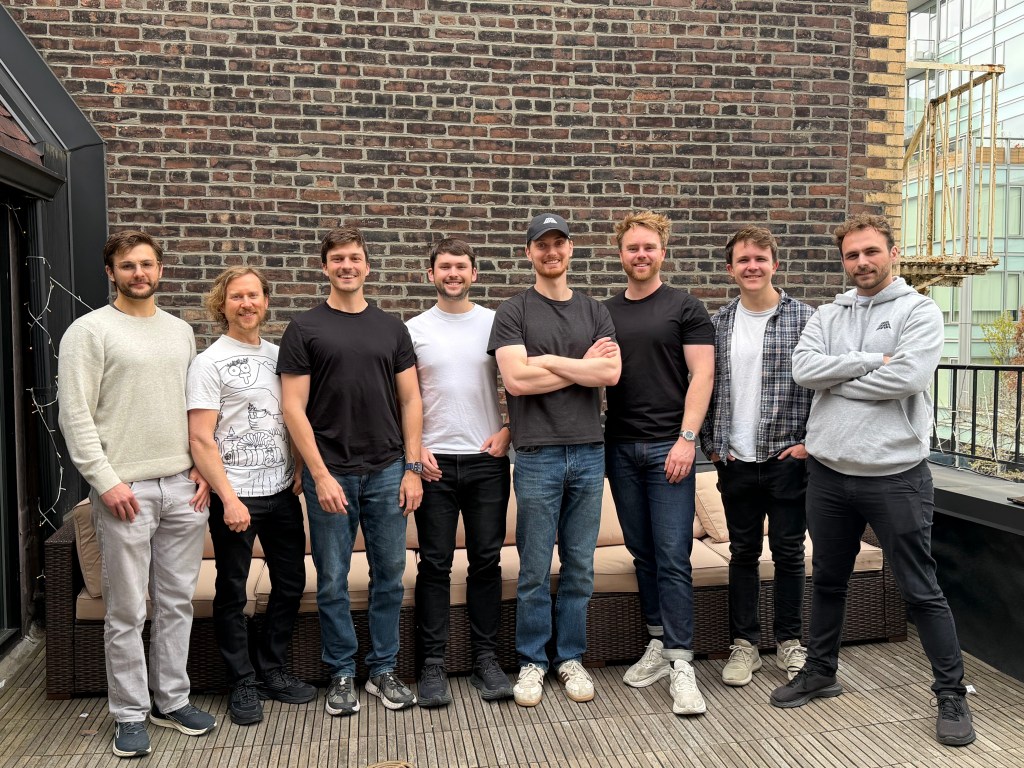
Antioch has secured $8.5 million in seed funding at a $60 million valuation, led by A* and Category Ventures, to accelerate its mission of democratizing physical AI development. The New York-based startup was founded by CEO Harry Mellsop alongside co-founders with deep roots in security intelligence and advanced research from Google DeepMind and Meta Reality Labs. Their goal is clear: eliminate the need for expensive mock-up warehouses or dangerous real-world trials by creating virtual twins that are indistinguishable from reality to the robot's sensors.
Investors are betting heavily on this approach because the alternative is economically unsustainable for most companies. Building a fleet of sensor-laden test vehicles or constructing full-scale physical testing arenas requires capital that only the largest incumbents can afford. Antioch’s platform allows developers to spin up multiple digital instances of their hardware simultaneously, running parallel simulations that generate millions of edge-case scenarios in hours rather than months. Key benefits include:
- Accelerated Iteration: Engineers can test thousands of algorithm variations overnight without waiting for physical hardware to be available or repaired.
- Safety First: Dangerous failure modes, such as a drone crashing or a robotic arm striking a worker, can be explored in a risk-free virtual sandbox.
- Sensor Emulation: The platform mimics the exact data streams from LIDAR, cameras, and IMUs that real robots receive, ensuring training data is statistically identical to reality.
Building a Cursor for Physical Intelligence and Safety
The comparison to Cursor, the AI-powered IDE that has revolutionized software development, serves as Antioch's central thesis: physical AI requires the same level of tooling abstraction to reach its potential. Just as LLMs have transformed how developers write code, high-fidelity simulation tools will allow engineers to design, train, and debug autonomous systems entirely in software before a single dollar is spent on manufacturing. This shift moves the bottleneck from hardware availability to algorithmic efficiency, mirroring the trajectory of the SaaS revolution seen with platforms like GitHub and Stripe.
The stakes for getting this right are significantly higher than in pure software development. A bug in a code editor might cause a deployment delay; a bug in an autonomous vehicle or industrial robot can result in injury or catastrophic failure. Çağla Kaymaz, a partner at Category Ventures, notes that the risks in physical AI are not contained to the digital realm, necessitating a level of simulation precision that earlier generative tools could not provide. Antioch is currently focusing on sensor and perception systems, which represent the bulk of the computational load for autonomous cars, drones, and heavy machinery.
The Path to Generalized Physical Agents
While generalized robots capable of replicating complex human tasks remain years away, the current focus on specific domains provides a foothold for rapid adoption. Early engagements include not only startups but also massive multinationals already investing heavily in robotics, suggesting that even established players recognize their simulation infrastructure is insufficient. Adrian Macneil, an angel investor and former executive at Cruise, advocates for a complete toolchain available off the shelf, arguing that the same data flywheels that propelled Waymo's success are now accessible to smaller competitors through these new platforms.
Researchers like David Mayo at MIT are already experimenting with using Antioch’s platform to benchmark large language models in physical contexts. In one trial, AI agents are tasked with designing robots and then pitting them against each other in simulated contests, creating a new paradigm for evaluating intelligence. If the simulation fidelity holds, this could unlock a data flywheel where every interaction, successful or failed, feeds back into the model to improve future iterations without human intervention.
The trajectory suggests that within two to three years, building an autonomous system will primarily be a software engineering challenge rather than a mechanical one. Antioch’s success hinges on whether its virtual environments can perfectly mirror the unpredictability of reality. If they succeed, the industry will finally have the tools to iterate on physical agents at digital speeds, turning the promise of physical AI from a distant vision into an operational reality.