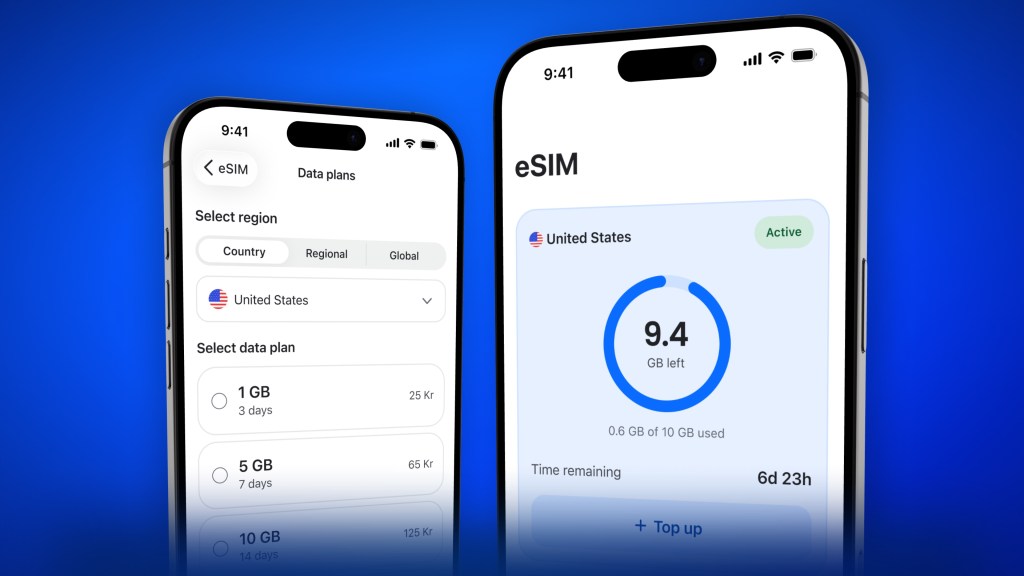
Imagine a traveler landing at Charles de Gaulle airport. Instead of hunting for a local SIM card or facing massive roaming charges, they simply toggle a setting within an app they already use to block spam. This seamless transition marks a major strategic shift as Truecaller gets into the eSIM business to evolve from a simple utility into a direct participant in the global telecommunications market.
Diversifying Revenue Streams Amidst Advertising Volatility
This pivot into digital connectivity arrives at a critical juncture for the company's finances. Recent disclosures show a significant downturn in core performance, with net sales dropping 27% to 362 million SEK ($39.34 million) and ad revenues plummeting by 44%. This contraction has necessitated difficult internal decisions, including recent workforce reductions of approximately 70 employees.
To stabilize its fiscal outlook, Truecaller is leaning into high-margin services to offset the instability of the advertising market. The company's strategy focuses on expanding subscription-based revenue through several specialized features:
- AI Assistant integration for advanced communication management.
- Family Protection tools for enhanced digital security.
- Travel eSIM packages designed for seamless international roaming.
The new eSIM offerings are structured to accommodate different travel durations, ranging from small 1 GB data packs valid for seven days to larger 20 GB bundles spanning a full month.
Leveraging a Massive User Base for Global Connectivity
While the eSIM market is already populated by established players like Airalo, Holafly, and Saily, Truecaller possesses a structural advantage: an existing, massive audience. The company operates with a monthly user base exceeding 500 million people, providing a built-in distribution model that competitors lack.
Chief Operating Officer Fredrik Kjell notes that while rivals must spend heavily on user acquisition, Truecaller is offering a new utility within an ecosystem where trust is already established. This approach allows for lower customer acquisition costs (CAC) and more aggressive pricing. To power this new infrastructure, the company has partnered with global connectivity provider Telna and software specialist Telness Tech.
Initial eSIM Rollout Destinations
The initial launch covers 29 high-traffic travel destinations across several regions:
- North America & Oceania: United States, Canada, Australia, and New Zealand.
- Europe: United Kingdom, Germany, France, Italy, Spain, Netherlands, and Sweden.
- Asia & Africa: Indonesia, Malaysia, South Africa, Egypt, and Nigeria.
Notably, India—Truecaller's largest market by volume—is absent from the initial list. This is widely attributed to stringent telecom regulations in the country that have previously challenged other eSIM providers due to concerns regarding fraudulent usage.
The Future of App-Based Connectivity
As device compatibility increases and global travel rebounds, eSIM adoption is accelerating. Investors are already moving into this space; within the last year, specialized startups like Roamless and Kolet have secured millions in funding.
By integrating connectivity directly into a communication utility, Truecaller is attempting to transform from a defensive tool used to block noise into an offensive tool for global mobility. The success of this venture depends on whether users view the app as a credible telecommunications provider. If they can bridge that gap, Truecaller may successfully move past its reliance on volatile ad spend and secure its place in the modern traveler's digital toolkit.