The subtle art of mathematical discovery often presents itself as an impenetrable fortress of symbols and axioms. To claim a breakthrough in this domain—especially one touching on conjectures debated for decades—requires more than mere computational power; it demands a novel insight into the underlying structure of reality that human minds have previously overlooked. For years, the tech industry has cycled through waves of hype regarding artificial intelligence's ability to reason, but OpenAI's recent claim suggests we may have finally moved past pattern matching and into true discovery.
The Burden of Proof: AI Claims vs. Historical Precedent
The history of artificial intelligence has been punctuated by moments of hyperbolic promise, where algorithms were touted as keys to unlocking long-standing scientific enigmas. Such claims naturally breed skepticism—a healthy academic caution that forces the technology to prove its worth repeatedly. When OpenAI announced its model purportedly disproving an 80-year-old mathematical problem, the echo of past overstatements was unavoidable.
Previous iterations of large language models have often fallen into a trap of "hallucinating" logic or simply identifying known solutions already cataloged within existing mathematical literature. This creates a cycle of false dawns where the AI appears brilliant until it is tested against truly novel, uncatalogued problems.
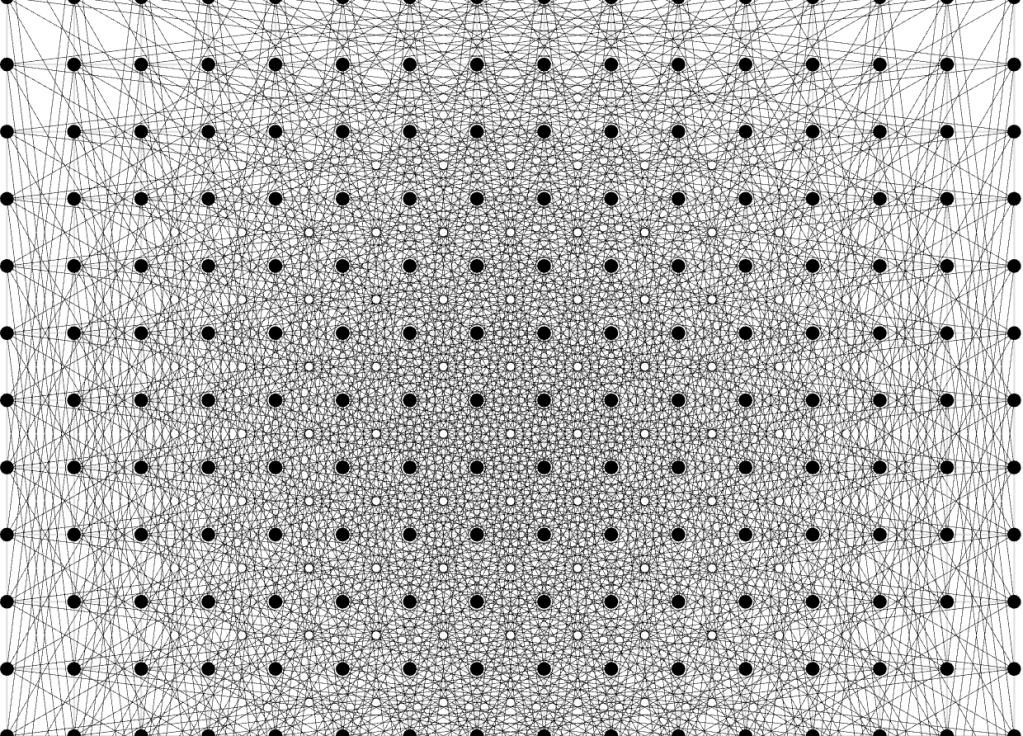
The critical difference this time appears to rest on the nature of the supposed discovery: a genuinely novel construction that fundamentally shifts established boundaries. The company asserts that its general-purpose reasoning model achieved this without being explicitly trained or prompted for specific number theory problems. This suggests a leap in abstract connective capacity rather than optimized recall, marking a significant departure from how previous models functioned.
Advancements in Deep Reasoning Chains
The true significance of an OpenAI math breakthrough resides not solely in solving one problem, but in what it implies about the architecture of modern AI. If these models can maintain coherent, deep chains of reasoning across disparate fields—connecting geometry to biology, for example—the implications stretch far beyond academic proofs.
To understand why this represents a paradigm shift, we must look at the operational leap required to move from a predictive text engine to a mathematical engine:
- Multi-step deduction: Moving away from simple pattern recognition toward sustained, logical sequences.
- Knowledge synthesis: Connecting previously siloed knowledge bases into a unified problem space.
- Hypothesis formulation: Creating new mathematical frameworks that challenge deeply held assumptions.
This capability suggests a shift in AI utility, moving it closer to a true scientific collaborator rather than merely an advanced search engine or code generator. It is no longer about finding the answer that already exists; it is about constructing the logic required to find an answer that has never been seen.
Implications for the Future of Science
The ability to autonomously navigate complex theoretical frameworks has ramifications for any field relying on formalized logic. If a model can master the rigors of number theory, its utility in other high-stakes environments is almost limitless.
In the medical field, this could translate to modeling protein folding dynamics with unprecedented accuracy, potentially surpassing current simulation limits. In physics, it suggests a potential pathway toward unifying disparate theories of matter through pure logical deduction.
While mathematicians like Noga Alon and Melanie Wood have provided necessary external validation points by demanding rigorous scrutiny, the discourse has correctly shifted from if AI can solve math to how its underlying reasoning process operates when confronted with genuine unknowns.
The ultimate measure remains peer review. For now, this announcement serves as a powerful inflection point: it forces the scientific community to confront an unprecedented level of computational assistance in the quest for knowledge. Should OpenAI follow through with verifiable, reproducible proofs that stand up to decades of expert scrutiny, this represents more than a software update; it marks the moment artificial intelligence matures into a true intellectual engine.