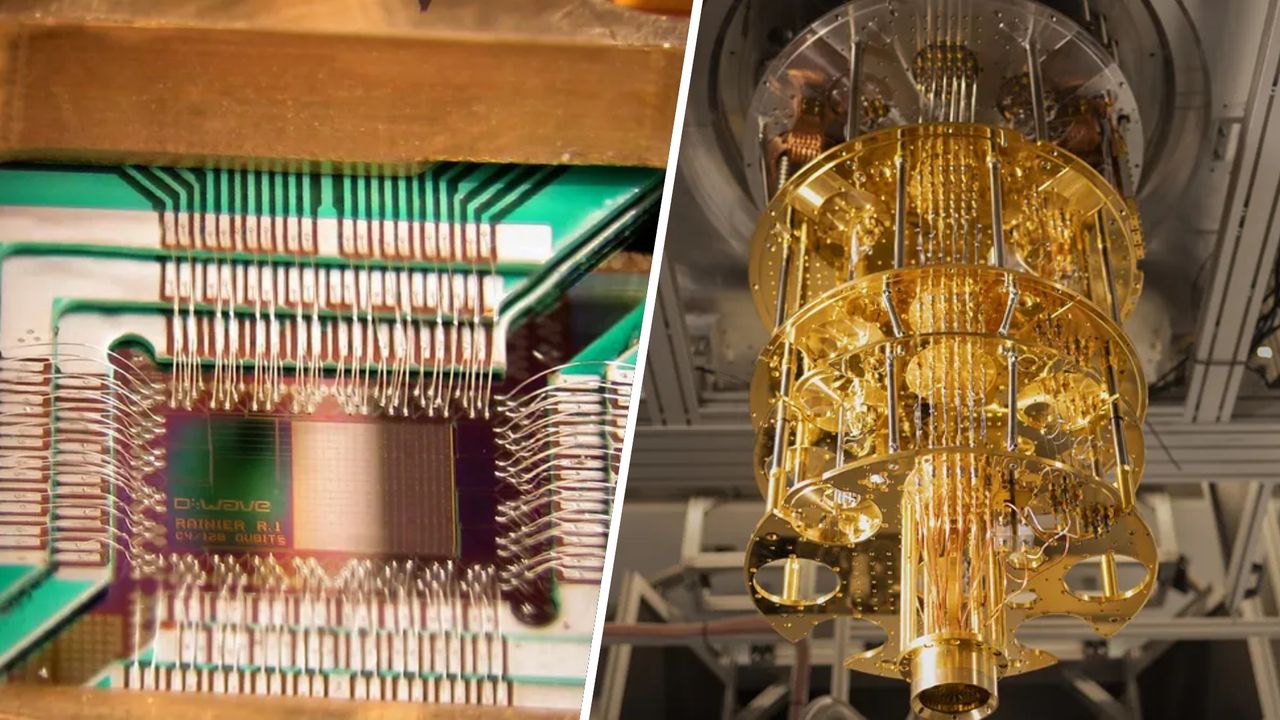
A $2 Billion Bet on the Future of Quantum Computing
The United States government is making a massive move to secure its dominance in next-generation technology. The US Department of Commerce has announced plans to provide just over $2 billion in CHIPS and Science Act grants to nine key quantum computing firms. This strategic injection of capital comes with a unique condition: the government will receive equity stakes in the recipient companies, signaling a deep commitment to fostering domestic innovation.
This unprecedented level of financial support highlights the critical role quantum technology plays in the current administration's tech-forward agenda. By exchanging cash for ownership, the US aims to accelerate development while retaining a share in the potential future rewards of this transformative sector.
Major Recipients and Strategic Investments
The allocation of funds reveals a clear focus on established industry leaders and promising startups alike. The biggest winner in this proposal is IBM, which is set to receive a $1 billion incentive. This funding is specifically designated to help develop advanced quantum computing chips. In a parallel move, IBM has committed to investing an additional $1 billion of its own capital into its quantum semiconductor foundry, Anderson, to establish a specialized manufacturing facility.
Other significant recipients include:
- GlobalFoundries: Set to receive $375 million in funding. In return, the US government will acquire a 1% stake in the company.
- D-Wave: Expected to be awarded $100 million. The company has already announced its intention to issue the Department of Commerce $100 million shares of its common stock once the deal is finalized.
- Rigetti Computing and Infleqtion: Both are expected to receive $100 million each, further diversifying the support across the industry.
- Diraq: The quantum computing startup is set to receive $38 million, providing crucial early-stage support for its technological advancements.
The Race for Quantum Leadership
While these deals are yet to be fully completed, the rationale behind such a heavy government push is evident. Quantum computing is rapidly moving from theoretical research to practical application, with the potential to revolutionize fields ranging from cryptography to drug discovery. The financial potential is immense, and early investment positions the US to lead this new technological frontier.
Industry leaders recognize the urgency of this moment. Dr. Alan Baratz, CEO of D-Wave, emphasized the significance of this partnership. "We believe that the US government’s strategic investment in D-Wave would advance the country’s global leadership position in quantum computing," Baratz stated. He further described the event as "a transformative moment for not just D-Wave, but also for quantum computing and the United States."
This surge in government interest mirrors a broader trend of investor enthusiasm. Companies like Pasqal are capitalizing on the growing belief that quantum technology is on the cusp of becoming a practical, everyday resource. Wasiq Bokhari, CEO of Pasqal, recently noted the shifting landscape to the Wall Street Journal: "People are realizing that quantum computing is only a few years behind AI."
As computing power becomes one of the most desirable resources globally, securing a foothold in the quantum market is seen as a prudent and necessary move. With billions flowing into the sector, the race to define the future of computation is officially underway.