Asus Enters the DRAM Market for ROG’s 20th Anniversary
Asus is celebrating two decades of its Republic of Gamers (ROG) brand with a significant expansion into a core PC component sector. While enthusiasts have already seen special edition hardware like the copper-themed Crosshair motherboard, the company is now making a move into the desktop memory market. This strategic shift marks a new chapter for the brand as it aims to offer a more complete ecosystem for high-performance gaming rigs.
Details regarding this new hardware were revealed during the ROG Day 2026 event in China. Although initially showcased locally, a preview of the DDR5 kit was subsequently shared via tech reviewer Bing’s YouTube channel, confirming that Asus is officially competing in the RAM space with its first dedicated product.
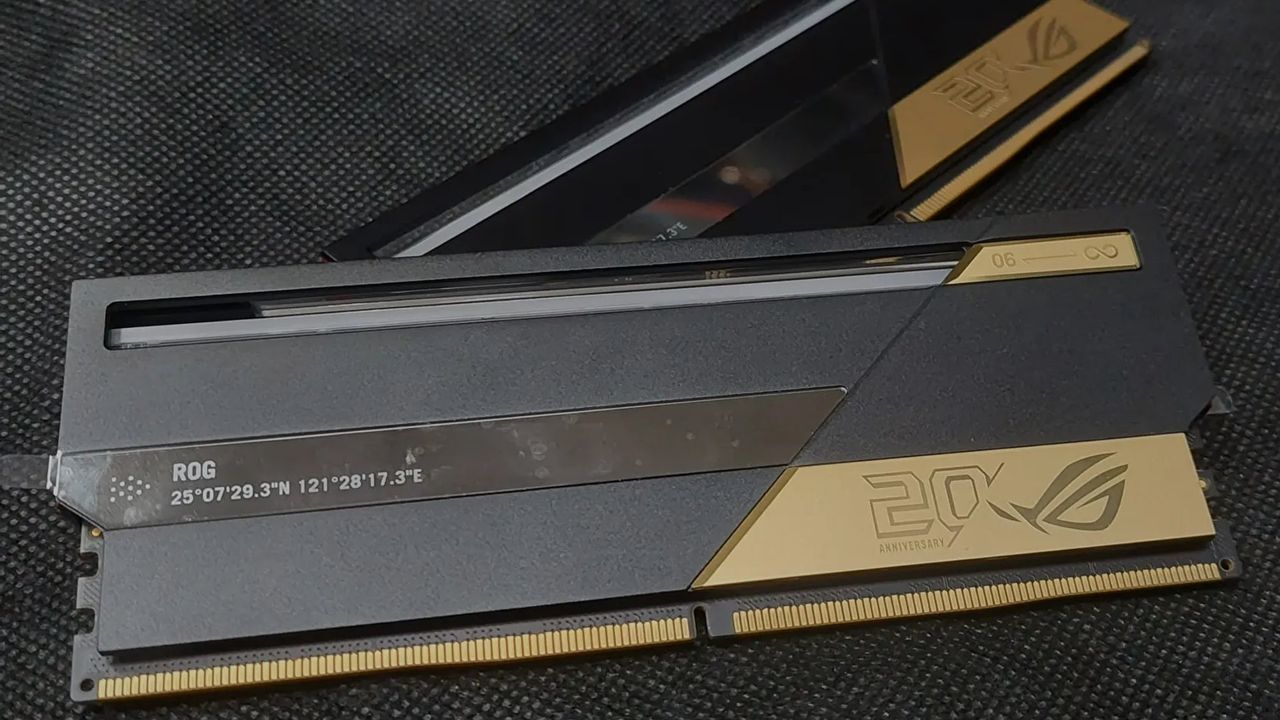
The ROG-Branded DDR5 Kit: Specs and Design
The initial offering is a 48 GB dual-channel DDR5 kit developed in collaboration with memory manufacturer Biwin. The specifications are tuned for high-speed performance, featuring a base speed of 6,000 MT/s.
Key technical details include:
- Timings: CL26-36-36-76, which offers tight CAS latency for improved responsiveness.
- Compatibility: The kit includes XMP profiles tailored for both AMD AM5 and Intel platforms, ensuring stability across major motherboard ecosystems.
- Aesthetics: The design adheres to ROG’s signature angular style but opts for a more subdued, classy color scheme rather than garish RGB-heavy visuals.
While the tight timings of CL26 are impressive, they may present compatibility challenges for some AM5 motherboards that struggle with extreme overclocking profiles. However, Asus’s high-end boards are engineered to support such specifications, making this kit a natural fit for their flagship lineup.
Pricing and Market Context
The financial implications of this launch are significant given the current state of the memory market. Videocardz reports the launch price in China is 5,999 yuan, which converts to approximately $888.
This premium pricing reflects several factors:
- The "ROG Tax": Branded gaming peripherals and components typically command a higher price point than standard equivalents.
- Memory Market Volatility: The industry is currently navigating the aftermath of the "RAMpocalypse," where supply chain disruptions have kept prices elevated.
- Capacity Premium: At 48 GB, this kit offers a non-standard capacity that appeals to enthusiasts and content creators, distinguishing it from standard 32 GB or 64 GB offerings.
For comparison, a standard 48 GB set of DDR5-6000 RAM from other manufacturers, such as Biwin’s non-ROG branded kits, retails for around $540 on Amazon. While this new ROG kit is substantially more expensive, the cost includes specialized tuning and brand prestige that appeals to the core ROG demographic.
A Step Toward a 100% ROG Rig
The introduction of ROG-branded DRAM raises questions about Asus’s long-term strategy. If this is a one-off anniversary release, the pricing and specs make sense as a celebration piece. However, if this signals a broader entry into the desktop memory market, Asus is positioning itself to compete directly with established giants like Corsair and G.Skill.
This move is particularly notable because it addresses a gap in Asus’s current hardware portfolio. Currently, ROG enthusiasts can build a complete PC using Asus components for motherboards, GPUs, coolers, and cases, but they must source their own CPU and memory. By adding DRAM to the lineup, Asus is inching closer to a 100% ROG rig.
Future Implications
If Asus continues down this path of vertical integration, the implications for the PC building community could be profound. Industry observers suggest that this could be the first step toward Asus producing its own M.2 SSDs, and potentially even ARM-powered processors by the end of the decade.
For now, ROG fans are expected to snap up these initial kits due to their collectible nature and the brand’s loyal following. However, the success of this launch will determine whether Asus becomes a permanent fixture in the memory market, fundamentally changing how enthusiasts approach component selection for their high-end builds.