A smartphone screen flashes a "data exhausted" warning during a busy Mumbai commute, prompting an instinctive reach for a mobile app to restore connectivity. Rather than switching between various banking or fintech applications, the user stays within their primary messaging interface to resolve the issue immediately. This seamless transition highlights how WhatsApp adds prepaid phone relarches in India to transform from a simple communication tool into a comprehensive utility platform.
Why WhatsApp Adds Prepaid Phone Recharges in India to Drive Growth
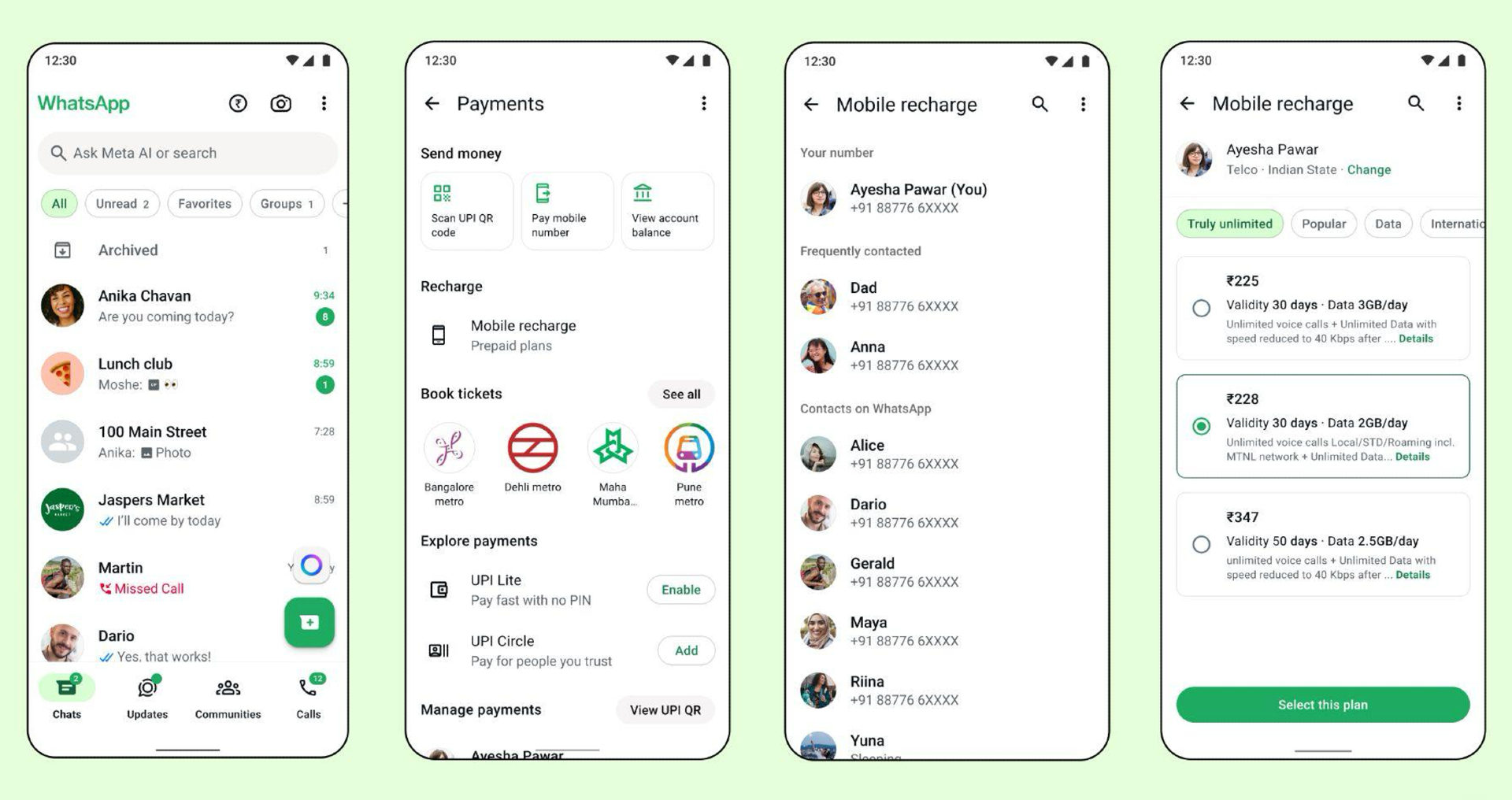
In a strategic move to drive higher transaction volumes, WhatsApp has announced the integration of mobile recharges within its interface. Through a new partnership with fintech provider PayU, users across the country will soon be able to top up mobile numbers for major telecommunications providers directly through their chats. The rollout is expected to reach all eligible users in India over the next two weeks.
The feature specifically targets the country's largest network operators, including Jio, Airtel, and Vodafone Idea. By integrating these essential services, Meta aims to capture a slice of the high-frequency utility market. This move is designed to increase user interaction with WhatsApp Pay, moving beyond peer-to-peer transfers into recurring, necessity-driven commerce.
WhatsApp's Payments Usage Still Lags Behind Competitors
Despite possessing a massive user base of over 500 million people in India, WhatsApp continues to face an uphill battle against established giants. The Indian digital payments sector is currently dominated by PhonePe and Google Pay, which leverage the government-backed Unified Payments Interface (UPI) to facilitate billions of monthly transactions.
The scale of the disparity remains stark when examining recent transaction data from the National Payments Corporation of India (NPCI):
- PhonePe: Processed over 10.5 billion transactions in March.
- Google Pay: Handled more than 7.5 billion transactions during the same period.
- WhatsApp Pay: Recorded approximately 130 million transactions.
While WhatsApp’s transaction volume remains a fraction of its competitors, there are signs of upward momentum. Following the removal of onboarding restrictions in late 2024, the platform's UPI transactions more than doubled from roughly 61 million in January 2025. Nevertheless, capturing meaningful market share requires a level of utility that makes switching away from incumbent apps unnecessary.
The Push Toward a Super-App Model
Meta’s recent updates suggest a concerted effort to build a super-app ecosystem similar to those seen in markets like China. The company has introduced several features designed to deepen user engagement and simplify financial management within the app.
Recent interface changes include:
- A prominent rupee (₹) icon on the home screen for rapid access to payments.
- Integrated capabilities for paying utility bills.
- Features for booking metro tickets.
- Access to various essential government services through chat interfaces.
By layering these services onto its existing messaging infrastructure, Meta is attempting to reduce friction in the user journey. The goal is to create a closed loop where communication, commerce, and essential services exist within a single, unified environment.
Verdict: Utility as the Path to Scale
The integration of mobile recharges is a logical step for WhatsApp, targeting a high-frequency use case that fits perfectly with its existing reach. However, the sheer volume of transactions handled by PhonePe and Google Pay suggests that brand loyalty and established ecosystem habits are deeply entrenched.
For Meta to succeed, it cannot rely solely on its massive user base; it must prove that its payment infrastructure is superior in terms of reliability and integrated convenience. The next few quarters will reveal whether these utility-driven features can actually shift the needle in India's hyper-competitive fintech landscape.