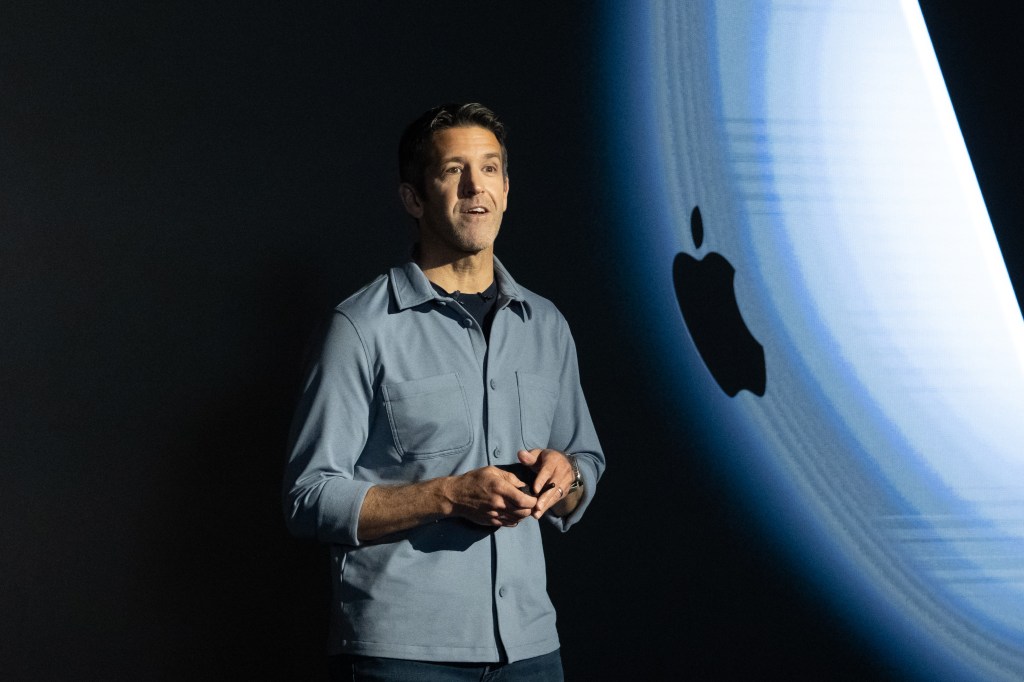
As Tim Cook prepares to step down after a fifteen-year tenure, the tech world is looking toward a new era of leadership. The appointment of John Ternus marks a transition defined by engineering precision rather than operational logistics. Taking the helm on September 1, Ternus represents a bridge between Apple's legendary hardware roots and its increasingly complex, software-driven future.
The Career Trajectory of John Ternus
For those outside the inner circles of Cupertino, Ternus has remained a relatively low-profile figure. He operates far from the tabloid scrutiny that often follows Silicon Valley executives. Having spent twenty-five years at the company, he is a veteran of the post-Jobs era who understands the fundamental DNA of Apple's hardware ecosystem.
His journey began in 2001 within the product design team, shortly after an early career stint at Virtual Research Systems. Since then, his ascent has been characterized by steady, incremental responsibility and a deep focus on technical execution.
By 2013, he had risen to become the Vice President of hardware engineering, and in 2021, he was promoted to Senior Vice President. This trajectory suggests that Apple’s leadership transition is about reinforcing a culture of long-term continuity. As a leader significantly younger than Cook, Ternus represents a generational shift prepared for a decade of consistent governance.
The Engineering Philosophy of John Ternus
The hallmarks of Ternus’s leadership are rooted in an almost obsessive attention to detail. He has frequently recounted stories from his early days involving the microscopic scrutiny of supplier parts. This includes a famous instance where he used a magnifying glass to count the grooves on a screw head at a supplier facility.
This commitment to craftsmanship is a core ten0et he carries forward from the legacy of Steve Jobs. He often references the importance of finishing the "back of the furniture" with the same care as the front, even when no one is intended to see it. Under his direction, Apple has successfully navigated massive technical shifts:
- The transition from Intel-based processors to proprietary Apple silicon, which redefined Mac performance.
- The development and refinement of the AirPods ecosystem, establishing dominance in wireless audio.
- The launch of the Apple Watch, creating a new pillar for health and fitness integration.
- The introduction of the Vision Pro, representing Apple's most ambitious foray into spatial computing.
- The recent development of the MacBook Neo, an experiment in balancing high-end performance with cost-effective design.
Navigating the AI and Spatial Computing Frontier
Stepping into the role of CEO, Ternus faces a landscape vastly different from the one he entered in 2001. While his expertise lies in the tangible—the glass, aluminum, and silicon—the industry's focus is shifting toward generative AI and pervasive machine learning. Integrating sophisticated artificial intelligence without compromising strict privacy standards will be his first true test.
Furthermore, he must determine the long-term trajectory of spatial computing as the company seeks a sustainable mass market for its most expensive hardware yet. As an engineer, John Ternus has proven capable of managing complex technical transitions. However, as CEO, he must now manage global market sentiment and intense competitive pressure.
The transition from Tim Cook to John Ternus is less about a change in direction and more about a refinement of focus. While the company's operational foundations are set, the challenge will be ensuring hardware excellence remains relevant in an era of software intelligence. If his history with Apple silicon is any indication, the company is prepared to meet this challenge with surgical precision.