New disclosures found within impending SpaceX IPO filings reveal a staggering financial reality for Elon Musk’s AI venture: xAI burned $6.4B last year. With only $3.2 billion in revenue reported, the company is operating at an aggressive deficit that shows no signs of cooling down.
The data suggests that the path to frontier-level artificial intelligence requires capital deployment on an unprecedented scale. Rather than chasing immediate profitability, xAI is betting heavily on a roadmap defined by massive infrastructure expansion and computational dominance.
Scaling Compute for Trillion-Parameter Models
The primary driver behind why xAI burned $6.4B last year is the ambitious goal of scaling Grok toward "multiple trillions of parameters." To achieve this level of complexity, the company must move far beyond current industry benchmarks, necessitating an exponential increase in processing power and hardware.
This isn't just a software race; it is a physical infrastructure overhaul. The filings indicate that xAI is pursuing vertical integration to control the entire AI stack, reducing reliance on third-party cloud providers. Key elements of this massive investment include:
- Massive Capex Run Rate: Annualized capital expenditure has already surpassed $30 billion.
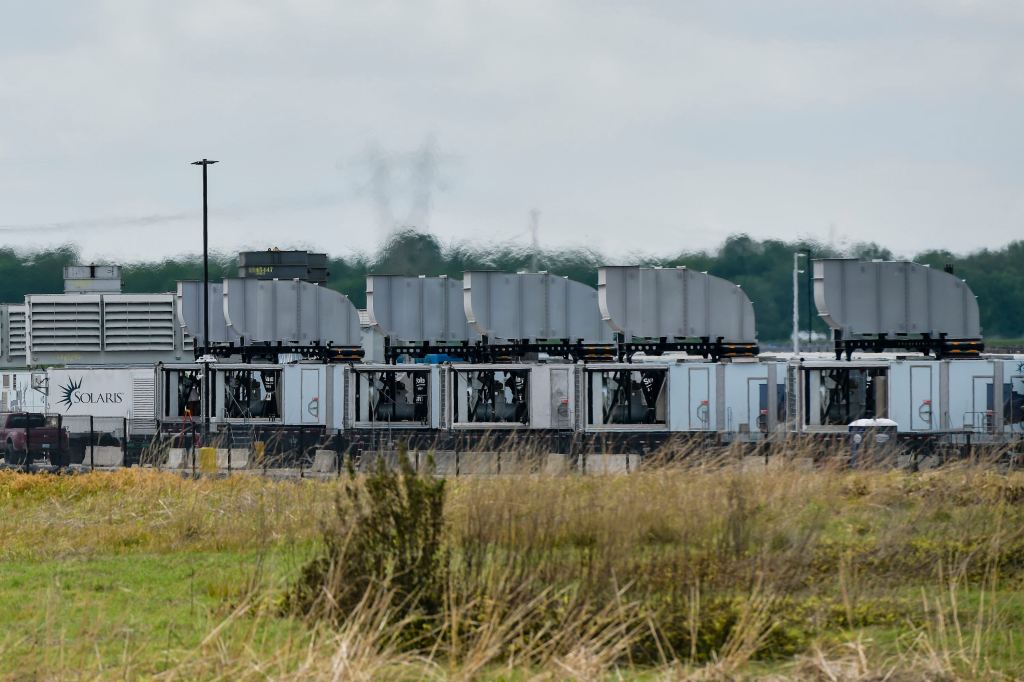
- Dedicated Data Centers: Development of facilities like Colossus and Colossus II to provide compute capacity measured in gigawatts.
- Hardware Control: A focus on securing proprietary control over physical hardware to optimize costs and iteration speeds.
The IPO Framework: Fueling Future Expenditure
With a potential $1.75 trillion valuation attached to this public debut, the SpaceX/xAI ecosystem sits at a unique crossroads of aerospace technology and high-performance computing. While competitors like Anthropic show revenue growth that signals a path toward profitability, Musk’s venture is following a different calculus: raw computational dominance outweighs quarterly earnings stability.
The "use of proceeds" section in the IPO documents acts as a declaration of intent for future spending. The vision extends beyond terrestrial server farms and into orbital infrastructure, suggesting a plan to solve compute limitations by rethinking where processing power actually lives.
Future Investment Priorities
To maintain this trajectory, the company has identified several critical areas for capital allocation:
- AI Compute Infrastructure Expansion: Direct funding for high-density, local data center deployments.
- Grok Development: Massive resource allocation to push Grok’s reasoning capabilities to unprecedented depths.
- Orbital AI Deployment: Long-term planning for satellite-based compute power.
Operational Reality vs. Visionary Ambition
There is a notable tension between the massive burn rate and current user engagement. As of March 2026, while Grok is integrated into the X ecosystem, only one-fifth of combined monthly active users are actively engaging with its core AI features. This indicates that much of the current capital is funding future potential rather than immediate consumer utility.
However, for xAI, the goal isn't a positive EBITDA—it is establishing irreversible control over the next generation of processing power. Whether that power resides in Nevada data centers or in low-Earth orbit, the company is clearly prioritizing computational supremacy over traditional financial metrics.