It is always a disappointment when a game you are looking forward to misses the mark, but it feels even worse when that game shows you exactly how much potential it wasted. Some games fail due to a lack of vision, but the most frustrating titles are those that provide a spark of brilliance without enough kindling to keep the fire going. In our Yoshi and the Mysterious Book review, we found that while the game ignites with creativity halfway through, that flame often fades into an ember before you can truly enjoy the warmth.
Creative Creatures and Discovery Mechanics
Yoshi and the Mysterious Book is a puzzle-platformer that places its mechanical emphasis squarely on the "puzzle" aspect rather than traditional platforming. Each stage revolves around a novel creature that Yoshi must lick, lift, or lob to uncover secrets. These interactions result in Discoveries, which are logged into a digital journal.
The variety of creatures is undeniably impressive and serves as the game's strongest suit. Some notable inhabitants include:
- A green critter with a bubble wand for a head.
- A jellyfish that functions like a high-end water jetpack.
- Multiplied bubblegum entities that grow when hopped on.
- A giant, drill-nosed warthog available for riding.
- Bouncy, hula-hooping birds.
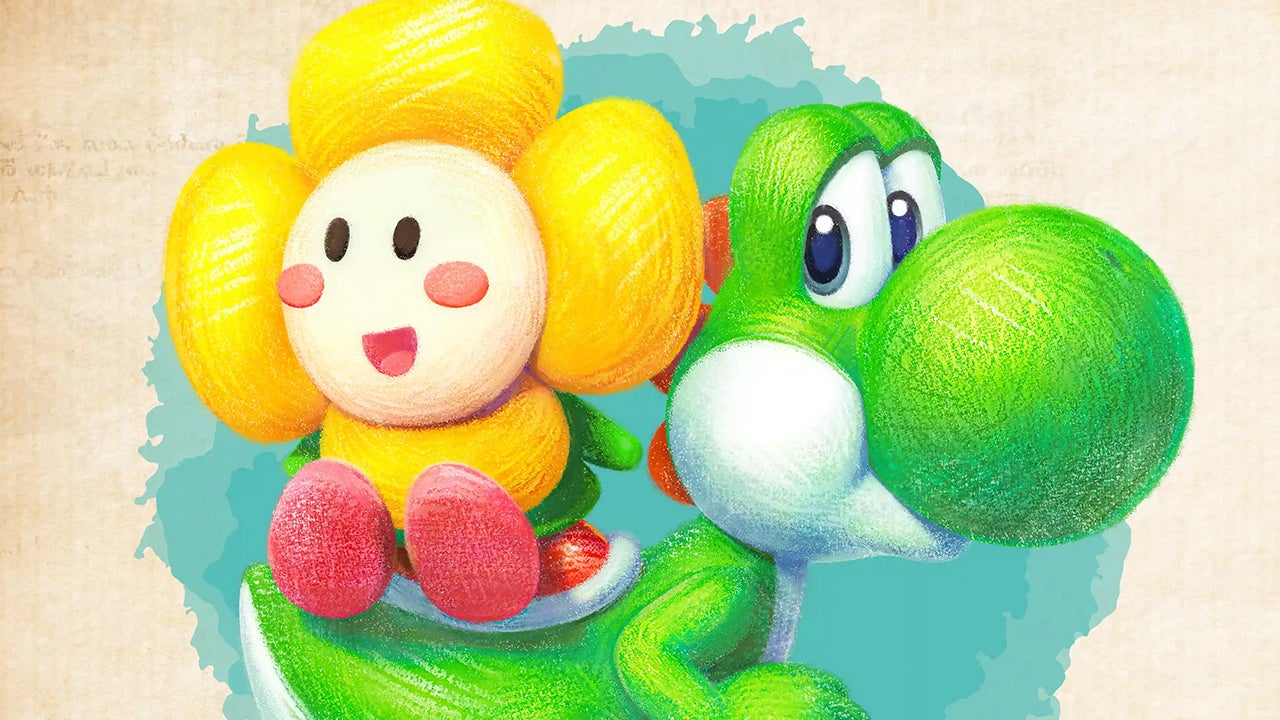
The game rewards your curiosity by flooding the screen with stamps and dopamine hits whenever you uncover how a creature behaves—such as learning that a flower person’s petals change color when eating an apple. This sense of unpredictable exploration makes hopping into a new stage feel genuinely fresh at first.
The Problem with Unnurtured Ideas
Despite the charm, many of the best ideas in Yoshi and the Mysterious Book go unnurtured. While the level design initially teaches you about a creature's gimmick, the gameplay often devolves into repetitive tasks once the initial novelty wears off. This makes the experience feel less like a cohesive fantasy adventure and more like a biology textbook: a collection of interesting experiments paired with a mountain of homework.
The game struggles with several core issues that prevent it from reaching greatness:
- Wonky Physics: Unlike polished Nintendo platformers, this game frequently stumbles into frustrating physics interactions involving spinning tops, surfing waves, or wall-jumping on springy bugs.
- Lack of Longevity: Once the Discoveries are made, the levels lose their appeal. There is very little intrinsic fun in revisiting a map that has already been "cleared."
- Underutilized Mechanics: While the game asks you to use previous Discoveries to interact with new subjects, these interactions are often too straightforward or occur on maps too small to allow for meaningful play.
While some variant levels offer more focused creature interactions, they are often far too brief to compensate for the lack of depth in the main stages. Ultimately, playing this game feels a bit like popping bubble wrap; it is satisfying at first, but unless you are dedicated to bursting every single mundane bubble, you are eventually left holding a limp piece of plastic.