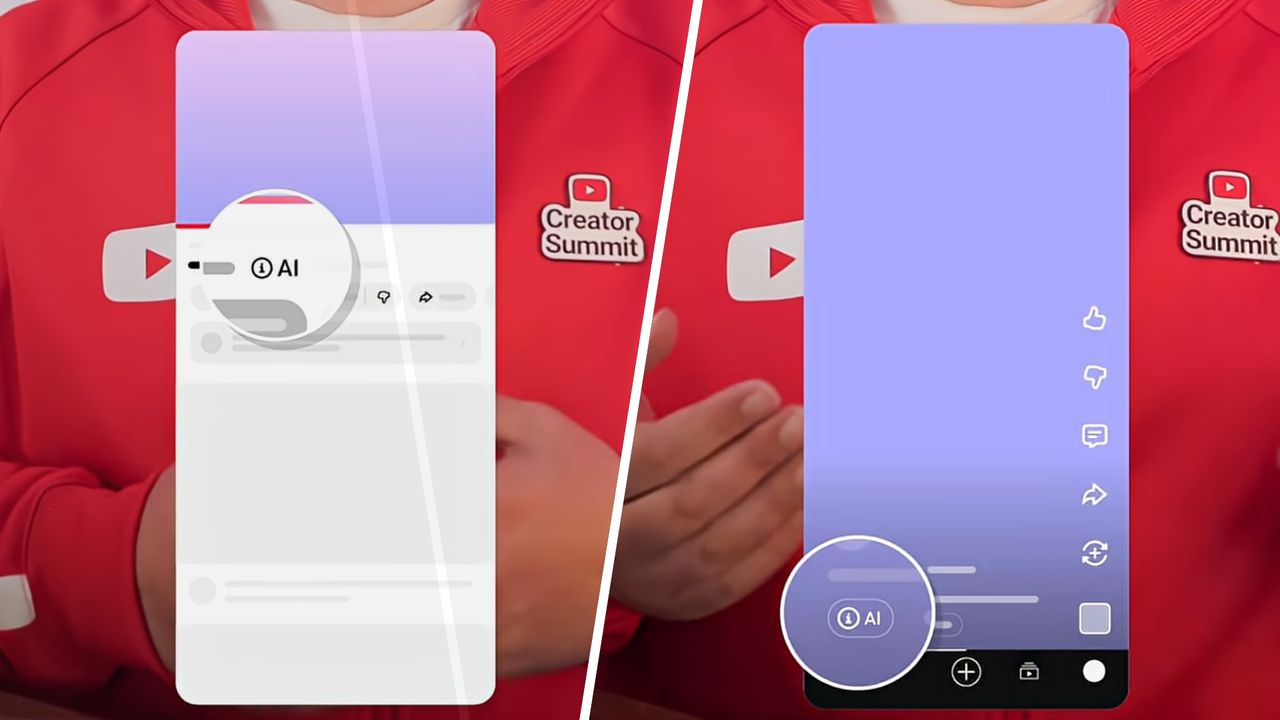
Have you ever watched a YouTube video and immediately screwed up your face trying to discern whether it’s real or synthetic? Welcome to a daily part of modern streaming. The good news is that YouTube has listened to user feedback, and as a result, the platform is moving AI-generated content labels to a much more prominent position. The bad news is that the promo video shows them looking pretty tiny. For long-form videos, these AI warnings will now sit directly below the player and above the description. On Shorts, they appear as an actual overlay on the footage itself.
Where Viewers Will Actually Spot the Tags
Both placements definitely mark a shift from the previous system, but yes, they still look like they could easily slip past casual scrollers. I suppose a massive red flashing banner reading "THIS VIDEO IS BULL****" would be a bit much, though it remains unclear if these updates fully assuage fears that photorealistic AI is becoming nearly impossible to distinguish from reality.
How YouTube Is Rolling Out New AI-Generated Content Labels
What might actually help viewers navigate the surge of synthetic media are YouTube’s newly announced internal detection signals. While creators have long been required to manually flag realistic AI usage, a fair number inevitably skip it. Now, YouTube says it will automatically apply a label whenever its systems detect significant photorealistic AI use. Despite this automation, the platform emphasizes that human oversight remains intact. "As this technology continues to improve, creators remain in control," YouTube states. If a creator believes their video was incorrectly tagged, they can simply update the disclosure status through YouTube Studio.
However, some labels will never be removed regardless of manual overrides:
- Videos created using YouTube’s own generative tools like Veo or Dream Screen
- Footage containing C2PA metadata that indicates fully generative AI origins
"Our goal is simple," the company’s blog post explains. "Make it as easy as possible for creators and viewers to have the right information." It’s a noble objective, certainly. Yet in an era where YouTube dominates online video and feeds us endless streams of synthetic slop, these updated AI-generated content labels still feel like small potatoes. Very small potatoes indeed, but a necessary step forward nonetheless.