This AI Weather Startup Is Out-Forecasting Government Agencies
The world’s most sophisticated weather models are being challenged not by a government agency or a major tech corporation, but by a startup with fewer resources and a radically different approach to data collection and machine learning. Windborne Systems, a Silicon Valley startup founded by Stanford students in 2019, has quietly positioned itself as a disruptive force in the field of meteorological forecasting. Its latest product, WeatherMesh 6, promises forecasts that are more frequent and accurate than those produced by the European Centre for Medium-Range Weather Forecasting (ECMWF), long considered the gold standard in global weather prediction.
The Power of Real-Time Data and AI
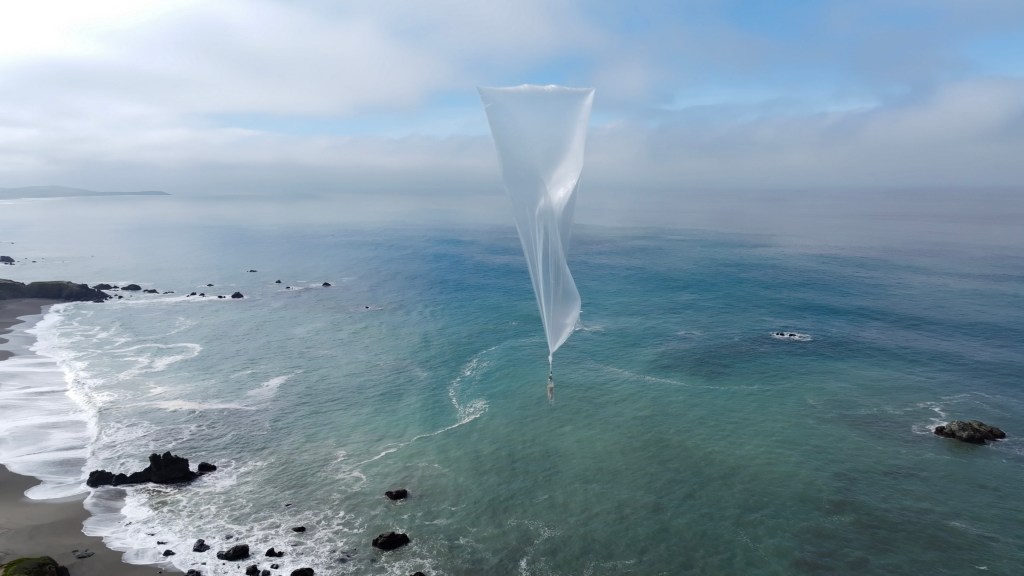
The key to Windborne’s success lies in its unique data assimilation strategy. While traditional models rely on historical data and pre-existing datasets from organizations like the ECMWF and NOAA, Windborne has built its own network of 400 high-altitude balloons that gather real-time atmospheric data. This allows the company to feed raw sensor readings directly into its deep learning models, bypassing the traditional preprocessing steps that often slow down and limit the accuracy of forecasts.
Windborne’s model is updated every hour, compared to the traditional six-hour intervals used by government agencies. It also achieves a resolution of 3 kilometers in key regions, allowing for more granular and localized predictions. This is particularly significant in areas like surface temperature, where the startup’s model claims to match the accuracy of the ECMWF’s traditional forecasts from the previous day.
- WeatherMesh 6 updates hourly rather than every six hours
- Resolves weather patterns down to 3 km in key regions
- Directly ingests raw sensor data from 400 balloons in real time
- Avoids reliance on preprocessed data from larger institutions
Windborne’s head of AI, Joan Creus-Costa, emphasizes that the direct ingestion of data from its balloons is the main driver of the model’s improved performance. Unlike traditional models that require powerful supercomputers and take hours to run, Windborne’s system leverages the computational efficiency of transformer-based models to deliver faster, more accurate results.
Navigating Challenges and Scaling Ambitions
The startup has also had to address real-world challenges, such as when one of its balloons collided with a United Airlines jetliner in 2025. While no one was harmed, the incident prompted the company to enhance its safety protocols, including adding ADS-B transponders to its balloons to improve visibility to air traffic control systems.
Despite such hurdles, Windborne has managed to secure partnerships with major institutions like the U.S. Air Force, NOAA, and private-sector clients. The company has raised $25 million in venture capital and now operates with a valuation of $85 million, signaling growing confidence in its approach.
Looking ahead, Windborne’s leadership is focused on refining its model and data infrastructure, rather than immediately building a consumer-facing product. CEO John Dean envisions a future where forecasts are integrated into AI agents and other digital assistants, rather than being accessed through traditional interfaces.
As the field of AI weather forecasting continues to evolve, Windborne’s success underscores a broader shift: the value of real-time data and the potential of machine learning to outperform even the most established institutions. The future of weather prediction may be less about who has the most powerful supercomputer, and more about who can collect and process data in the most efficient and accurate way.