DuckDuckGo Makes Its ‘No-AI’ Search Engine Easier to Access as Its Traffic Booms
The shift toward AI-driven search experiences is accelerating, but a growing segment of users is resisting the trend — and DuckDuckGo is capitalizing on the sentiment with a renewed push for its AI-free search platform. The company’s latest move to simplify access to its no-AI search engine — through browser extensions and updated privacy tools — reflects a broader industry pushback against the increasing dominance of AI in digital services.
DuckDuckGo Targets a Niche with AI-Free Extensions
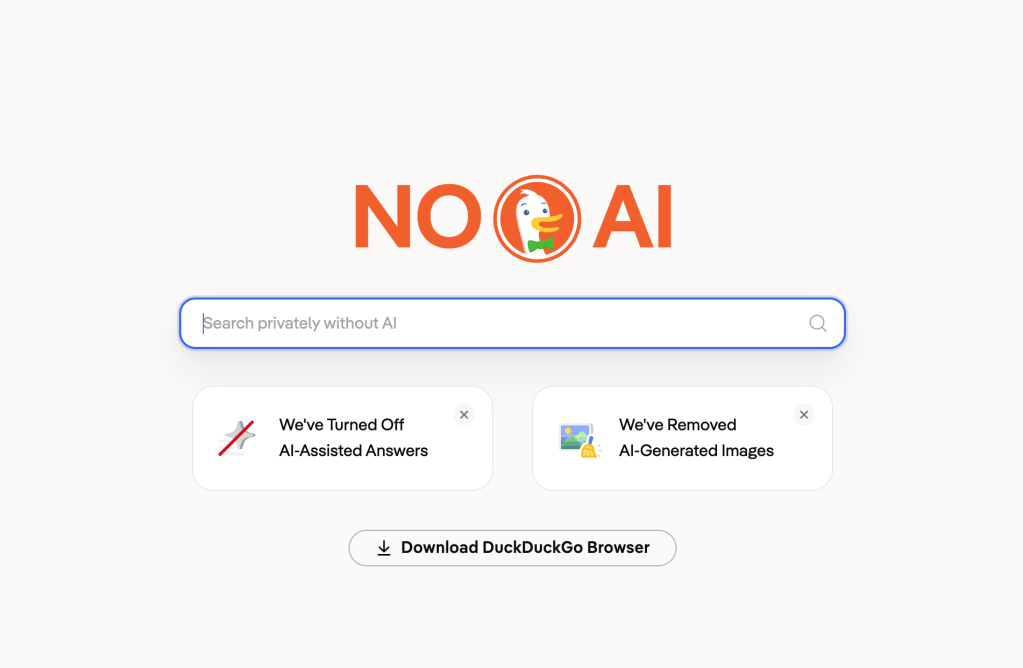
DuckDuckGo’s new browser extensions for Chrome and Firefox allow users to set its AI-free search page, noai.duckduckgo.com, as their default, offering a stark contrast to the AI-overloaded interfaces now being rolled out by competitors. This feature ensures users are not inadvertently directed to AI-generated content, a concern for those wary of algorithmic bias, data privacy, or the erosion of traditional search mechanics.
The move follows a notable surge in traffic to DuckDuckGo’s no-AI search page, with visits up nearly 30% week-over-week and U.S. app installs seeing an 18.1% increase. This growth has been particularly pronounced since Google’s May announcement of a radical AI-first redesign of its search engine. The company is now offering a more interactive experience, integrating AI-generated summaries and chat-based follow-ups into its core product.
A Rising Demand for Choice in Search
The increased adoption of DuckDuckGo’s no-AI search highlights a growing demand for user choice in how information is curated and presented online. While Google’s new AI Overviews may offer convenience, they also raise concerns about transparency, user control, and the potential for algorithmic manipulation. This has led to a noticeable migration toward search engines that emphasize privacy, neutrality, and traditional search results.
Users can now set DuckDuckGo as their default search engine through browser extensions.
The company is updating its existing Privacy Essentials extensions to include AI search settings.
DuckDuckGo’s web browser users retain their AI preferences even after clearing history.
DuckDuckGo is not opposing AI outright. The company still provides an AI chatbot with access to multiple large language models and offers a subscription plan that includes advanced AI tools alongside privacy-focused services. This dual approach allows the company to cater to both privacy-conscious users and those seeking AI-driven assistance.
A Sustained Shift in Search Behavior
The traffic growth to DuckDuckGo’s no-AI search page has been consistent, with visits averaging 84% above the baseline since Google’s overhaul. This suggests a more permanent shift in user behavior, rather than a temporary reaction to the AI changes. The company noted that traffic spiked threefold on Thursday, May 28, 2026, the day after Google’s announcement — and it has continued to rise.
As AI becomes more integrated into search, the need for alternatives is likely to increase. While Google’s AI-first approach promises a more interactive and efficient search experience, it also risks alienating users who value control, transparency, and the absence of algorithmic mediation. DuckDuckGo’s strategic response underscores the importance of providing users with options — a key factor in maintaining trust in the digital ecosystem.
The rise of DuckDuckGo’s no-AI search engine suggests that the market is not yet fully convinced of the benefits of AI-driven search. While the technology offers new possibilities, it also raises questions about the long-term implications for user autonomy, data privacy, and the integrity of search results. As the debate continues, one thing is clear: the demand for choice in how users interact with the web is not only growing but becoming a defining feature of the search landscape.