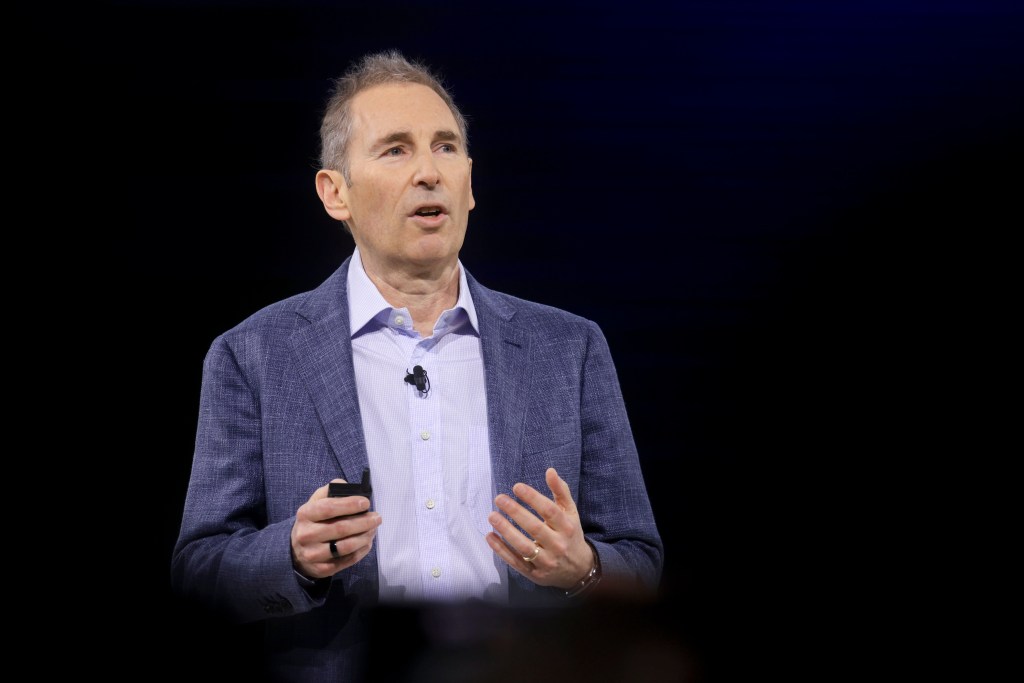
Is it possible for a company to achieve its fastest growth rate in fifteen quarters while simultaneously facing significant pressure on its liquid reserves? The recent earnings report suggests that Amazon's cloud business is doing exactly that. As the artificial intelligence revolution intensifies, Amazon Web Services (AWS) is navigating a period of unprecedented revenue acceleration paired with an aggressive, capital-intensive expansion strategy.
The AI Multiplier and Revenue Acceleration
The latest financial data reveals that AWS net sales surged by 28% year-over-scale, reaching a total of $37.6 billion. This performance marks the most significant growth spurt for the cloud division in nearly four years. According to Amazon CEO Andy Jassy, the primary driver behind this momentum is the industry's massive shift toward generative AI. This shift has positioned AWS as a critical provider of the "picks and shovels" necessary for large-scale model training and deployment.
Comparing Historical Growth Scales
The scale of this transition is difficult to overstate when looking at historical benchmarks. During the early stages of the cloud era, AWS took several years to reach a revenue run rate of just $58 million.
In contrast, the current AI-driven wave has propelled the company's AI-related revenue run rate to over $15 billion in roughly the same timeframe. This represents a nearly 260-fold increase in scale compared to previous technological cycles, highlighting how much more concentrated and rapid the demand for compute power has become.
High Capital Spending for Infrastructure Dominance
While the top-line growth is impressive, it comes with a heavy price tag. To meet the skyrocketing demand for AI workloads, Amazon is significantly increasing its capital expenditure (CapEx). This spending is not merely incremental; it is outpacing revenue growth in the short term, creating a predictable strain on the company's free cash flow.
For the trailing twelve months, Amazon reported that free cash flow had decreased to $1.2 billion, driven largely by this massive infrastructure build-out. The strategy involves front-loading costs to ensure capacity is available before customers demand it. Jassy has noted that AWS must commit enormous amounts of capital toward long-lived assets well in advance of monetization. These investments include:
- Specialized hardware, such as custom AI chips and high-performance servers.
- Physical infrastructure, including land acquisition and the construction of massive data centers.
- Networking and connectivity gear to manage the massive throughput required by modern LLMs.
- Power and energy procurement to sustain next-generation compute clusters.
While these investments impact immediate liquidity, the company views them as long-term bets. Many of these assets, particularly data centers, are expected to have a useful life exceeding 30 years, while hardware components typically serve a five-to-six-year cycle.
The Future Outlook for Amazon’s Cloud Business
The broader Amazon ecosystem remains robust, with overall company sales rising 17% to $181.5 billion. However, the true story lies in whether AWS can successfully bridge the gap between massive upfront spending and long-term profitability. The current era of AI requires a level of infrastructure density that was virtually unimaginable during the first wave of cloud computing.
The verdict on Amazon's strategy remains tied to the durability of the AI boom. If the demand for generative intelligence continues to scale at this trajectory, the current "cash burn" will look like an essential down payment on future dominance.
However, if the industry faces a period of consolidation or reduced interest in large-scale model development, the massive weight of these capital commitments could become a significant liability. For now, Amazon is clearly betting that the era of compute-hungry intelligence is only just beginning.