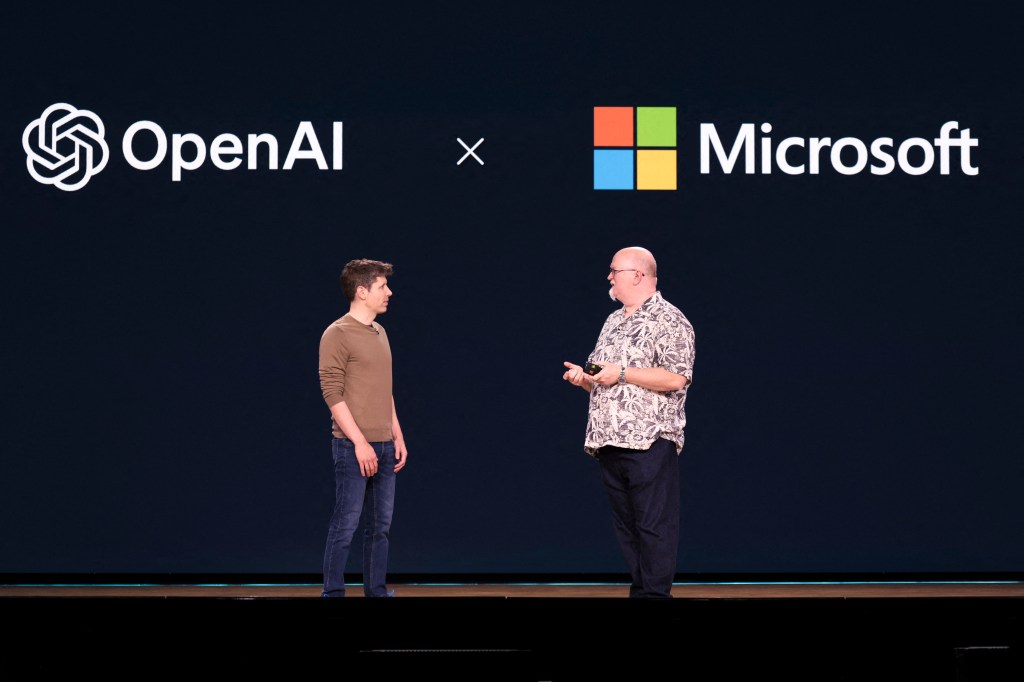
Can a software giant maintain its competitive edge once its primary technological advantage is no longer exclusive? For much of the recent generative AI boom, Microsoft’s relationship with OpenAI was viewed through the lens of a near-monopoly on frontier intelligence. However, as competition intensifies, Satya Nadella says he’s ready to ‘exploit’ the new OpenAI deal by shifting focus from exclusivity to long-term utility.
Moving Beyond Exclusivity
The era of Microsoft holding a closed loop on OpenAI's most advanced models appears to be transitioning into a period of high-efficiency exploitation. While industry speculators have focused on the loss of exclusivity, Nadella has directed attention toward the structural advantages remaining in the revised agreement.
Crucially, Microsoft has retained access to OpenAI's intellectual property—including its most sophisticated models and agentic products—under a royalty-free framework that extends through 2032. This move represents a fundamental shift in how value is extracted from AI partnerships.
Exploiting the New OpenAI Deal via Azure Integration
By removing the requirement to pay OpenAI for access to these frontier models, Microsoft can significantly reduce the overhead associated with deploying large-scale AI solutions. The term "exploit," as used by Nadella during a recent Wall Street analyst call, underscores a commitment to aggressive deployment and integration across the Azure ecosystem.
This strategy is not merely about having the best model; it is about having the most cost-effective access to that model at scale. This approach allows Microsoft to maximize its long-term intellectual property rights even as Amazon emerges as a key player in the OpenAI ecosystem.
A Multi-Model Ecosystem Strategy
The landscape of enterprise AI is moving rapidly toward a state of model agnosticism, where the provider of the infrastructure becomes more important than the specific intelligence running on it. Microsoft is clearly positioning itself as the definitive hyperscaler for this new era.
Rather than tethering the future of the company to a single partner, Microsoft is building an environment where customers can choose between OpenAI, Anthropic, and various open-source alternatives. This diversification serves as a powerful defensive moat against vendor lock-in.
Key Metrics of Microsoft's AI Growth
The financial results of this multi-model strategy are already evident in the company's recent performance:
- Microsoft's AI business has achieved an annual revenue run rate of $37 billion.
- Year-over-year growth for the AI segment has reached a staggering 123%.
- OpenAI remains one of Microsoft's most significant customers, driving massive demand for Azure compute and accelerator services.
- Microsoft retains a substantial 27% equity stake in OpenAI, ensuring long-term alignment with the startup's success.
The symbiotic nature of this relationship is deepened by OpenAI’s massive infrastructure requirements. The commitment from OpenAI to utilize more than $250 billion worth of Microsoft cloud services creates a closed loop of value where every advancement in research translates into increased consumption of Microsoft's core product.
The Verdict: Controlling the Infrastructure
The industry is currently witnessing a transition from "AI as a feature" to "AI as an infrastructure." While critics argue that the loss of exclusivity marks the end of Microsoft’s period of unchallenged dominance, the financial metrics suggest otherwise.
By pivoting from a provider of exclusive access to a provider of universal compute and model orchestration, Microsoft is betting that the winner of the AI wars will be the one who controls the plumbing, not just the brain. If the company can continue to leverage its royalty-free rights through 2032 while scaling its multi-model offerings, the "win-win" Nadella describes may well become the industry standard.