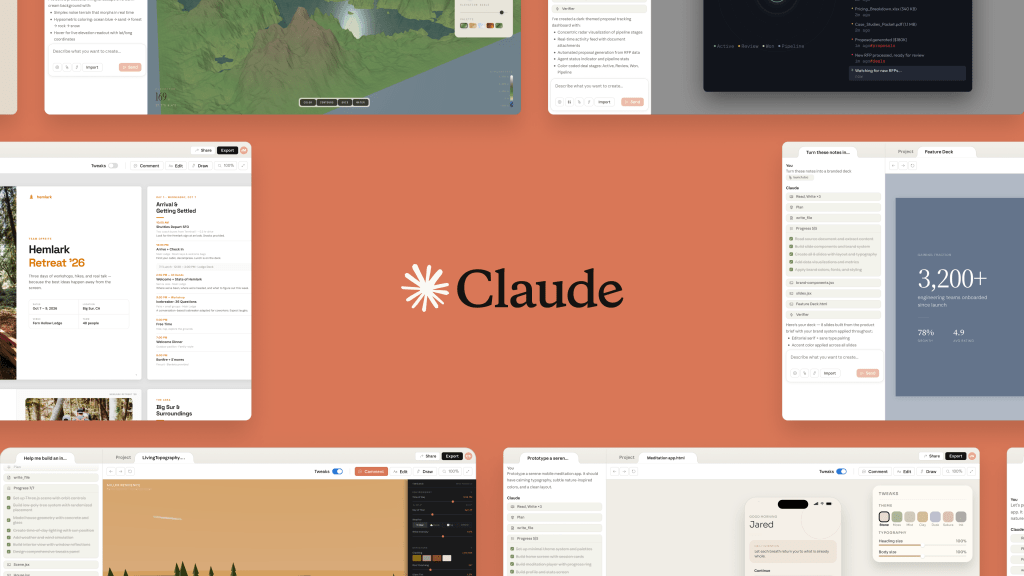
Typing a simple prompt into a text field triggers an immediate transformation on the screen, as soft greens and tranquil layouts manifest from mere words. A blank workspace rapidly populates with calming typography and subtle, nature-inspired hues following nothing more than a brief description of a mobile meditation app. This is the core experience offered by Claude Design, the latest experimental product from Anthropic designed to bridge the gap between abstract ideas and tangible visuals.
Rapid Prototyping via Claude Design
The primary objective of this tool is to democratize the initial stages of visual communication. For founders, product managers, and engineers who lack formal training in tools like Figma or Adobe Creative Cloud, the barrier to sharing a vision has traditionally been high. This new tool removes that friction by allowing users to describe a concept—such as a "serene mobile meditation app"—and receive an initial version of a prototype almost instantly.
Iterative Refinement through Natural Language
The workflow is built around iterative refinement rather than static generation. Once the initial layout appears, users can interact with the output through direct edits or follow-up natural language requests. A user might decide that the typography needs more weight, or they may request the immediate addition of a dark mode toggle. This conversational approach to design allows for a rapid prototyping loop that focuses on intent rather than technical execution.
The utility of this tool extends across various professional formats:
- One-pagers and internal documentation.
- High-fidelity presentation slides.
- Early-stage UI/UX prototypes.
- Brand-aligned visual assets.
Ecosystem Synergy and Design System Integration
While the sudden arrival of a generative design tool might suggest an impending conflict with established platforms like Canva, Anthropic is positioning Claude Design as a complementary force. The company has explicitly stated that its goal is not to replace existing design ecosystems but to feed them.
Once a concept is refined within the tool, it can be exported into several formats, including PDFs, URLs, and PPTX files. Crucially, assets can also be sent directly to Canva, where they become fully editable and ready for collaborative, professional-grade polishing.
Maintaining Brand Integrity
Perhaps the most sophisticated feature lies in its ability to maintain brand integrity through design system integration. Unlike standard generative AI that might produce visually pleasing but brand-inconsistent results, Claude Design can ingest a company’s existing codebase and design files.
By reading these technical assets, the tool can automatically apply a team's specific color palettes, typography, and component styles to every new project it generates. This ensures that even a non-designer can produce work that feels native to the organization's established visual identity.
The Enterprise Push in an Intensifying Market
The launch of Claude Design arrives at a pivotal moment for Anthropic as it aggressively expands its footprint in the enterprise and prosumer sectors. Following the recent rollout of Claude Cowork, which introduced agentic assistants for complex organizational tasks, this move demonstrates a clear strategy: transforming Claude from a chatbot into an integrated workspace engine.
The underlying technology, powered by Claude Opus 4.7, is currently available in research preview for those subscribed to Claude Pro, Max, Team, and Enterprise tiers. As the landscape of AI-driven productivity tools becomes increasingly crowded, Anthropic’s focus on specialized, agentic workflows sets it apart from general-purpose competitors.
With rumors of a massive funding round potentially valuing the company at upwards of $800 billion, the stakes for this expansion into visual design are incredibly high. If Anthropic can successfully integrate into the existing professional pipeline without disrupting established workflows, they may well define the next generation of the AI-augmented office.