Does chasing maximum wattage fundamentally compromise the long-term chemistry of your battery? While modern lithium-ion technology is remarkably robust, finding the best iPhone charger involves a critical trade-off between immediate convenience and hardware longevity.
Navigating the current ecosystem of USB-C, MagSafe, and Qi2 standards requires an understanding of both current device capabilities and future-proofing requirements. To maintain a high-performance mobile ecosystem, you must balance speed with thermal management.
Finding the Best iPhone Charger: Wall Adapters and Cables
For users demanding rapid replenishment, a standard 5W or 7.5W brick is no longer sufficient. The hardware landscape has shifted toward higher-output architectures capable of handling the increased power envelopes of newer models.
The Anker Nano 45W with USB-C stands out as a premier choice for those prioritizing efficiency; its ability to deliver up to 40 watts means an iPhone can reach 50 percent battery life in roughly 20 minutes. While current hardware limitations may restrict this speed on older models, the utility of a high-wattage charger lies in its ability to support the iPhone 17 series and beyond.
Reliable power delivery is only as effective as the medium through which it travels. A premium cable remains the backbone of any charging setup:
- Anker Prime USB-C to USB-C cable: Offers a durable, braided nylon exterior that can withstand extreme temperature fluctuations, making it ideal for travel.
- Ugreen USB-C to Lightning cable: Provides a resilient alternative to standard Apple cables, featuring MFi-certified reliability and superior casing integrity for legacy hardware.
Mobile Energy: Power Banks and MagSafe Ecosystems
When electricity is unavailable, the focus shifts from raw wattage to portability and magnetic convenience. The Anker MagGo Power Bank (10K) utilizes the new Qi2 standard to provide 15 watts of wireless power. This is a significant upgrade for users seeking a seamless, cable-free experience on the move.
Although its capacity may only provide one full charge for many modern devices, the integration of a built-in kickstand and an LED power display makes it an indispensable tool for media consumption during transit.
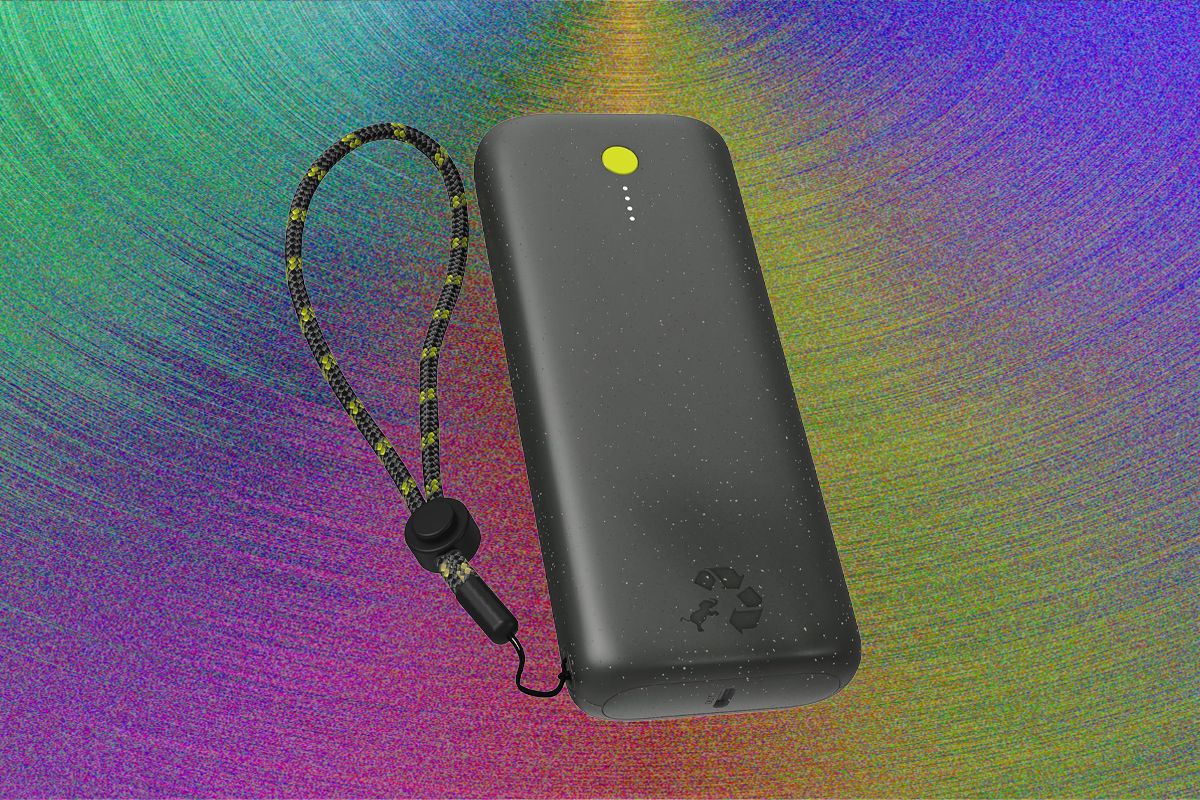
For more traditional portable needs, the Nimble Champ (Series 2) offers a svelte, environmentally conscious option. Utilizing bioplastics and recycled materials, this power bank is small enough to fit in a pocket while delivering 20 watts of power to two devices simultaneously. This represents a middle ground for users who do not require high-speed output but need more than an emergency top-off.
Desktop Optimization: Charging Stations and Stands
A well-organized workspace benefits from stationary charging solutions that manage multiple peripherals at once. The Belkin 3-in-1 Qi2 Charging Stand is designed for the complete Apple ecosystem, capable of simultaneously powering an iPhone, an Apple Watch, and AirPods. This setup is particularly effective for users who utilize StandBy mode, allowing the iPhone to function as a desktop utility while it replenishes.
For those with less cluttered requirements, the Mophie 2-in-1 Wireless Charging Stand offers a more streamlined approach. By focusing on just two devices—typically an iPhone and a set of AirPods—it provides a sturdy, adjustable desktop companion that avoids the overkill of a full three-device station.
Technical Benchmarks for iPhone Charging
To ensure you are selecting the best iPhone charger for your specific use case, keep these technical benchmarks in mind:
- iPhone 16 and 17 Series: Support up to 40W wired and 25W MagSafe charging.
- iPhone 15 and earlier: Generally capped at 20W wired and 15W MagSafe.
- Optimal Battery Health: Lower wattage (15W) is often preferable for overnight charging to minimize heat.
- Emergency Use: High-wattage (40W+) chargers are best for rapid bursts when battery levels are critical.
The evolution of iPhone charging suggests a move toward higher power ceilings and more standardized wireless protocols like Qi2. Selecting gear based on specific use cases—rather than chasing maximum wattage alone—remains the most effective strategy for long-term device stability.