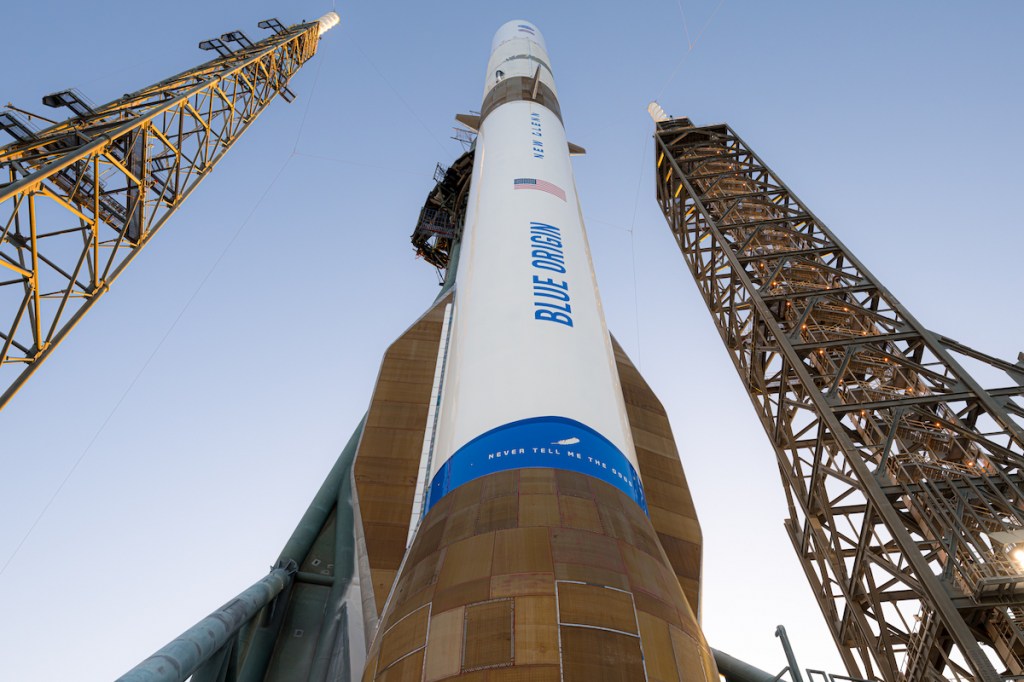
Blue Origin's New Glenn rocket achieved a rare feat on its third mission by landing a re-used booster with pinpoint precision, yet the payload it delivered was effectively lost. The paradox is stark: the launch vehicle performed flawlessly, completing a complex re-flight and drone ship recovery that would have satisfied most commercial customers, while the upper stage failed its fundamental purpose of placing a communications satellite into a sustainable orbit. This discrepancy between booster performance and payload delivery exposes a critical vulnerability in the race to dominate heavy-lift capabilities.
Off-Nominal Orbit Signals Upper Stage Failure
The third New Glenn launch initiated with promise, lifting off from Cape Canaveral with a booster that had flown previously. This marked the program's inaugural re-flight, a milestone demonstrating reusability. Approximately ten minutes after liftoff, the core stage returned to a drone ship, a maneuver Jeff Bezos highlighted on social media as a sign of confidence. Even rival Elon Musk offered congratulations on the landing, though the payload loss complicates the celebratory narrative.
Roughly two hours later, the situation deteriorated. Blue Origin confirmed the upper stage placed the AST SpaceMobile BlueBird 7 satellite into an off-nominal orbit. The altitude proved insufficient to sustain operations, necessitating a controlled de-orbit where the asset will burn up in Earth's atmosphere. Despite the loss, the satellite separated successfully and powered on, but the orbit was simply too low to matter.
AST SpaceMobile acknowledged the lower-than-planned altitude in a statement, noting that insurance covers the financial loss and that a replacement BlueBird is nearing completion. The company retains confidence in its constellation timeline, expecting to launch 45 additional satellites by the end of 2026 through contracts with multiple providers. This redundancy suggests the immediate commercial impact is manageable for the customer, even as the launch provider faces scrutiny.
Implications for the Artemis Program and NASA Relations
The failure carries weight beyond Blue Origin's immediate commercial portfolio. The company has staked its reputation on becoming a primary launch provider for NASA's Artemis missions. Both the space agency and the Trump administration have pressured Blue Origin alongside SpaceX to deploy lunar landers before the end of the current presidential term. CEO Dave Limp has publicly vowed the company will "move heaven and Earth" to accelerate lunar return.
An off-nominal payload delivery complicates this high-stakes narrative, even if the rocket mechanics functioned correctly. The distinction between the booster's success and the upper stage's failure isolates the problem to the second stage or the insertion burn. New Glenn utilized a re-used booster for this flight, marking a significant step in the rocket's lifecycle. The successful recovery of that booster validates the reusability claims but does not absolve the upper stage of its primary directive. This separation of concerns highlights the complexity of heavy-lift vehicles; even with a proven first stage, the upper stage must execute a precise burn to achieve the intended trajectory. A deviation here renders the booster's performance irrelevant to the customer's needs.
Blue Origin had considered launching its own lunar lander on this third mission but opted for the commercial payload instead. This decision highlights the pressure to monetize early and the risks associated with flying unproven hardware on high-profile government contracts. The incident raises questions about the company's risk management strategy as it transitions from development to operational execution.
The Broader Context of Heavy-Lift Competition
The New Glenn program operates in a crowded field where reliability is the ultimate currency. Blue Origin aims to challenge the status quo, yet early setbacks underscore the unforgiving nature of orbital mechanics. The industry is watching closely to see how the company manages the fallout and whether this incident affects its standing with government partners. Key takeaways from the incident include:
- The first major operational failure for New Glenn, contrasting with its flawless first flight in January 2025.
- The successful re-flight and recovery of the booster, proving reusability even as the payload mission failed.
- AST SpaceMobile's insurance coverage mitigates immediate financial damage, though it does not repair the launch provider's reputation.
- The incident occurs just as Blue Origin is preparing to test its lunar lander, raising questions about risk management in high-priority government missions.
- Blue Origin's strategy of flying commercial payloads early differs from SpaceX's approach during Starship's development, where dummy payloads were used extensively to isolate technical variables.
Blue Origin has remained largely silent since the initial announcement, declining to provide further comment despite the gravity of the event. In the aerospace industry, silence following a failure often signals a rapid internal investigation or a decision to withhold technical details until a root cause is identified. The vagueness of "off-nominal orbit" leaves analysts to speculate on the cause: a guidance error, a thrust anomaly, or a sensor failure during the critical insertion phase.
Until details emerge, the incident serves as a reminder that reusability does not guarantee payload success. New Glenn's trajectory mirrors the volatile path of previous heavy-lift programs, where the margin for error shrinks as launch cadence increases. The program must now demonstrate it can correct this deviation quickly to maintain its credibility in a market where customers are increasingly wary of operational hiccups.