The Future of the Artemis Program Is Riding on Reentry
The future of the Artemis program is riding on reentry, a critical phase that recently grounded NASA's human lunar initiative for nearly two years. Despite Orion's heat shield enduring 2,700 degrees Celsius during its uncrewed Artemis I test, the resulting erosion patterns deviated so significantly from engineering models that safety protocols demanded an immediate halt. This single discrepancy in thermal performance highlighted a stark reality: while the trajectory to and around the moon is a triumph of orbital mechanics, the survival of four astronauts depends entirely on a twenty-minute window where plasma temperatures approach 5,000 degrees Fahrenheit. The Artemis II mission, carrying the first crewed flight since Apollo, represents more than a symbolic return; it serves as the ultimate stress test for a spacecraft that has never before carried humans through such violent atmospheric entry conditions.
The Thermal Barrier That Defines Mission Success
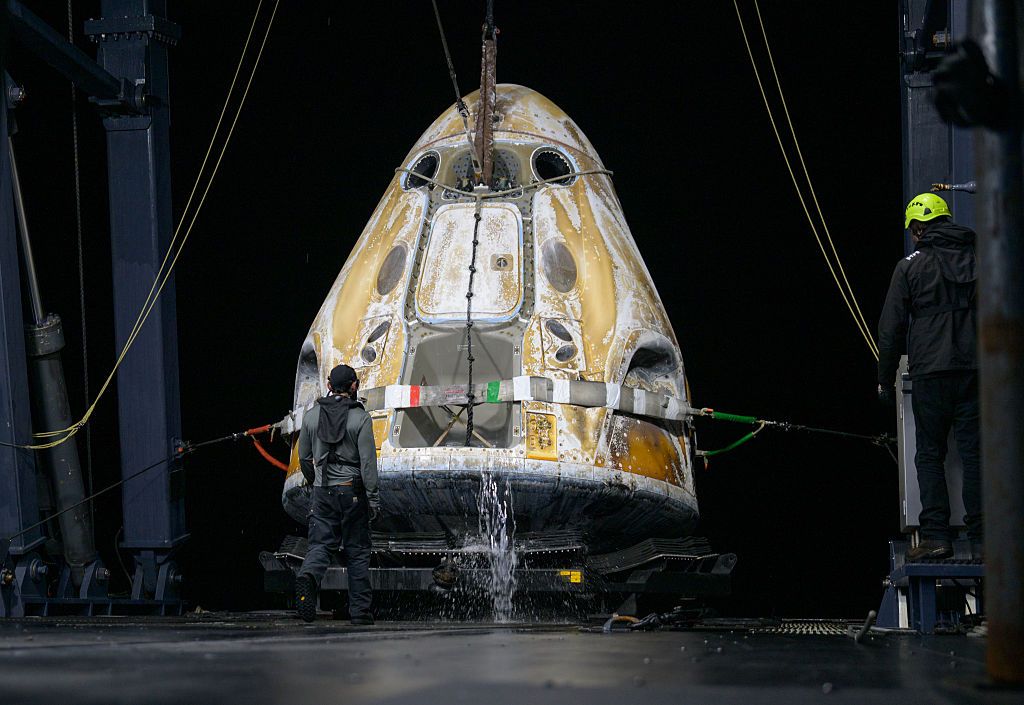
The reentry phase of the Artemis program is not merely a concluding maneuver but the most perilous chapter in the entire mission profile. While modern engineering allows for precise calculations regarding lunar transits, the return trip introduces variables that defy perfect prediction. As Orion descends from the moon at roughly 11 kilometers per second—32 times the speed of sound—the capsule generates a shockwave of plasma that effectively cuts it off from Earth communications for six minutes. During this "blackout," the crew is completely isolated, relying on an ablative heat shield made of Avcoat to prevent incineration. Unlike the Space Shuttle, which utilized reusable tiles prone to micro-fractures, or the Soyuz capsules that faced catastrophic failures in history, Orion's future relies on a material designed to burn away in a controlled manner, sacrificing itself layer by layer to carry the crew safely home.
History offers grim precedents for underestimating reentry dynamics. The loss of Columbia was not caused by the launch failure or the orbital phase, but by a foam strike that compromised the thermal protection system, leading to structural disintegration during descent. Similarly, the Soyuz 1 tragedy stemmed from parachute malfunctions during the final descent, resulting in the first fatality for the Soviet space program. These events demonstrate that a successful mission is only as strong as its weakest point of failure, and for Artemis, that point is undeniably atmospheric entry. The margin for error is nonexistent; the Avcoat shield must perform with absolute uniformity to protect the crew from the intense friction heat generated at hypersonic speeds.
Engineering Adjustments Following Artemis I Erosion
The initial success of the uncrewed Artemis I mission was immediately overshadowed by post-flight data analysis revealing unexpected thermal erosion patterns on Orion's heat shield. Engineers had modeled a specific burn rate for Avcoat, yet the actual flight showed uneven ablation that exceeded safety margins and suggested potential risks for crewed missions. This discovery forced NASA to implement a rigorous series of corrective actions before any humans could board the spacecraft again. The program did not simply tweak the software; it underwent a fundamental redesign of the thermal protection system and recalibrated its simulation models based on real-world data rather than theoretical assumptions.
The response to these findings was comprehensive and deliberate, ensuring that no assumption went unchallenged:
- Material Redesign: Engineers analyzed every batch of Avcoat used in Artemis I, identifying inconsistencies in the manufacturing process and implementing tighter quality controls for subsequent launches.
- Model Recalibration: Computational fluid dynamics models were updated to reflect the actual erosion behavior observed during flight, reducing the gap between predicted and real-world performance.
- Testing Protocols: New ground-based testing methods were introduced to simulate high-speed reentry conditions more accurately, ensuring future shields can withstand the specific plasma loads of a lunar return.
These adjustments were not merely procedural; they represented a cultural shift within the agency regarding how safety is quantified for deep space exploration. The delay of Artemis II was not a sign of failure but a testament to an organization prioritizing crew survival over schedule adherence. By addressing the thermal anomalies before launch, NASA acknowledged that the Avcoat shield's performance is the single most critical variable in the mission's success equation.
Strategic Pivots and the Path to Lunar Surface
The revelation regarding reentry risks has fundamentally altered the strategic timeline for the Artemis program. Recognizing that the complexity of returning from the moon demands absolute certainty, NASA has shifted the landing objectives for subsequent missions to ensure a more robust validation process. The original plan envisioned an early lunar landing, but the lessons learned from reentry dynamics have pushed the first surface touchdown to Artemis IV, scheduled no earlier than 2030. This timeline adjustment allows for Artemis III to serve as a critical intermediate step focused on system validation rather than immediate exploration.
This recalibration ensures that when humans finally set foot on the lunar surface, the return journey is not left to chance. The program now treats reentry as a distinct phase requiring its own rigorous testing regime, separate from launch and orbital maneuvers. By decoupling the landing goal from the initial crewed flight, NASA creates a buffer zone where technical uncertainties can be resolved without jeopardizing human lives. This approach mirrors the iterative development seen in commercial aviation, where safety protocols evolve through incremental testing rather than relying solely on theoretical success rates.
The future of American lunar exploration hinges on this phase of the mission. While public attention often focuses on the launch or the moon landing, the true measure of Artemis's longevity will be determined by whether Orion can survive its final descent home without compromising the crew it carries.