Artemis II Crew Returns: A Historic Splashdown and a Leap Toward Artemis III
After captivating a global audience, the crew of NASA's Artemis II mission has returned to Earth safely following a splashdown in the Pacific Ocean. Commander Reid Wiseman, pilot Victor Glover, mission specialist Christina Koch, and Canadian astronaut Jeremy Hansen became the first astronauts to travel to the Moon in more than half a century. This historic round trip not only delivered spectacular images of our home planet and the lunar surface but also sparked cultural moments ranging from nods to Ryan Gosling's Project Hail Mary to a surge in players for the space simulator Kerbal Space Program.
The successful return marks a pivotal moment for the Artemis II mission, proving humanity can once again journey beyond low Earth orbit. The team traveled 252,756 miles from home at their farthest point during this nearly 10-day odyssey. In total, Wiseman, Glover, Koch, and Hansen flew a staggering 694,481 miles, with their lunar flyby surpassing the distance record previously held by Apollo 13 astronauts in 1970.
The High-Stakes Reentry and Safe Recovery
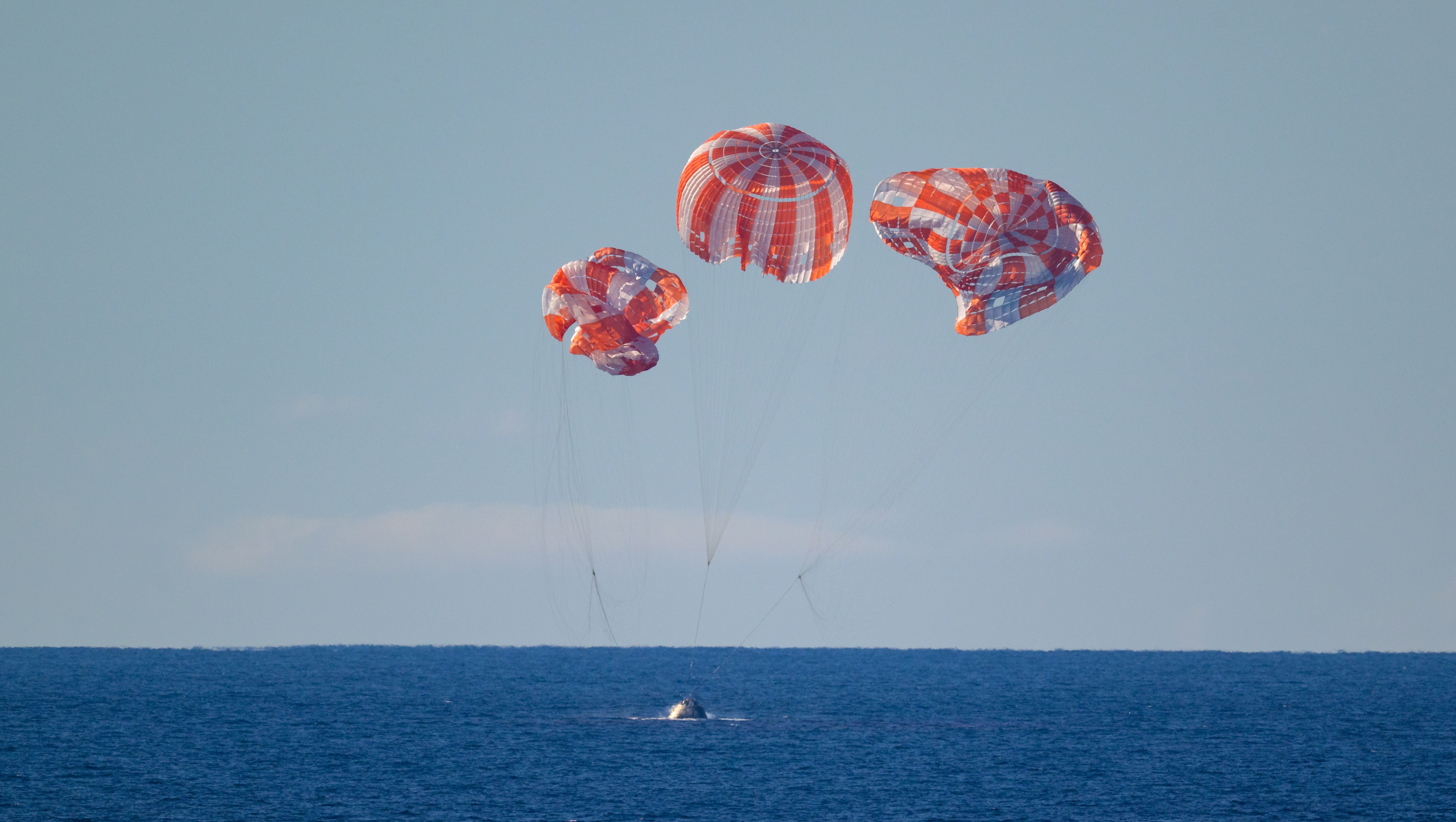
The Artemis II astronauts splashed down at 8:07 pm ET (0007 UTC on April 11), bringing their historic mission around the Moon to a close. The flawless return occurred as the crew's capsule, named Integrity, hit the upper atmosphere at speeds exceeding 38,600 km/h. During reentry, the heatshield endured temperatures half as hot as the surface of the Sun, causing the astronauts to lose contact with mission control in Houston for six minutes due to extreme plasma buildup.
Following a splashdown off the coast of San Diego at 5:07 pm PDT on Friday, the crew was extracted from the capsule and transported via helicopter to the USS John P. Murtha for medical evaluations. They were subsequently flown to NASA's Johnson Space Center in Houston to be reunited with their families on April 11. Key details from this critical phase include:
- Entry Speed: The capsule reached speeds of over 38,600 km/h during atmospheric entry.
- Heatshield Conditions: Temperatures reached half the heat of the Sun's surface.
- Communication Blackout: Contact with Houston was lost for six minutes due to thermal plasma.
- Recovery Vessel: The USS John P. Murtha served as the primary recovery ship.
Looking Ahead: Artemis III and the Permanent Moon Base
Speaking to the press, Artemis II entry flight director Rick Henfling admitted there was anxiety in the room but also immense confidence while bringing the Orion crew home. "We all breathed a sigh of relief once the side hatch opened up," he added, noting that after a brief moment with the flight controllers, they turned to wave and give a thumbs-up to the waiting families.
NASA Associate Administrator Amit Kshatriya emphasized that this success belongs to thousands of people across 14 countries who built and trusted the vehicle. "The Artemis II crew is home," he stated, highlighting that the entry, descent, and landing systems performed exactly as designed. He noted that their work protected four human lives traveling at 25,000 miles per hour, ensuring a safe return to Earth.
The broader vision extends far beyond this single mission. As NASA Administrator Jared Isaacman commented, the crew accepted significant risk in service of the knowledge gained and the future being built. "Artemis II proved the vehicle, the teams, the architecture, and the international partnership that will return humanity to the lunar surface," Kshatriya added. While 53 years ago humanity left the Moon, this time we are returning to stay, with the focus now confidently turning toward Artemis III.
The Artemis III mission, scheduled for next year, will see a new Orion crew test integrated operations with commercially built Moon landers in low Earth orbit. NASA plans to send astronauts on increasingly challenging missions to explore more of the Moon, establish an "enduring human presence" on the surface, and lay the groundwork for sending the first astronauts to Mars. With Artemis II complete, the agency is now preparing to assemble Artemis III, build a permanent base, and ensure humanity never gives up the Moon again.