Artemis II Astronauts Safely Return to Earth After Historic Flight Around the Moon
The Artemis II astronauts have safely returned to Earth, marking a pivotal moment in space exploration history. When the Orion spacecraft named Integrity pierced the Pacific Ocean off San Diego on Friday evening, it signaled more than just the end of a ten-day odyssey; it validated a new era where humans can survive deep space travel. The crew traversed over 695,000 miles, venturing farther from Earth than any previous generation, yet their return was defined by a quiet triumph rather than a chaotic spectacle. This successful Artemis II mission confirms that humanity is ready to take the next steps toward becoming a multi-planetary species.
The Crucible of Reentry and Human Resilience
The final moments of the flight tested the limits of both engineering and human physiology like never before. As Orion re-entered the atmosphere at 24,000 miles per hour, the capsule endured a communication blackout while its heat shield faced temperatures soaring to roughly 3,000 degrees Fahrenheit. This fiery descent was not merely a procedural hurdle but a critical proof of concept for future missions that will rely on this specific reentry profile to reach Mars and beyond. The crew's survival through such extreme conditions validates the Space Launch System rocket as the most powerful vehicle ever built to carry humans, proving it can deliver payloads safely from lunar distances back to Earth.
The splashdown occurred shortly after 5 pm Pacific Time, with the capsule deploying drogue parachutes at 22,000 feet before settling into a gentle 20-mile-per-hour descent for its final impact. This controlled termination of flight is essential for the Artemis program's long-term viability, ensuring that the return leg is as reliable as the launch. The successful recovery of the crew—Commander Reid Wiseman, Pilot Victor Glover, Mission Specialist Christina Koch, and Canadian astronaut Jeremy Hansen—signals a shift from theoretical planning to operational reality in deep space exploration.
Observations Beyond the Visual Spectrum
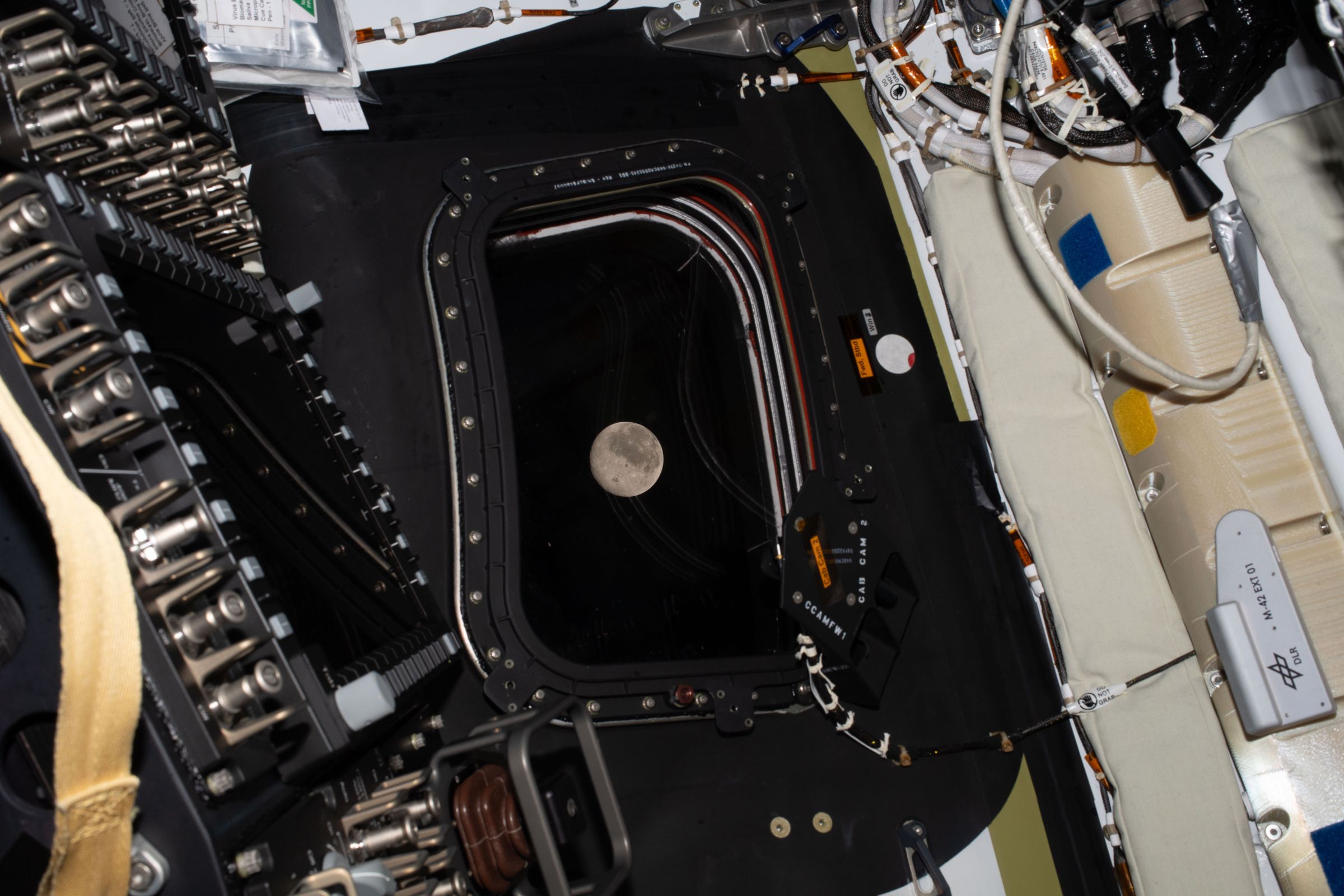
While the technical success of reentry dominated headlines, the Artemis II astronauts gathered scientific data that offers a more complex narrative about our celestial neighbor. The crew were the first humans to view the entire disk of the moon's far side and witnessed a solar eclipse from the lunar vicinity that illuminated the darkened earth with a brilliant halo. These observations revealed surface details invisible from Earth, including brownish patches and greenish tints on the Aristarchus Plateau that suggest ancient volcanic activity.
During their flyby, which brought them to within 4,000 miles of the lunar south pole, the crew identified several critical geological features that will inform future landing site selections:
- The south pole landscape appeared more jagged and steep than orbital photography suggested, presenting significant challenges for traversing terrain.
- Freshly excavated crater centers glowed with an intense brightness, described by Koch as resembling a "lampshade with tiny pinprick holes," indicating the presence of unique minerals.
- The crew observed multiple impact flashes caused by meteorites striking the lunar surface, providing real-time data on the frequency and force of extraterrestrial debris bombardment.
This visual reconnaissance was facilitated by a new laser communications system capable of transmitting up to 260 megabits per second, allowing for near-instantaneous data sharing with ground scientists. The ability to identify these features in real-time means that future orbiters can be directed immediately to specific coordinates for more detailed analysis, accelerating the pace of lunar discovery.
Legacy and the Path Forward
The mission also carried a deeply personal weight, culminating in an emotional moment when the crew proposed names for two previously unnamed craters near their trajectory. They designated one as Integrity, honoring the spacecraft that carried them, and the other as Carroll in memory of Wiseman's late wife. This act of naming underscores how human connection remains central even in the most sterile environments, a theme reinforced by Glover's observation that "humans probably have not evolved to see what we are seeing."
Beyond the scientific and emotional achievements, this mission serves as a litmus test for the broader Artemis program goals. The crew conducted essential tests on life support systems, including a notable challenge with wastewater venting from the spacecraft's toilet that engineers must now address. Despite such minor technical hiccups, the mission demonstrated that humans can operate effectively in deep space for over a week, a prerequisite for the planned landing at the lunar south pole by 2028.
As the crew prepares to share their perspective on Earth as a "beautiful planet and a very special place," the success of Artemis II suggests that humanity is ready to take the next steps toward becoming a multi-planetary species. The record distance shattered during this flight will likely stand only until NASA or other agencies push further, but the foundation laid here ensures that those future journeys can begin from a position of proven capability rather than untested hope.