When and How to Watch the Artemis II Mission’s Return to Earth
The grind is finally over for the Artemis II mission, and after ten days of high-stakes gameplay in the void, the Orion capsule is screaming back toward Earth like a meteor on a mission. As GLI7CH, I've spent years analyzing game mechanics, from the physics engines of Starfield to orbital trajectories in Kerbal Space Program, but nothing compares to watching real-life spaceflight where the stakes are literally life or death. This isn't just a video; it's the ultimate boss fight for NASA, and if they pull this off, we unlock the entire "Return to Moon" DLC that has been locked behind a paywall of engineering hurdles for decades.
Knowing when and how to watch the Artemis II mission’s return to Earth is crucial for fans who don't want to miss the final boss battle of this historic chapter. The reentry phase is where the rubber meets the road, or rather, where the heat shield meets the plasma. According to the schedule, the splashdown event kicks off on Friday, April 10, at 5:07 PM PDT. If you're tuning in from the East Coast, that's a kickoff time of 8:08 PM ET, and for our friends in Chicago or Denver, it's a late-night watch party starting at 7:07 PM and 6:07 PM respectively. This is the moment where the game transitions from exploration to survival.
The Brutal Physics of Reentry and Survival
The capsule will hit our atmosphere near southeast Hawaii at a blistering 38,400 kmh—roughly Mach 32. For us gamers used to fast travel systems that teleport us instantly across maps, this is a slow-motion cutscene that defines tension. At the peak of reentry, the outside of Orion will scorch at 2,760 degrees Celsius. That's hotter than lava, and we're talking about four humans sitting inside a tin can made of heat-resistant composites.
The physics simulation here is brutal. After spending a week in microgravity, the crew is about to experience up to 3.9 g's of force. Imagine playing an intense FPS where suddenly gravity quadruples, making every movement heavy and exhausting. That is what they will feel as the capsule slams into the atmosphere. It's not just a smooth landing; it's a violent deceleration that tests human physiology and the structural integrity of the ship simultaneously.
Key moments during this high-stakes descent include:
- Extreme Deceleration: The crew endures forces up to 3.9 g, simulating a gravity quadrupling effect on their bodies.
- Plasma Blackout: For six minutes during descent, the plasma blanket surrounding the capsule will cut all radio signals.
- Critical Window: During this blackout, nobody knows if the shield held or if the ship took critical damage until the parachutes deploy and the signal returns.
This is the ultimate "loading screen" moment in gaming terms where you lose connection with your team just when you need it most. The suspense is palpable because for those six minutes, nobody knows if the mission succeeds before the final landing sequence begins.
Where to Stream the Historic Splashdown Live
Watching this requires you to tune into NASA's official channels, which are streaming live on NASA+, as well as major platforms like Amazon Prime, Apple TV, Netflix, and HBO Max. Yes, even though it's a government mission, you can catch the broadcast on your usual streaming services, making it accessible for everyone who wants to witness history in real-time. The visual spectacle of Orion re-entering the atmosphere is something that no amount of ray-tracing or high-fidelity graphics could fully replicate. It's raw, chaotic, and undeniably beautiful.
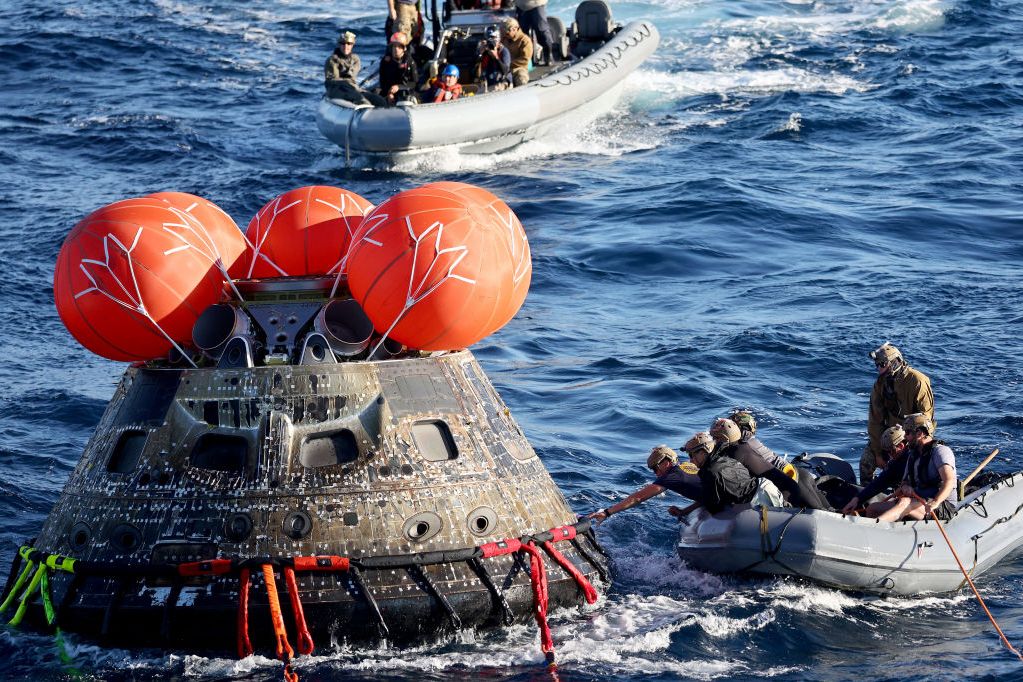
Once the parachute system deploys for a controlled descent, the game shifts from survival mode to recovery operations. The splashdown will occur off the coast of California, where the crew will board a ship for an initial medical evaluation before heading back to Houston for debriefs. From my perspective as someone who has spent countless hours analyzing game lore and mechanics, this mission is the equivalent of completing the hardest difficulty setting on a title that everyone thought was impossible.
The Artemis II mission wasn't about landing on the moon; it was about proving we could leave Earth, circle our satellite, and come back safely with a crew intact. This reentry is the final boss battle for the current iteration of the program. If they fail here, the entire "Return to Moon" campaign gets canceled like a buggy update that forces a console restart. But if they succeed, we unlock the next chapter: the actual lunar landing scheduled for Artemis IV.
The trajectory of this mission is a feat of engineering that rivals the most complex levels in any strategy game. The astronauts traveled about 10,300 kilometers beyond the moon, breaking records for distance from Earth. Now, as they face the fire re-entry and the g-forces, we are witnessing the culmination of decades of development. The future of deep space exploration depends on this specific sequence of events playing out exactly to script. We have to trust in the systems, the training, and the sheer grit of these astronauts who are about to endure one of the most intense physical experiences a human can survive outside of combat. So, set your alarms, grab your popcorn (or maybe some high-energy snacks for this marathon), and prepare to watch the most critical landing sequence in modern history. The game is on, and we are all watching from the sidelines as humanity takes its next giant leap forward.