Bremont Is Sending a Watch to the Moon’s Surface
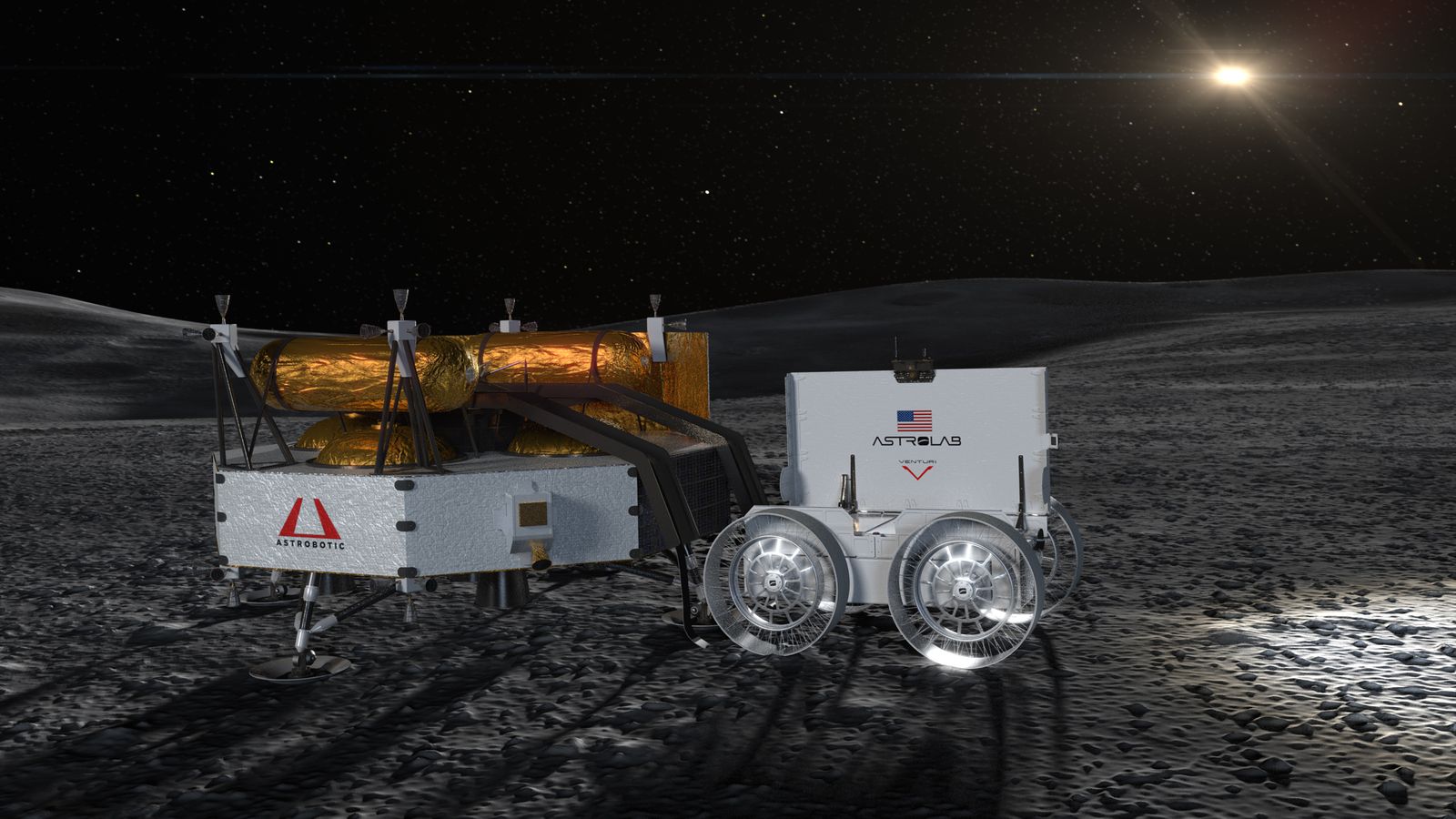
The British watchmaker Bremont is executing a one-way journey to the lunar surface, securing its place as the first brand to have a timepiece roam the moon's crust. This ambitious deployment sees the Supernova Chronograph attached to Astrolab’s FLIP rover, transforming a luxury mechanical instrument into an unscheduled passenger aboard Griffin Mission One later this year. While Omega and Breitling prepare for human crews with their respective Artemis II selections, Bremont has bypassed astronaut wrists entirely, opting instead for a robotic outpost that will endure the harsh lunar night in a bid to prove the durability of British horology against the vacuum of space. This unique mission marks a bold new chapter where Bremont is sending a watch to the moon’s surface to test the limits of mechanical engineering.
The Supernova Enters the Void
The centerpiece of this extraterrestrial experiment is Bremont’s Supernova Chronograph, an entirely new reference from the brand’s futuristic space-inspired collection. Measuring 41mm in a 904L stainless steel case, the watch features an integrated bracelet and a three-dimensional perforated dial that mimics the geometry of spacecraft solar sails. When illuminated by low light or the harsh glare of the sun, the blue-emission Super-LumiNova beneath the grid glows with a luminescence CEO Davide Cerrato describes as comparable to "the energy inside spaceships."
Inside the case lies an automatic chronograph movement supplied by Sellita, boasting a 62-hour power reserve and chronometer certification. The timepiece is housed within a multifaceted decahedral black ceramic bezel and a reworking of Bremont’s signature Trip-Tick construction designed for rugged reliability. However, the mission profile presents an immediate paradox: the watch head, weighing only 107 grams, will be glued vertically into the rover's chassis between its front wheels, leaving the mechanical movement to rely on the rover's motion for winding rather than a wearer’s arm.
Cerrato admits the watch will likely stop running during the two-week lunar night, as the lack of human interaction means the power reserve will eventually deplete. The hope is that when the FLIP rover resumes its journey across the regolith, the acceleration, pitches, and tilts will jolt the rotor into action once more. While the gravitational pull on the moon is a sixth of Earth's, Bremont believes the erratic movement of the rover provides sufficient torque to keep the mechanism ticking intermittently throughout the mission.
Surviving the Lunar Extremes
The FLIP rover itself represents a technological pivot for Astrolab, developed in just over a year after NASA’s VIPER project was paused. Weighing 1,058 pounds, this technology demonstrator carries four HD cameras and a deployable solar array, but its most critical feature is the set of hyper-deformable wheels crafted from silicone, composite, and stainless steel. These specialized tires are designed to expand upon deployment, creating a soft contact surface that prevents the vehicle from sinking into the unconsolidated lunar dust.
Standard rubber would turn glass-like at the moon's nighttime temperatures of -200 degrees Celsius (-328 Fahrenheit), causing catastrophic failure. Astrolab’s solution ensures the rover can navigate the terrain while surviving the freezing darkness. Before leaving Earth, both the watch and the rover underwent rigorous Spacecraft Protoflight Qualification testing in Hawthorne, California, simulating the brutal conditions of launch and landing.
The testing regimen included:
- Thermal cycling: Subjecting hardware to extreme temperature fluctuations between extremes to drive off volatiles.
- Acoustic testing: Exposing components to high-decibel sound levels mimicking the roar of a launch vehicle.
- Random vibration: Using shaker tables to emulate the specific vibration profile of the launch environment.
- Shock and separation events: Physically striking components with hammers to simulate stage separations during ascent.
Cerrato remains unfazed by these hurdles, citing Bremont’s existing track record of subjecting watches to aircraft ejector seat testing as preparation for this level of scrutiny. The company asserts that the environmental factors—temperature, aging, vibration, and radiation exposure—are far more extreme in their tests than what will be experienced on the lunar surface.
A New Era of Lunar Timekeeping
Bremont’s mission arrives at a pivotal moment where lunar timekeeping is becoming a formal discipline. By the end of 2026, NASA is tasked with establishing Coordinated Lunar Time, an atomic-clock-based standard to underpin navigation and communication beyond Earth. While the mechanical precision of a Bremont watch fixed to a rover chassis holds little practical value for scientific data compared to atomic clocks, there is a distinct symbolic symmetry in this timing.
The industry is currently witnessing a surge in lunar-focused timepieces, with IWC Schaffhausen unveiling the Pilot’s Venturer Vertical Drive engineered specifically for space suits, and California startup Barrelhand developing the EVA-rated Monolith with a ceramic dial. Yet Bremont stands apart by placing its mechanical movement on the surface itself, accepting the risk of failure as part of a larger experiment in resilience.
This deployment is not merely a marketing stunt but a genuine probe into how human craftsmanship withstands an alien environment. As humanity prepares for sustained lunar presence via the Artemis program and commercial stations like Haven-1, the ticking of a mechanical watch on the moon will serve as a tangible link to Earth’s history of exploration. The moment humanity formally agrees on how to tell time on the moon coincides with the first timekeeper sitting upon it, marking a quiet but significant milestone in the return to the lunar surface.