From CLI to Physical Dashboard: Meet Clawdmeter
The landscape of AI token consumption tracking has shifted dramatically. It has moved beyond sterile CLI queries and sprawling spreadsheet logs into the realm of tangible, interactive experiences. A new open-source project, Clawdmeter, exemplifies this evolution by transforming Claude Code usage metrics into a compact desktop dashboard that seamlessly blends utility with whimsical design.
For developers deeply integrated into AI workflows, monitoring token usage is no longer just a technical necessity—it’s a cultural shift. Clawdmeter addresses this by providing a physical artifact that bridges digital metrics with tangible feedback, making consumption patterns both transparent and engaging.
Hardware-Driven Analytics and Design
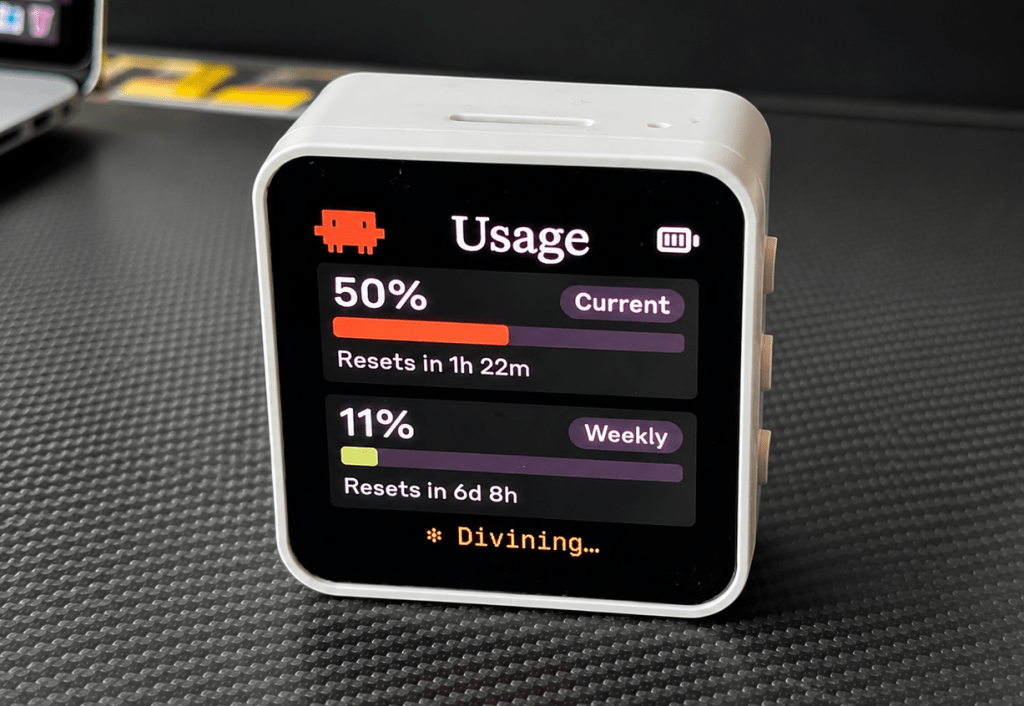
Clawdmeter leverages low-power embedded systems to visualize token usage through animated sprites and real-time charts. Its design philosophy prioritizes immediacy, displaying daily utilization rates on a 2.16-inch AMOLED screen without requiring terminal access or third-party dashboards.
The device is built on a robust core of accessible components:
- Core Component: An ESP32-S3 microcontroller paired with Bluetooth connectivity for seamless data transfer.
- Visual Feedback: Pixel-art animations intensify proportionally to usage spikes, providing an intuitive, at-a-glance health check of your AI consumption.
- Interaction Model: Three tactile buttons enable mode switching via Bluetooth peripheral pairing, keeping the interface clean and responsive.
By anchoring AI usage awareness in physical hardware, Clawdmeter ensures that developers remain connected to their resource consumption without interrupting their flow with heavy software interfaces.
Open Source Momentum and Community
Since its debut on GitHub on May 10, Clawdmeter has quickly gained traction, attracting over 800 stars and 50 forks. This rapid adoption signals a strong community resonance with its blend of practicality and retro charm.
Developers are particularly appreciative of the project's minimal setup requirements alongside the extensive opportunities for customization. The open-source nature allows users to:
- Modify themes to match their desktop aesthetic.
- Add new animations to reflect different usage patterns.
- Integrate alternative usage-tracking APIs for broader compatibility.
This flexibility is crucial as the tool adapts to the evolving needs of the developer community. It taps into broader tokenmaxxing trends, where engineers consciously maximize AI token throughput as a proxy for productivity. As language models become deeply embedded in daily workflows, there is a growing demand for tools that make these consumption patterns visible and manageable.
Technical Implementation and Future Outlook
The technical backbone of Clawdmeter relies on efficient data handling to ensure accuracy without sacrificing performance. Haraldsson, the project’s creator, utilizes Claude's OAuth token to query API responses directly. This method ensures accurate usage readings while avoiding excessive latency.
Key technical features include:
- Incremental Updates: The dashboard updates in small increments, avoiding resource-intensive rendering while maintaining responsiveness during intensive computational tasks.
- Streamlined Navigation: The middle button cycles toggle between detailed session analytics and connection controls, keeping the focus sharp amid frequent adjustments.
As token limits become increasingly competitive resources, solutions like Clawdmeter underscore the value of intuitive interfaces that empower users to monitor and adjust consumption habits effortlessly. Its compact form factor demonstrates that desktop gadgets need not sacrifice personality for functionality.
Looking ahead, the project’s continued development will likely incorporate deeper analytics, cross-platform compatibility, and possibly hardware-agnostic variants. This expansion will help grow its accessibility across diverse environments.
The Intersection of Craft and Code
Clawdmeter stands as both a practical utility and a cultural artifact. It reflects how developers are reimagining everyday interactions with powerful models through small-scale, well-designed projects. As the industry matures, the intersection of hardware craftsmanship and AI telemetry marks a distinct phase in productivity tooling—one where observability is not just monitored, but felt.