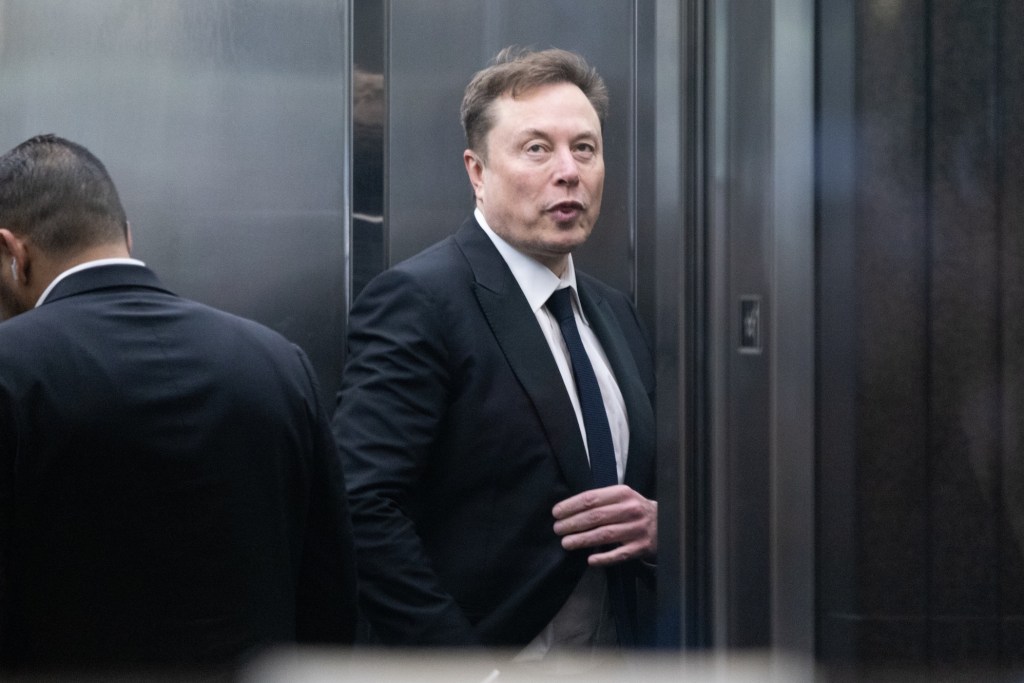
The legal battle between Elon Musk and OpenAI has escalated significantly beyond allegations of mission drift. New details have emerged following recent testimony where Elon Musk testifies that xAI trained Grok on OpenAI models. During proceedings in a California federal court, Musk confirmed that xAI utilized distillation techniques—the process of using high-performing models to train newer ones—to refine its Grok chatbot.
The Impact of the News: Elon Musk Testifies that xAI Trained Grok on OpenAI Models
The core controversy involves how frontier models are optimized and trained. While building a foundational model from scratch requires astronomical investments in compute infrastructure, distillation offers a controversial shortcut. By systematically querying high-performing APIs like OpenAI’s GPT series, developers can use the outputs to "teach" a secondary model the nuances of logic, reasoning, and linguistic patterns.
When asked if xAI specifically targeted OpenAI models for this purpose, Musk responded that it was "partly" true, asserting that such techniques are common practice. This admission, where Elon Musk testifies that xAI trained Grok on OpenAI models, places xAI at the center of an industry debate regarding intellectual property. As Elon Musk testifies that xAI trained Grok on models, many are questioning the ethics of using proprietary outputs to bypass traditional development costs.
The Economics of AI Mimicry
The implications for the economics of AI development are profound:
- Cost Reduction: Distillation allows smaller labs to create capable models without multi-billion dollar training price tags.
- Performance Parity: It enables open-weight models to approach the reasoning capabilities of closed, proprietary systems.
- Competitive Pressure: Smaller players can rapidly close the gap with industry leaders by leveraging existing breakthroughs.
An Industry-Wide Arms Race
The practice of distillation is a central focus for the field's most powerful players. Companies like OpenAI, Anthropic, and Google have reportedly formed a united front through the Frontier Model Forum. Their primary objective is to identify and mitigate "suspicious mass queries" that suggest coordinated attempts at distillation, particularly from foreign competitors.
There is a deep irony in this technical struggle. While frontier labs are currently embroiled in litigation over the use of copyrighted web data, they now find themselves on the defensive against competitors using their own outputs as training material. This creates a recursive loop where the intelligence produced by these models becomes the raw material for the next generation of rivals.
Musk's testimony also provided a rare glimpse into his personal assessment of the current landscape. Despite his aggressive stance toward OpenAI, he did not position xAI at the top of the hierarchy. Instead, he ranked the world's leading providers as follows:
- Anthropic
- OpenAI
- Chinese open-source models
The Erosion of Proprietary Advantage
The admission that distillation is a standard industry tool suggests that the traditional "moat" built on massive datasets and compute may be more fragile than previously thought. If software-based mimicry can effectively replicate the reasoning capabilities of a trillion-parameter model, the competitive advantage shifts from data ownership to architectural efficiency.
As the industry moves forward, the focus will likely shift from preventing access to data to policing the Terms of Service governing API usage. The legal precedent set by these ongoing trials will determine whether the next era of AI is defined by isolated silos of intelligence or a more fluid, contentious ecosystem of continuous model refinement.