What if the next major shift in digital product development comes not from another visual canvas or code editor, but from a tool that bridges design and production seamlessly? While AI-powered platforms dominate current headlines, Dessn has emerged as a distinctive voice, challenging conventional assumptions about how teams turn concepts into operational systems.
Founded by Gabriella Hachem and Nim Cheema, the startup has successfully secured $6 million in seed funding to build a bridge that lets designers operate directly within production environments. This eliminates the traditional overhead tied to local setup or complex infrastructure.
The Production-Centric Design Philosophy
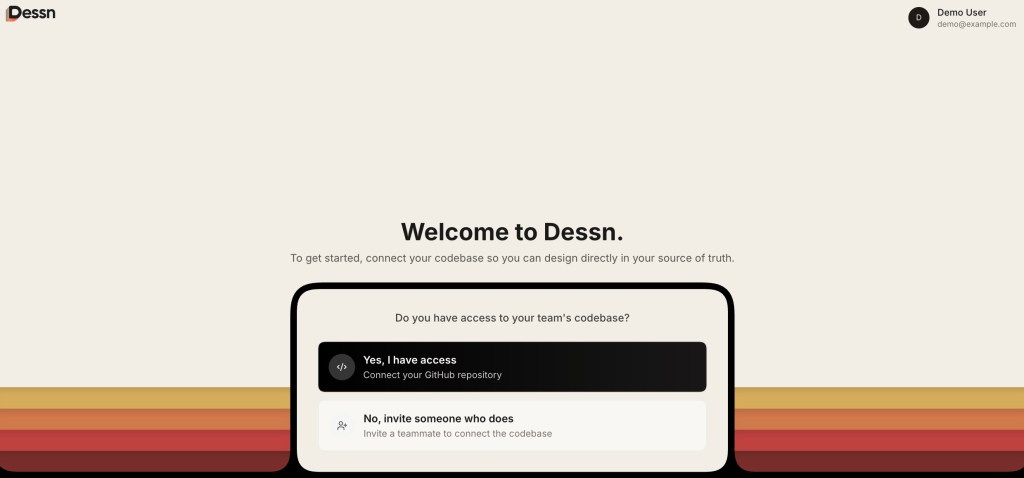
Traditional design tools prioritize rapid iteration in abstracted spaces, often treating code as a final output rather than an ongoing asset. Dessn flips this model by treating the codebase itself as the canvas. This allows teams to prototype, test, and refine features inside live environments that mirror actual deployment conditions.
By using this production-focused design tool, companies can achieve several key advantages:
- Reduced Friction: Minimizes the gap between design intent and operational reality.
- Faster Feedback: Enables quicker iteration cycles without sacrificing quality.
- Seamless Integration: Works with existing backends or microservices to avoid costly migrations.
- High Fidelity: Maintains consistency between a prototype and its production counterpart.
Early Adopters and Market Impact
The practical impact of the tool is already being felt by high-stakes organizations. Current users include Color (health technology), Wispr (voice AI), and Mercury (fintech)—sectors where speed, reliability, and compliance are non-negotiable.
Unlike design platforms such as Visual Electric, Weavy by Figma, Flora, or Krea—which often focus on AI-driven mockups or low-fidelity drafts—Dessn operates directly within the production stack. This makes it uniquely suited for teams that must balance creative freedom with strict operational discipline. Notably, the company intentionally avoids deep integration with Figma to preserve flexibility and reduce vendor lock-in.
AI Prompting Meets Production Realities
While Dessn allows users to prompt for new layouts or features, it emphasizes execution over speculation. The platform prioritizes relevance and token efficiency, offering a secure environment for sensitive data:
- Data Privacy: Users can opt out of public model training to protect proprietary information.
- Workflow Continuity: Future roadmaps include integrations with Slack and meeting note-takers like Granola.
- Direct Input: Real-time discussions from meetings can eventually feed directly into design prompts.
Business Model and Future Outlook
The $6 million funding round was led by Connect Ventures, alongside Betaworks and N49P. This capital injection signals strong industry confidence in a production-centric approach that minimizes switching costs.
Dessn will utilize a freemium model to scale its user base:
- Free Tier: Includes one repository for testing and up to five weekly prompts per project.
- Paid Tiers: Priced at $39 per user monthly, unlocking higher prompt limits and custom public links.
- Enterprise Security: Paid options allow teams to opt out of model training entirely.
As adoption grows, Dessn aims to refine its AI prompting quality while maintaining rigorous data governance. By helping organizations treat code as a living artifact rather than a static deliverable, this production-focused design tool is positioned to redefine how designers and engineers collaborate in high-pressure environments.