The era of disposable consumer electronics is facing a direct challenge from hardware that prioritizes longevity over planned obsolescence. At a recent event in San Francisco, Framework unveiled the Framework Laptop 13 Pro, a machine designed to disrupt the industry's trend toward unrepairable, closed-loop systems. This new iteration moves away from purely AMD-based configurations to embrace Intel Core Ultra Series 3 processors, aiming for a balance of high performance and extreme efficiency. CEO Nirav Patel framed the launch as a resistance against an industry that seeks to strip users of physical ownership in favor of AI-driven rental models.
Premium Hardware Upgrades in the Framework Laptop 13 Pro
The 13 Pro introduces significant hardware refinements specifically intended for power users, developers, and engineers. A new 3K resolution (2880 x 1920) display provides a crisp interface, now featuring touchscreen capabilities and an anti-glare matte polarizer for outdoor visibility. With a brightness peak of 700 nits, the panel is optimized for productivity in varying lighting conditions, much like high-end tablets.
Beyond the screen, the implementation of a haptic touchpad and Dolby Atmos speakers signals a push toward premium build quality that rivals more established competitors. These upgrades ensure the Framework Laptop 13 Pro can handle professional workloads without sacrificing the user experience.
Efficiency, Portability, and Battery Endurance
Efficiency remains the cornerstone of this new hardware generation. The shift to Intel's latest architecture, combined with a larger battery capacity, allows for much-improved endurance. Framework claims the device can deliver over 20 hours of battery life while streaming 4K content, providing nearly 12 additional hours of use compared to the previous generation.
The chassis itself remains remarkably portable for mobile professionals:
- Thickness: Just under 0.62 inches.
- Weight: Approximately three pounds.
- Display: 3K resolution with a 700-nit peak brightness.
- Audio: Integrated Dolby Atmos speakers.
Modular Design and Cross-Generation Compatibility
Central to the Framework identity is the concept of modularity and user-driven customization. The 13 Pro maintains its signature expansion system, allowing users to swap Thunderbolt 4 modules to customize their port selection with HDMI, USB-C, or other necessary interfaces. This prevents the "port anxiety" common in ultra-thin laptops, as the user decides which connections are essential for their specific workflow.
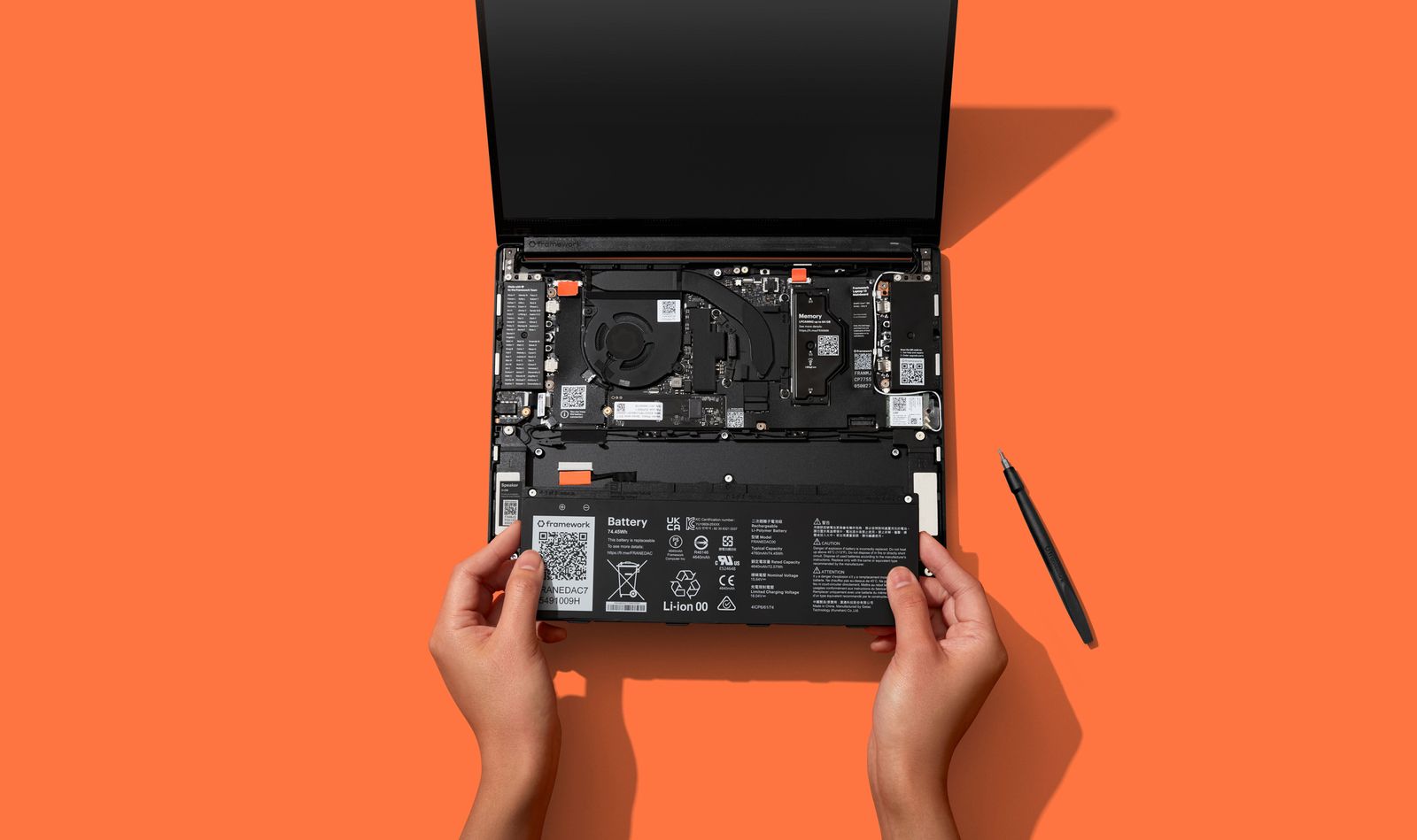
Crucially, the company has engineered these components for cross-generation compatibility. This ensures that existing owners can integrate new mainboards, displays, or batteries into their current chassis, effectively extending the hardware lifecycle and mitigating electronic waste. The pricing structure reflects this commitment to accessibility through choice:
- DIY Edition: Starts at $1,199, requiring users to assemble the components themselves.
- Pre-built Units: Start at $1,499 for those seeking a ready-to-use configuration.
- Operating System Support: Fully compatible with Windows and officially Ubuntu-certified for Linux enthusiasts.
- Color Options: New finishes available, including an elegant anodized graphite.
Expanding the Ecosystem: Framework 16 and Beyond
Expansion efforts are not limited to the 13-inch form factor, as updates to the Framework Laptop 16 were also prominently featured. This larger model is receiving new color options, such as "Bezel," alongside a new haptic touchpad and support for AMD Ryzen 5 processors. For those requiring specialized graphical power, the previewed OCuLink Dev Kit offers a pathway to connect external GPUs, bridging the gap between ultra-portable efficiency and high-end workstation performance.
The company is also looking toward peripheral flexibility with a preview of an upcoming wireless keyboard. Utilizing the open-source ZMK firmware, this project invites community collaboration to create a tool that allows for remote system control from a distance. This focus on the ecosystem suggests that Framework's vision extends far beyond a single device, aiming instead to provide a cohesive, user-controlled computing environment.