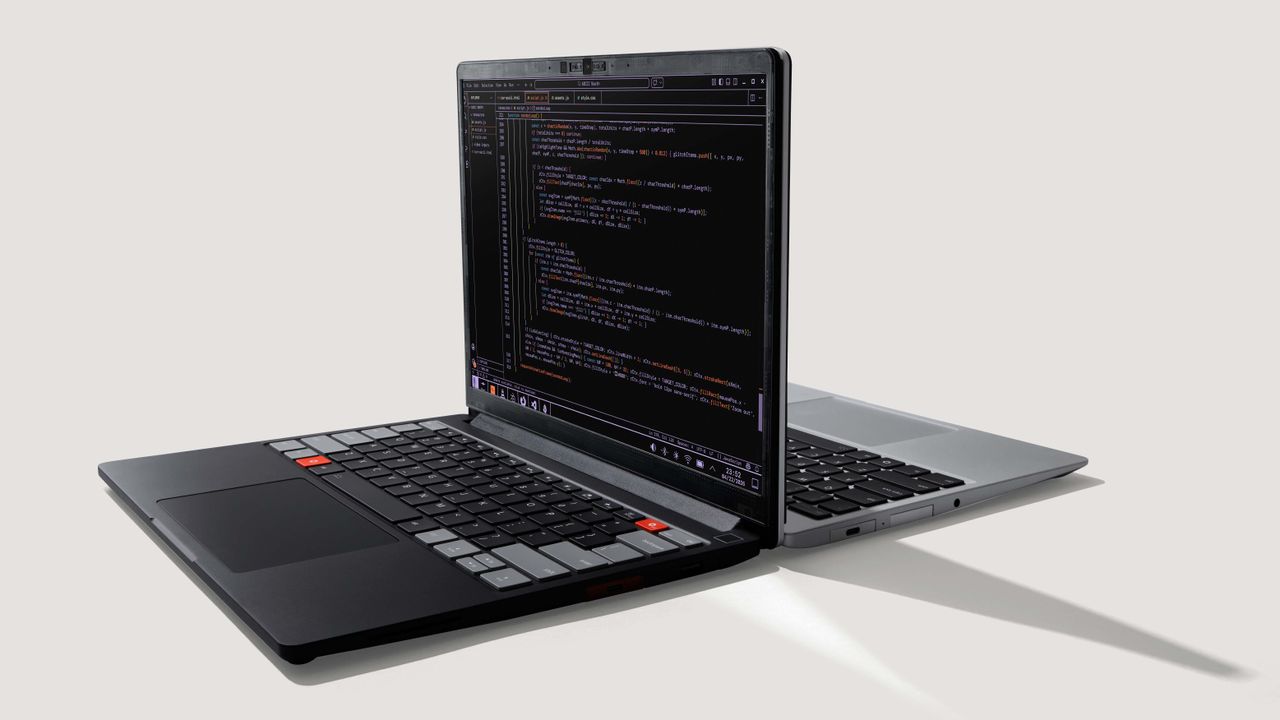
Framework has officially unveiled what many are calling the MacBook Pro for Linux users. The new Framework 13 Pro feels like a next-generation evolution of their 13-inch notebook, representing the culmination of six years of regular releases from one of the most respected manufacturers in the space.
The device features a brand new chassis, which is being fully machined out of extruded blocks of aluminium for the first time. It arrives equipped with a fresh Panther Lake mainboard, a new type of memory module, a larger battery, and a fully-custom display.
Despite these massive changes, Framework has not abandoned its core repairability-focused ethos. Every single new element is backwards compatible with every previous Framework 13 laptop. You could upgrade an old 11th Gen Tiger Lake machine to the new Panther Lake mainboard—complete with LPCAMM2 memory modules and PCIe Gen5 SSD support—in just 15 minutes using a single screwdriver.
A New Era for the MacBook Pro for Linux Users
The core of the new Framework 13 Pro is built around "a massive leap in battery life." While much of this is due to the efficiency of Intel's new Panther Lake architecture, there are other hardware factors at play. The device features a larger 74 Wh battery (up from 61 Wh), a power-optimised display, and the use of LPCAMM2 memory.
The implementation of Micon-made LPCAMM2 is particularly interesting given current memory premiums. Framework will offer 16, 32, and 64 GB modules through their Marketplace to support this new standard.
Performance and Gaming Capabilities
For those seeking high performance, the hardware options are impressive. The new mainboards will feature Intel Core Ultra 5, Core Ultra X7, and Core Ultra X9 chips. For gamers, the X7 and X9 models are particularly exciting because they include the 12 Xe core B390 integrated GPU. This provides performance that approaches entry-level discrete GPUs.
To sustain these powerful chips, the battery has been physically enlarged. This required a redesigned bottom cover for the 13 Pro to house the larger cells, making the front edge slightly thicker. If you want this larger battery for your standard Framework 13, you can purchase an expanded housing kit from the Marketplace.
Premium Display and Haptic Upgrades
The new Framework 13 Pro introduces a totally custom touchscreen panel, addressing previous concerns regarding screen quality. The new specs include:
- Resolution: 2880 x 1920 (3:2 aspect ratio)
- Contrast Ratio: 1800:1
- Refresh Rate: 30–120 Hz VRR
- Brightness: Up to 700 nits
Framework has also introduced a new haptic trackpad. According to the company, "Touchpad feel is an area where Windows and Linux laptops have historically fallen behind Macs," so their mechanical and firmware teams have focused heavily on delivering a premium experience.
Pricing and Availability
The first shipments of the Framework 13 Pro are scheduled to go out in June this year (noting the release date listed as June 2026). Beyond the 13 Pro, Framework also revealed a new wireless touchpad keyboard, updates to the Framework 16, and a new OCuLink Dev Kit for adding desktop GPUs to the 16-inch model via an eight-lane PCIe interface.
Pricing details are as follows:
- DIY Edition: From $1,199 | £1,199
- Prebuilt Ubuntu: From $1,499 | £1,499
- Prebuilt Windows: From $1,699 | £1,699
- Mainboard Only: From $449 | £449