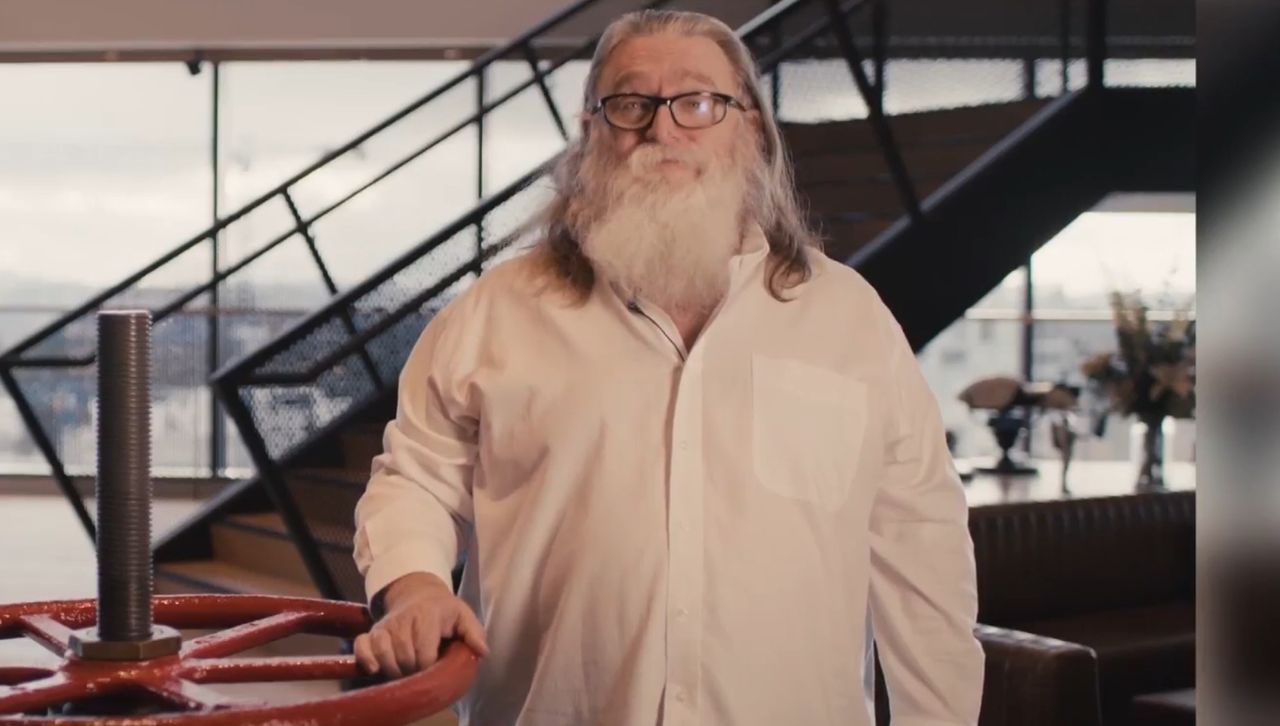
Internal emails released during the ongoing Musk v. Altman lawsuit have revealed that Gabe Newell was an enthusiastic supporter of OpenAI in 2018, donating $20 million and even acting as the sole member of an 'informal advisory board'. These documents, covering the period from 2016 to 2020, highlight a time when OpenAI was far less prominent than it is today.
The Financial Impact: How Gabe Newell was an enthusiastic supporter of OpenAI in 2018
The revelations come from emails sent by Shivon Zilis to Elon Musk. Zilis, a tech venture capitalist who served on the OpenAI board until 2023, also shared a personal connection with Musk, as the two have four children together. In her correspondence, Zilis provided Musk with an "inside track" on the company's internal developments.
In an email dated April 23, 2018, Zilis detailed several key technical and structural updates:
- OpenAI’s progress in having its AI defeat a five-player Dota 2 team was looking better than anticipated.
- The rise in AI performance was causing internal concerns regarding the timeline for AGI.
- Zilis was managing her time between OpenAI, Tesla, and Neuralink.
Beyond his advisory role, the scale of Newell's financial commitment is significant. A court submission titled "undisputed facts" lists the contributions OpenAI received from non-Musk donors between 2016 and 2020. The second-largest donation listed was a staggering $20,008,279 from Gabe Newell in 2018. It is clear that Gabe Newell was an enthusiastic supporter of OpenAI in 2018, providing massive capital during the company's early years.
Neuroscience and Future Tech Ventures
Newell’s interests appear to extend deeply into the field of brain-computer interfaces. He is the founder of Starfish Neuroscience, a company designing a minimally invasive neural interface chip. His recent activity suggests continued interest in this sector; as recently as January 2026, Newell contributed an unspecified amount to a funding round for Merge Labs, which lists OpenAI as both an investor and research partner.
In his emails, Newell discussed his evolving views on neuromodulation with Musk:
"For a long time I thought neuromodulation (e.g. rTMS) was weird... I've more or less done a 180, and think there is a significant near-term consumer market."
Musk responded by sharing highly confidential technical progress regarding Neuralink. He noted that the team had achieved "insane" progress, successfully implanting approximately 6,000 electrodes into a monkey brain with high-quality signal/noise ratios. The hardware is so compact that only a small USB-C opening and a slight surround are visible on the skull.
The lawsuit continues to uncover unexpected industry overlaps. For example, after Hideo Kojima visited Valve in 2018, Newell even emailed Musk to attempt to arrange a tour of SpaceX for the legendary creator.