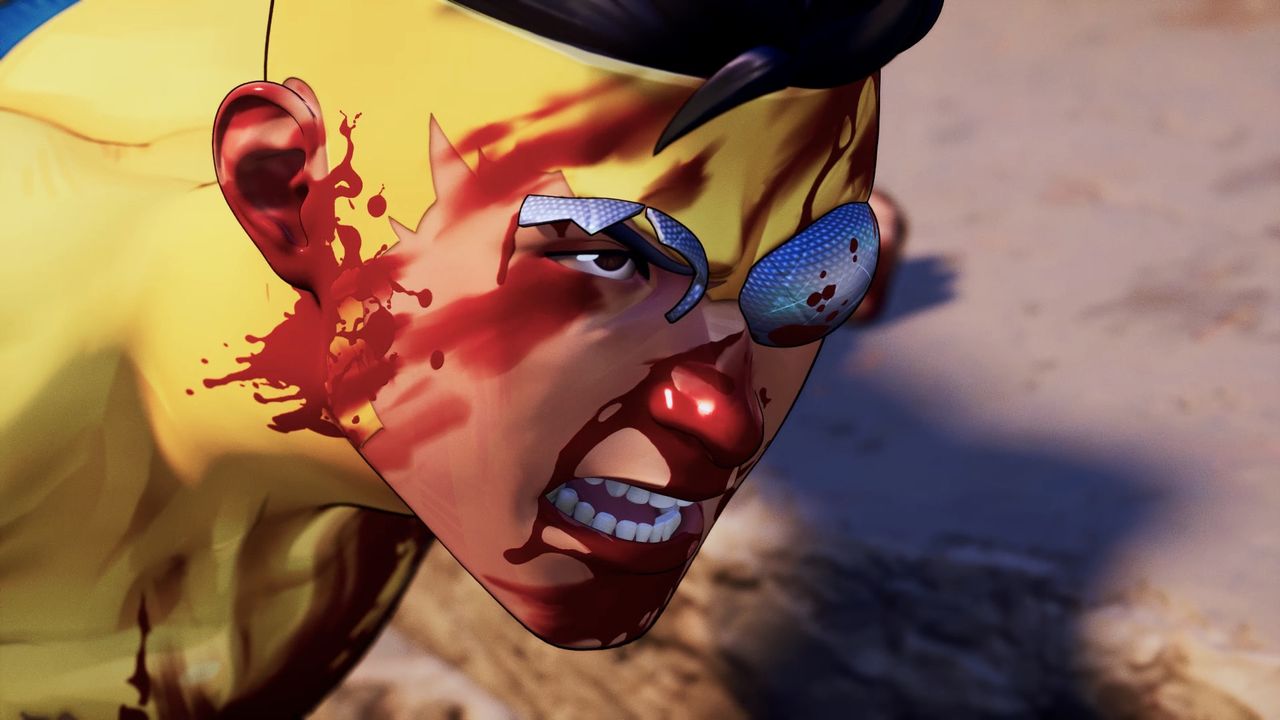
I've never read Invincible, but through playing the acclaimed comic's new licensed fighting game, Invincible Vs, I feel like I've gotten to know its characters inside and out. I don't say that because I know more about their backstories than when I started, but because it is incredibly easy in this game to punch people into showers of gore.
About a dozen seconds into the intro cinematic, the titular teen hero is launched by his own father through a stranger's head, killing them instantly. My first point of feedback is that this guy seems extremely vincible. Fortunately, he has friends, as this is a 3v3 tag fighter reminiscent of Marvel vs. Capcom or Dragonball FighterZ.
The High-Octane Mechanics of Invincible Vs
The true strength of the game lies in its assist system. While each character possesses a relatively simple suite of moves, the real fun begins when you combine multiple kits in tandem. The gameplay loop is built around several key components:
- Attack Variety: Moves are split between light, medium, and heavy attacks.
- Special Techniques: Players can utilize specials and boosted variants of those specials.
- Super Moves: High-impact finishers that can end matches.
- The Tag System: You can use one-and-done assists or perform an active tag to switch characters mid-combo.
A combo limit meter prevents you from styling too hard on your own, but the meter resets when you tag, allowing for ridiculous stretches of punishment. It feels freeform and rewarding, meaning you don't have to spend hours in a training room identifying safe pressure options before having fun.
If you are worried about being caught in an endless loop, you aren't trapped as soon as you get hit. By holding down medium and heavy attack right as an opponent swaps characters, you can straight-up escape the combo. This creates a layer of guesswork and mindgames that fighting games need to thrive.
A Visceral Tribute to the Source Material
If you have played the Killer Instinct reboot—which some of the Invincible Vs developers worked on a decade ago—the system won't feel exactly like a combo breaker, but it pays off in the same way. The game’s strategic depth doesn't vanish even when one player is winning hard.
The game is also incredibly accessible for newcomers. There are no cramp-inducing pretzel motions or double 360 stick inputs required, as the game features a one-button autocombo for reliable damage. It is certainly less intimidating than titles like Tekken or Blazblue, making it perfect for fans of the show who have never picked up a fighter.
Visually, the game is a fantastic tribute to the comic and its fandom. You might see a chibi Omni-Man doing his "think, Mark!" pose on a loading screen, or watch characters bark insults as their costumes are slashed to ribbons. Any time Battle Beast opens his mouth, I reflexively go, "Hell yeah, Battle Beast" [Hell yeah, Battle Beast —Ed].
Where the Experience Falls Short
Despite the excellent combat, I wish there was more going on outside of the versus mode. There is a story mode, but it clocks in at around an hour and failed to impress me beyond its sick cutscenes. The premise involves a mysterious force forcing characters to fight, but many battles are pared down to 1v1 or 2v2 for narrative reasons.
Because these matches lack the 3v3 assist system, the result is a parade of disposable battles that lack energy. Once you have seen the cutscenes once, there is no reason to return. I also found the difficulty lacking; on normal, the AI rolls over when met with autocombo and special spam.
The Arcade mode suffers from similar issues. While it features unique endings for each character, as a newcomer, I felt like I was peering into a world of out-of-context spoilers. I missed the depth found in older titles; I was hoping for something akin to Killer Instinct's Shadow Lords roguelike mode, but nothing takes its place here. While the emphasis on versus mode is common for the genre, a bit more single-player substance would have gone a long way.