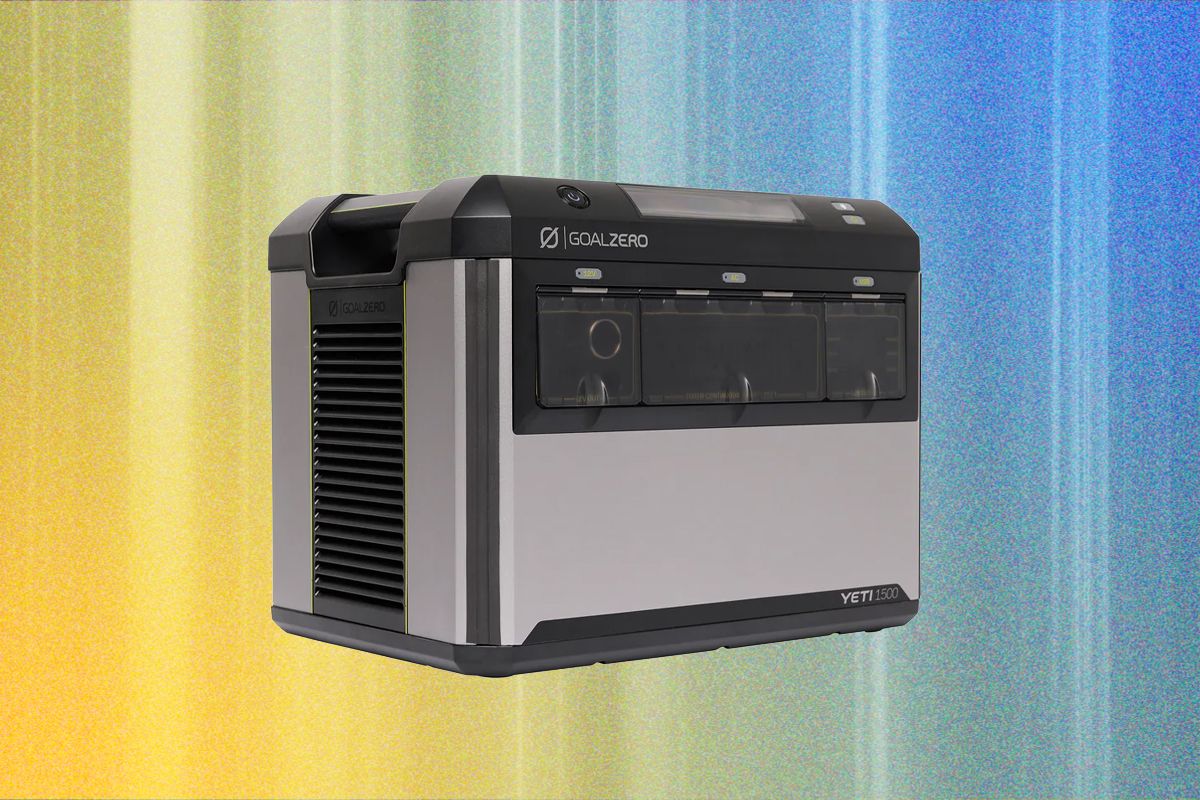
In this Goal Zero Yeti 1500 Power Station Review (2026), we explore a fundamental shift in battery technology. A move toward lithium iron phosphate chemistry means accepting a slightly heavier footprint in exchange for a vastly extended lifespan. While traditional portable power stations often prioritize energy density to keep weight at a minimum, the 2026 model focuses on the long-term endurance required by professional overlanders and mobile workers.
Engineering for Extreme Environments
The move to LiFePO4 is the most significant upgrade in this sixth iteration of the Yeti 1500. This new chemical composition allows the unit to reach an impressive 4,000 charge cycles before dropping to 80 percent capacity, far outlasting its predecessors. Although this chemistry comes with slightly less energy density and a lack of an internal heating element for sub-freezing charging, the stability it offers in varied climates is a major advantage.
The chassis has also been redesigned for ruggedness, utilizing a primarily aluminum construction that provides superior resistance to vibrations common in off-road vehicles. Unlike many consumer-grade power stations made largely of plastic, this build quality is intended to survive washboard roads and heavy transit. While some plastic elements remain for ventilation, the structural integrity makes it much more resilient against cracks and dust ingress.
High-Output Connectivity in the Goal Zero Yeti 1500 Power Station
The port selection on this model is specifically engineered to bridge the gap between consumer electronics and heavy-duty vehicle systems. A new 140W USB-C port provides the high wattage necessary for fast-charging modern laptops and professional camera gear without needing a bulky AC adapter. The AC section remains highly capable, offering four outlets with a continuous 2,000W output and a massive 3,600W surge capacity.
Where this unit truly separates itself from competitors like Jackery or smaller Bluetti models is its specialized 12V capabilities. The inclusion of a 30-amp 12V output allows for direct integration into existing vehicle power systems, making it a turnkey solution for overlanders. This level of high-amp delivery is rarely found in portable units of this size and is often only available in much larger, more expensive stationary setups.
Charging Ecosystems and Smart Management
Efficiency in recharging is critical when operating far from a traditional power grid. The Yeti 1500 supports rapid AC wall charging, capable of reaching a full charge in just over an hour at 1,800 watts. For those relying on renewable energy, the unit accommodates up to 900W of solar input via both standard 8mm inputs and Goal Zero's proprietary HPP connectors.
Smart management is handled through the YETI app, which allows for remote monitoring and control via Bluetooth or Wi-Fi. The software provides detailed insights into real-time power draw, battery health, and discharge history. A standout feature for mobile users is the ability to remotely toggle specific outputs, allowing them to eliminate phantom drains without having to physically access the unit in a cramped vehicle interior.
Key Technical Specifications:
- Chemistry: Lithium Iron Phosphate (LiFePO4)
- Cycle Life: 4,000 cycles to 80% capacity
- AC Output: 2,000W continuous / 3,600W surge
- USB-C Power: 140W high-speed port
- DC Output: 30A 12V capability for vehicle integration
- Solar Input: Up to 900W via HPP or 8mm
The Goal Zero Yeti 1500 Power Station is not a budget-friendly accessory, and the price per watt-hour remains on the higher side of the market. However, for users who require a ruggedized, high-output bridge between their vehicle's electrical system and their portable electronics, the premium is well-placed. It stands as one of the few truly versatile options that functions equally well as a home backup battery and a dedicated overlanding power source.