Our H2O Audio Tri Run Workout Headphones Review finds that while bone conduction technology aims to balance personal audio with environmental awareness, the H2O Audio Tri Run struggles to maintain that equilibrium. Priced competitively at under $100, this release feels more like a collection of compromises than a breakthrough in the wearable audio market. It attempts to leverage H2O Audio's established expertise in aquatic peripherals to capture the crowded running and cycling demographic, but the execution lacks necessary refinement.
Rugged Design and Secure Fit
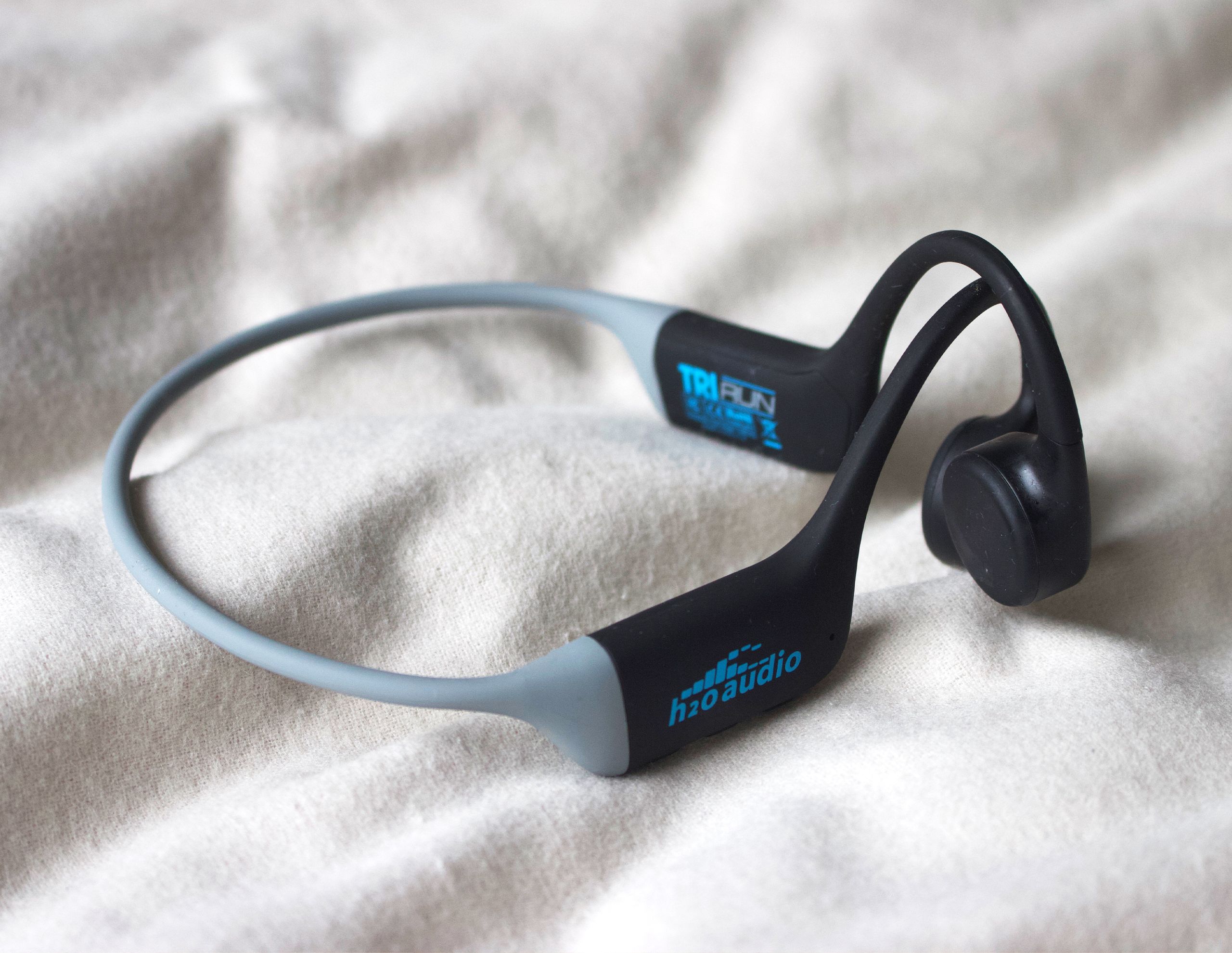
The hardware follows a familiar neckband architecture that utilizes a blend of titanium and silicone for stability. At a mere 1.3 ounces, the weight distribution is handled with enough precision to ensure the device does $not$ shift during high-intensity intervals or uneven terrain. An IPX8 waterproof rating provides significant peace of mind against heavy rain or excessive perspiration during summer training sessions. Furthermore, physical buttons located on the underside offer tactile, reliable control even when movement becomes erratic.
The build quality suggests a product intended for longevity in harsh environments. The slim profile prevents the headphones from feeling bulky, making them suitable for various head shapes. Unlike more expensive models that might feel cumbersome, the Tri Run sits snugly without exerting excessive pressure on the temporal region. This stability is critical for athletes who cannot afford to constantly readjust their gear mid-stride.
Audio and Connectivity Shortcomings in our H2O Audio Tri Run Workout Headphones Review
Sound reproduction remains the primary hurdle for this device's success. The audio profile lacks depth, characterized by muddy bass and a noticeably grainy treble that fails to engage listeners during longer sessions. Without a companion app or EQ customization, users are forced to accept the factory tuning as is. This lack of software support makes it difficult to mitigate the acoustic flaws inherent in their bone-conduction implementation.
Connectivity issues further detract from the overall utility of the headset. While the device pairs easily with various smartphones and smartwatches, it lacks the ability for multi-point pairing. This omission prevents seamless transitions between a primary smartphone and a secondary device like a Garmin watch or tablet. Furthermore, when volume must be increased to overcome wind or traffic noise, a distracting "bone-conduction tickle" becomes noticeable against the cheekbones.
Battery Life and Charging Limitations
Battery endurance and charging convenience represent two of the most frustrating aspects of the Tri Run experience. While the manufacturer quotes seven hours of playback, real-world usage at higher volumes—often necessary to overcome ambient noise—drops that figure closer to five or six hours. This reduction in playtime makes long-distance endurance training a potential challenge for users who rely on consistent playback.
The reliance on a propriary charging cable is particularly frustrating in an era dominated by USB-C standardization. In a tech ecosystem increasingly focused on reducing cable clutter, carrying an extra, specialized cord feels like an unnecessary burden. The lack of a fast-charging mode further complicates the user experience for those who might need a quick boost before a workout.
Final Verdict
The market for affordable bone-conduction gear is ripe for disruption, but the Tri Run fails to provide a compelling reason to move away from established players like Shokz. While it offers a stable and sweat-resistant design, the acoustic failures and charging inconveniences are too significant to ignore. Ultimately, this H2O Audio Tri Run Workout Headphones Review concludes that until H2O Audio can deliver a more refined sonic experience and modernize their power requirements, this remains a secondary option for those on a strict budget.
Pros and Cons
Strengths:
- Extremely secure and comfortable fit for high-intensity movement.
- High IPX8 waterproof rating suitable for heavy sweat and rain.
- Reliable tactile physical buttons for easy use during activity.
- Lightweight design that minimizes fatigue.
Weaknesses:
- Subpar audio fidelity with muddy bass and grainy treble.
- Lack of a companion app or customizable EQ modes.
- Dependence on a non-standard, proprietary charging cable.
- Absence of multi-point Bluetooth pairing.