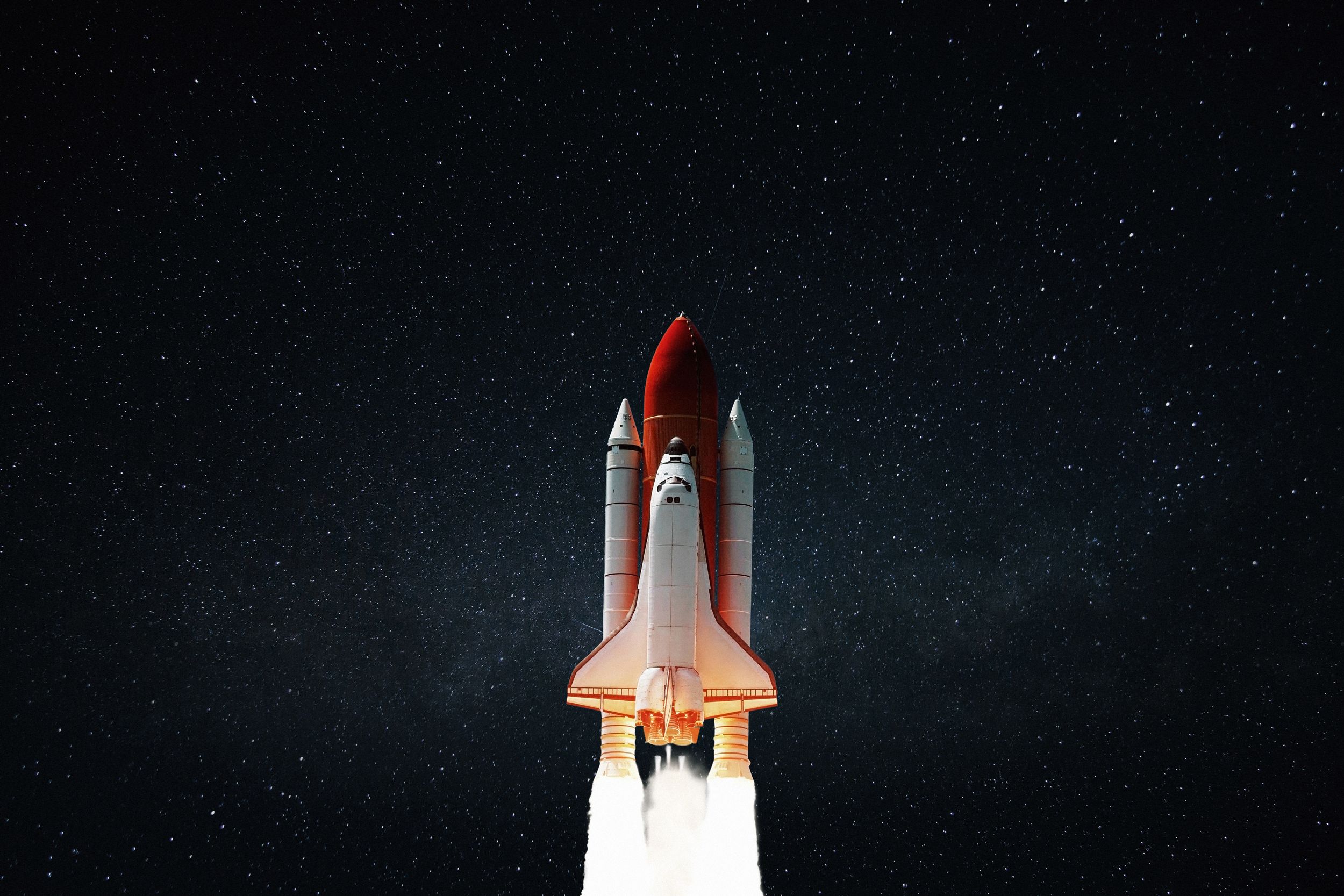
Can velocity be accurately determined in a void where every visible landmark is also in motion? On Earth, speed is a tangible sensation derived from the blur of passing trees or the wind rushing past a cockpit window. In the vacuum of deep space, these familiar markers vanish, raising a fundamental question: how can astronauts tell how fast they’re going when there is no ground beneath them?
The Relativity of Motion and Reference Frames
Determining speed in space requires an understanding that motion is never absolute; it is always relative to a chosen reference frame. A person pedaling a bicycle at ten miles per hour on the deck of a moving cruise ship possesses a different velocity relative to the ship than they do relative to the ocean below. In orbital mechanics, selecting the correct frame is the difference between mission success and a catastrophic drift into the void.
For missions orbiting Earth, the planet serves as a stable, intuitive anchor. However, as navigation extends toward the lunar surface or Mars, mission controllers must shift their perspective. For upcoming missions like NASA's Artemis IV, using Earth as a primary reference point would be counterproductive for landing maneuvers. Instead, spacecraft must calculate velocity relative to the Moon.
This principle extends even further; to navigate the solar system, the Sun becomes the necessary center of the coordinate plane. Because no stationary point exists in the universe, every measurement is essentially a calculation of displacement over time. Without a fixed "ground," engineers rely on complex calculations to ensure trajectories align with their destinations.
How Can Astronauts Tell How Fast They’re Going? The Doppler Effect
One of the most reliable methods for tracking distant objects involves electromagnetic waves. This technique is vital to understanding how can astronauts tell how fast they're going via radio and light frequencies. The Doppler effect, a phenomenon well-known in acoustics, applies similarly to light and radio waves.
When a sound or wave source moves toward an observer, the waves compress; as it recates, the waves stretch. In deep space communication, this allows ground stations to monitor spacecraft through two primary shifts:
- Blueshift: Indicates the spacecraft is moving toward Earth as the frequency of incoming radio waves increases.
- Redshift: Indicates the spacecraft is moving away as the wave frequency decreases.
- Frequency Analysis: By measuring the tiny difference between a transmitted signal and its reflected return, engineers can calculate velocity with extreme precision.
While highly accurate, this method has inherent limitations. It primarily measures radial velocity—the speed at which an object moves directly toward or away from the observer. If a spacecraft travels perpendicular to the line of sight, the Doppler shift becomes negligible. Furthermore, any celestial body passing between Earth and the craft can temporarily blind mission control.
Inertial Measurement and Acceleration Integration
When a spacecraft is out of contact with Earth, it must rely on internal sensors through inertial measurement. This process does not measure velocity directly, but rather tracks acceleration—the rate at which velocity changes. By using high-precision gyroscopes and accelerometers, a craft can monitor the forces acting upon it.
The physics of this method is rooted in Newton's second law. If an onboard computer knows its initial velocity and precisely measures every change in speed, it can mathematically integrate those changes to estimate current motion. It is much like driving through a tunnel with no windows; while you cannot see the road, you can "feel" every turn and brake application.
However, engineers must still address the core problem of how can astronauts tell how fast they're going when sensors begin to drift. Small errors in sensor readings accumulate over days of travel. This cumulative error means that inertial navigation requires periodic recalibration against external markers, such as star positions or ground-based radio signals, to prevent the spacecraft from wandering off course.
Summary of Navigational Methods
| Method | Primary Mechanism | Major Limitation | | :--- | :--- | :--- | | Doppler Tracking | Measuring frequency shifts in radio waves | Requires line-of-sight; measures radial velocity only | | Inertial Navigation | Integrating acceleration via onboard sensors | Susceptible to error accumulation (drift) over time | | Optical Navigation | Identifying landmarks like stars or planets | High computational load and requires visibility |
As humanity pushes toward permanent lunar bases and Martian colonies, the reliance on pure physics will only deepen. The transition from Earth-dependent tracking to fully autonomous, onboard navigation represents one of the greatest technical hurdles in modern exploration. Success will depend not on seeing the destination, but on the ability to mathematically prove exactly how fast we are approaching it.