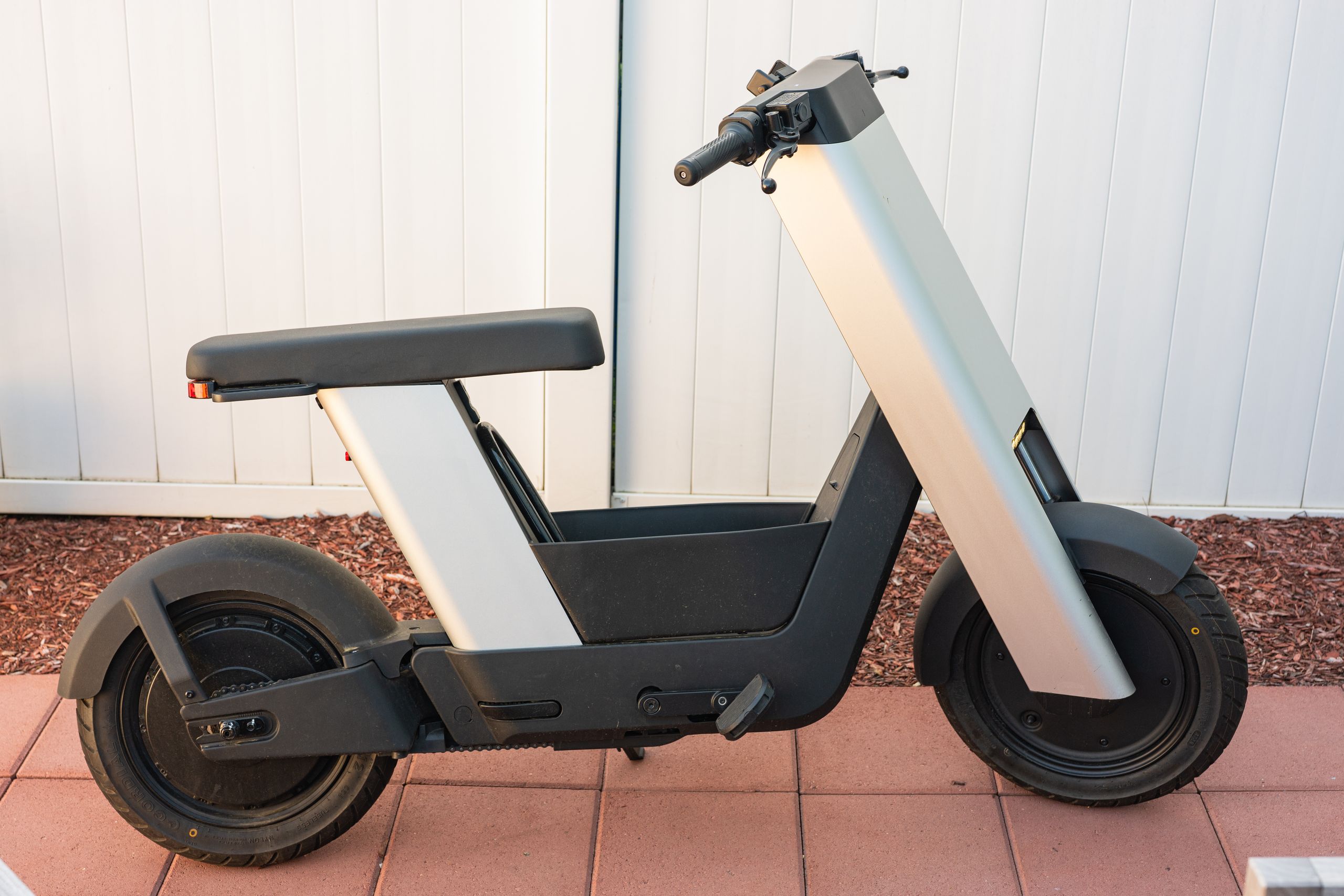
With its 176-pound frame and sharp, angular silhouette, the Olto is one of the most visually arresting electric bikes currently on the market. This Infinite Machine Olto review explores a Brooklyn-based creation that refuses to blend into the background of urban transit. At a $3,495 price point, the design language draws unavoidable comparisons to Tesla’s Cybertruck, presenting an industrial aesthetic that is as polarizing as it is memorable.
Cyber-Inspired Design and Digital Integration
The Olto operates as a Class 2 ebike with the capability to unlock Class 3 speeds of up to 28 mph, provided local regulations permit. While the exterior screams futuristic minimalism, the user interface relies heavily on modern connectivity. The bike is designed around an ecosystem of digital tools, utilizing an NFC card for seamless unlocking and a companion app for deeper system management.
While the Android version has faced reported bugs, the iOS implementation offers a stable way to monitor the vehicle's status and track its location via integrated GPS. However, this high-tech approach is not without its compromises. The integration of plastic components near the footrests can feel somewhat underwhelming given the premium price tag, and the lack of substantial integrated storage may prove a hurdle for those needing more than a smartphone.
Charging Ecosystem and Modular Extras
The charging experience is central to the Olto’s identity. In this Infinite Machine Olto review, we also look at how users can customize their power setup. Beyond simply plugging into a wall, users can opt for an ecosystem of accessories designed to minimize friction:
- Olto Charging Dock ($168): Allows the 20-pound battery to be removed and charged indoors.
- Super Charger ($248): Capable of pushing the battery from zero to 80 percent in just 90 minutes.
- Modular Attachments: Various options including a kid carrier, rear racks, and phone mounts.
Engineering for the Urban Commuter
On the road, the Olto prioritizes stability and smooth power delivery. Driven by a 750-watt rear hub motor, the bike handles the unpredictable terrain of city streets—from smooth asphalt to jarring cobblestones—with surprising grace. A notable feature is the Boost pusher, a momentary torque increase that allows riders to accelerate quickly through intersections, though it requires a brief cooldown period between uses.
The ride quality feels more substantial than a standard ebike, bordering on the sensation of a small, heavy-duty moped. However, security remains a primary concern for any high-value urban vehicle. When powered down, the motor and steering are physically locked, supplemented by a loud alarm and a backup battery that keeps the GPS active even if the main power source is removed.
Performance and Braking Realities
Despite these safeguards, the bike's 176-pound weight makes it impossible to carry into an apartment, forcing riders to rely on street parking. The braking system utilizes hydraulic brakes that provide reliable stopping power, though heavy deceleration can occasionally lead to minor skids under certain conditions.
Furthermore, while the battery range is marketed at approximately 32 miles, real-world performance may vary based on rider weight and terrain. A heavy load on inclines will naturally tax the 1.2-kWh capacity more aggressively.
The Infinite Machine Olto Review Verdict
The Infinite Machine Olto is not a utilitarian tool for the casual cyclist, nor is it a budget-friendly commuter option. It is a statement piece designed for the tech enthusiast who values aesthetic impact and digital integration as much as mechanical performance.
For those who can embrace its heavy footprint and polarizing "Cyber" look, it offers a smooth, exhilarating, and highly secure way to navigate the modern cityscape. If the company continues to refine its build quality and expand its storage solutions, the Olto could set a new standard for premium electric micromobility.