Intel Returns to the Grid: A New Era for McLaren
Intel has officially confirmed its return to Formula 1, sealing a major partnership with McLaren, the team that secured both the Drivers' and Constructors' championships in 2025. As part of this strategic alliance, the chip giant will supply the Woking-based squad with a suite of high-performance Xeon and Core Ultra processors.
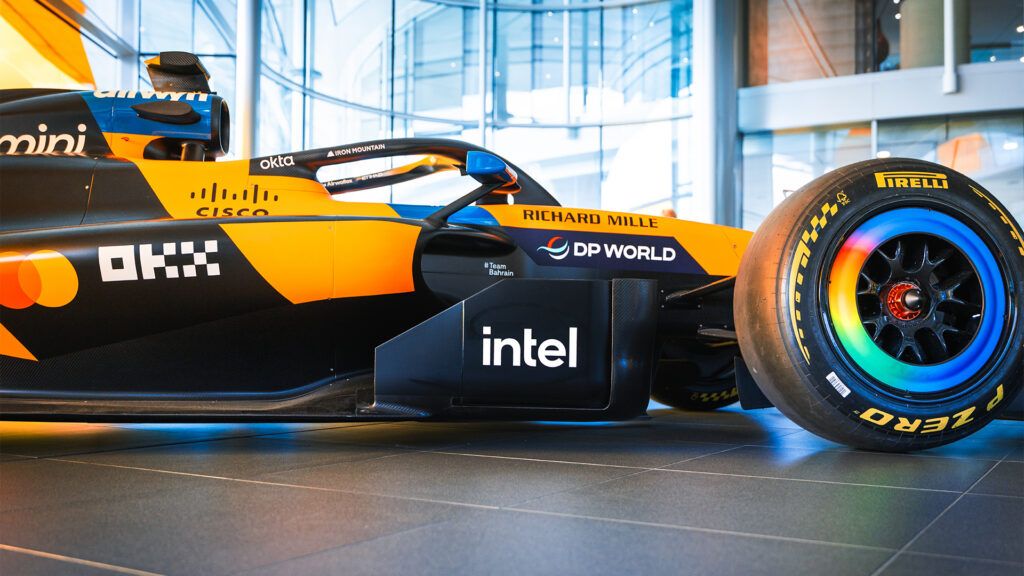
In exchange for this critical hardware, McLaren will display the Intel logo on the side of their championship-winning cars, signaling a renewed commitment to technological collaboration. This move marks a significant moment for both the tech giant and the racing team, highlighting the increasing intersection of computing power and motorsport performance.
Powering Performance with High-End Computing
Formula 1 teams have evolved into sophisticated data companies, where milliseconds are won or lost in the server room as much as on the track. Intel’s involvement goes beyond mere branding; it provides the raw computational muscle necessary for McLaren’s operations.
The company will provide its chips to support several critical areas of McLaren’s engineering workflow:
- Computational Fluid Dynamics (CFD): Analyzing airflows around the car to optimize downforce and reduce drag.
- Aerodynamic Analysis: Simulating complex air interactions to refine bodywork and wing designs.
- Vehicle-Dynamics Simulation: Modeling how the car handles various track conditions and driving inputs.
- Real-Time Decision Systems: Enabling split-second strategic calls during races based on live data.
- Race Strategy Analytics: Processing vast amounts of telemetry to predict tire wear, fuel consumption, and competitor moves.
By integrating Core Ultra and Xeon architectures into their tech stack, McLaren aims to process this data faster and more efficiently, turning raw information into a tangible competitive advantage.
A Strategic Move for Intel’s Revival
This partnership is particularly notable given Intel’s recent trajectory. The company has faced significant challenges in reclaiming its position as the dominant force in the semiconductor industry. However, signs of recovery are emerging, including successful launches like the Panther Lake processors and increased investment from the US government and Nvidia, which underscores the growing importance of domestic chip manufacturing.
Intel CEO Lip-Bu Tan emphasized the strategic importance of this collaboration:
"Formula 1 racing and IndyCar are some of the ultimate proving grounds for high-performance computing. Intel is proud to be McLaren Racing’s compute partner, and to be part of a team that thrives on precision, speed, and innovation. Together, Intel and McLaren will push the boundaries of what’s possible, transforming data into competitive advantage at every turn."
For McLaren CEO Zak Brown, the deal strengthens their technological ecosystem. He noted:
"Performance in IndyCar and Formula 1 racing is driven by technology, and partnering with Intel strengthens our ability to innovate at scale. Intel has already been an important part of our technology ecosystem, and their leadership in computing will play a critical role in how we design, build, and race our cars. We’re excited to deepen this relationship even further."
While the press release language may seem standard, the implications are profound. For Intel, returning to the pinnacle of motorsport is a bold statement of confidence. It signals their intent to be seen not just as a chip manufacturer, but as an essential partner in the most competitive arena on earth, even as they work to restore their market leadership.
Beyond Formula 1: A Broader Racing Future
Intel’s return to the grid is not limited to Formula 1. The partnership is set to extend to McLaren’s IndyCar team and their sim racing division in the future. This multi-series approach suggests Intel is looking to establish a comprehensive presence across all forms of high-performance racing.
This is not Intel’s first foray into motorsport sponsorship. The company previously featured prominently on the side of the BMW Sauber team in the early 2000s. However, the landscape has changed dramatically since then. Today, the relationship is built on deep technical integration rather than simple branding.
Additionally, McLaren continues to navigate a complex web of tech partnerships. Their ongoing collaboration with Google is currently being repositioned, with a growing focus on AI integration. As AI and high-performance computing become increasingly central to racing strategy, Intel’s entry into this ecosystem positions them as a key player in the next generation of motorsport technology.