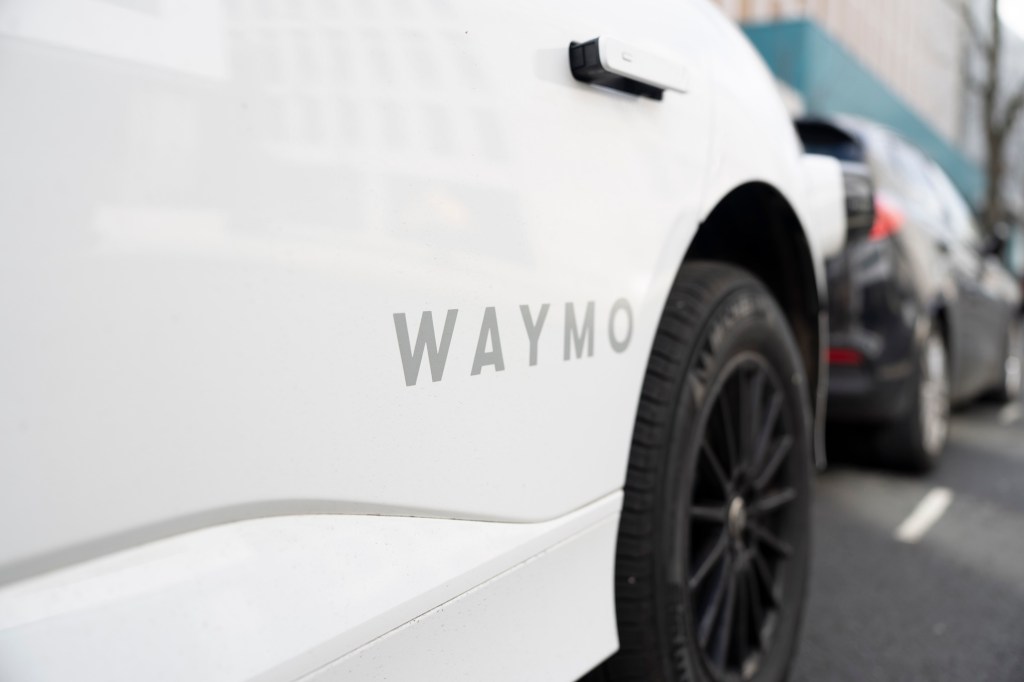
London Gets Closer to Its First Robotaxi Service as Waymo Begins Testing
The chaotic, narrow streets of London—where buses double as mobile landmarks and pedestrians weave unpredictably through traffic—are arguably the most unforgiving environment on Earth for an autonomous vehicle. Yet this very complexity is what Waymo has selected to prove its technology works globally. While American metropolises like Phoenix offer wide boulevards ideal for initial testing, the capital of the United Kingdom presents a labyrinth demanding a level of AI adaptability far beyond current benchmarks. London gets closer to its first robotaxi service as Waymo begins testing, officially commencing public road trials with its electric fleet. This milestone positions the city for what could become its first international commercial deployment later this year, marking a critical shift from simulation to real-world verification.
Navigating the Urban Labyrinth: A Stress Test of AI
The decision to deploy in London is not merely an expansion of territory but a stress test of the highest order. The city's infrastructure, characterized by narrow lanes where two vehicles barely pass and frequent pedestrian crossings without dedicated signals, creates a scenario that would stump many lesser autonomous systems. Waymo co-CEO Dmitri Dolgov has already noted on social platforms that their core driving AI is "generalizing very well," suggesting the system is successfully learning to handle these local nuances before fully driverless operations commence.
Unlike in California where testing began with wide, open roads, London requires a different approach to data collection and safety validation:
- Human Oversight: Current trials operate with Jaguar I-Pace electric SUVs equipped with Waymo's self-driving stack, but every vehicle carries a human safety operator behind the wheel ready to intervene.
- Local Mapping: Before autonomous testing could even begin, Waymo employees manually drove through London's streets to map the city, capturing unique variables like construction zones and irregular signage.
- Emergency Integration: The company is actively collaborating with UK emergency services, recognizing that a robotaxi fleet must communicate seamlessly with police and ambulance units in high-stress scenarios.
This rigorous preparation underscores why the timeline for full autonomy remains tied to regulatory approval from the U.K. government rather than just internal readiness. While NHTSA filings indicate Waymo already manages a fleet exceeding 3,000 vehicles across eleven U.S. cities, translating that capability to London's dense urban fabric requires months of localized data training.
Strategic Footprints and Global Ambitions
Waymo's entry into the British market is deeply rooted in long-term acquisition strategy rather than ad-hoc expansion. The company's 2019 purchase of Latent Logic, a UK startup spun out of Oxford University, provided it with proprietary machine learning techniques for imitation learning that make simulation more realistic—a crucial asset when real-world data collection on chaotic streets is risky or slow. This acquisition led to the establishment of an engineering hub in Oxford, serving as a talent magnet and R&D center specifically tuned to European driving dynamics.
The company's current infrastructure investments signal a commitment beyond mere experimentation:
- Service Centers: Waymo is establishing multiple autonomous vehicle service centers across London to ensure rapid maintenance and support for its growing fleet.
- Local Hiring: The firm has prioritized hiring locally, integrating British engineers and operations staff into its global workforce to navigate regulatory landscapes more effectively.
- Fleet Evolution: While the current fleet consists of Jaguar I-Pace vehicles, future deployments may include new minivan-like platforms from manufacturers like Zeekr, designed specifically for ride-hailing efficiency.
However, the path to a commercial launch is fraught with competition that extends beyond just other tech giants. UK-based startup Wayve, which utilizes a distinct approach to AI-driven driving, is also racing toward a driverless service in London. Furthermore, Uber has signed on as a partner alongside Nissan and Wayve to launch a pilot program in Tokyo by late 2026, suggesting that the race for global autonomy is becoming a multi-pronged battle involving established ride-hailing giants and nimble startups alike.
The Regulatory Hurdle Before Full Autonomy
The timeline for London's first true robotaxi service hinges entirely on the finalization of regulatory frameworks by U.K. authorities. Waymo has indicated that rider-only deployment—where passengers can hail a vehicle without a safety driver present—is contingent upon government approval, mirroring the cautious pace observed in American markets. This regulatory dependency means that while testing is underway and public perception is being shaped through controlled trials, the moment when Londoners can simply summon an autonomous car to their door remains a target for late 2026 at the earliest.
The stakes for Waymo are exceptionally high; success in London would validate its technology in one of the world's most complex traffic environments, potentially unlocking other European markets. Conversely, failure to adapt to these conditions could stall international expansion plans indefinitely. As the company prepares to hand over control from its human operators to their AI systems, the world is watching to see if a vehicle designed for American suburbs can master the chaotic rhythm of British streets. The coming months will determine whether London becomes the proving ground that propels Waymo into global dominance or merely another challenging market where autonomous ambition meets the unyielding reality of urban infrastructure.