Uber and Nuro begin testing premium robotaxi service in San Francisco with Lucid Gravity SUVs
Can an autonomous vehicle truly navigate the chaotic streets of San Francisco without a human hand on the wheel? The answer may finally be arriving in a sleek, sensor-laden Lucid Gravity SUV, marking a pivotal shift for both Uber and Nuro. After months of closed-course trials and preliminary public road tests, the two companies have officially begun testing a premium robotaxi service with select Uber employees riding inside as data points rather than just passengers. This development signals that the years-long promise of driverless rides is transitioning from theoretical engineering to a live, albeit controlled, operational reality on American soil.
Where Luxury Meets Autonomous Technology
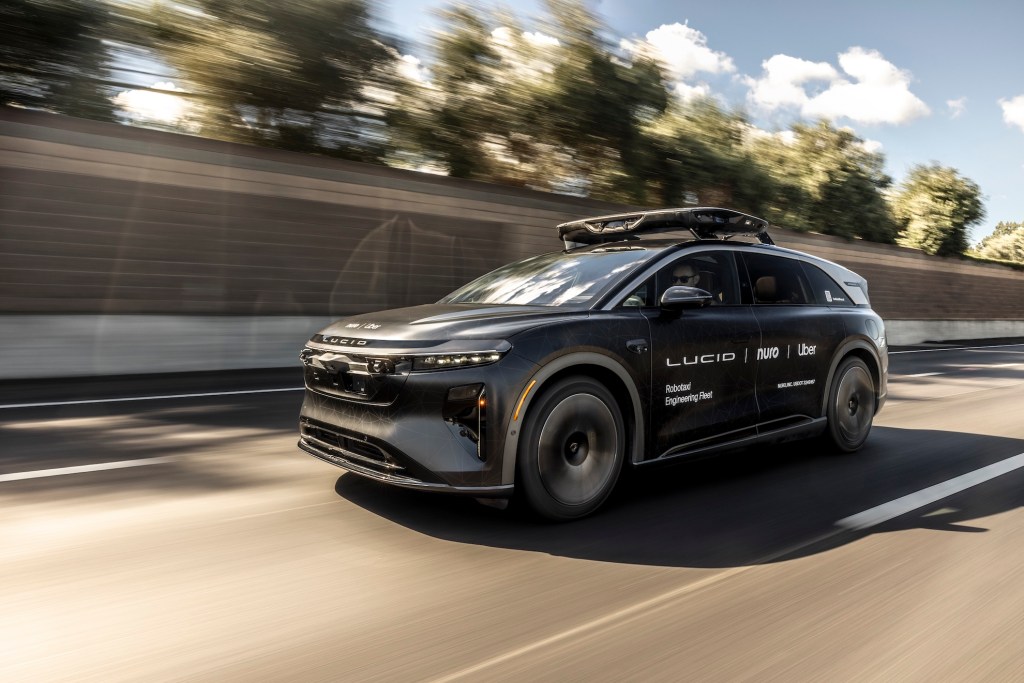
The vehicle at the center of this experiment is far removed from the stripped-down test rigs that have dominated autonomous vehicle news for nearly a decade. These are Lucid Gravity SUVs, high-end electric vehicles equipped with Nuro’s proprietary self-driving stack, creating a blend of luxury comfort and cutting-edge robotics. The cars operate in autonomous mode but maintain a critical safety layer: a human safety operator sits behind the wheel, ready to intervene if the system encounters an edge case it cannot resolve.
The technology driving these robotaxis is formidable, relying heavily on Nvidia’s Drive AGX Thor computer for processing power. This hardware processes input from a sophisticated sensor suite that includes high-resolution cameras, solid-state lidar sensors, and radar units. Together, these components construct a real-time 3D model of the vehicle's surroundings, enabling the car to make split-second decisions regarding acceleration, braking, and steering.
Uber’s investment strategy extends beyond mere testing; the company committed $300 million directly into Lucid Motors and signed an agreement to purchase at least 20,000 of these Gravity SUVs over the next six years. This massive capital injection underscores a long-term bet that premium autonomous mobility will become a dominant force in urban transportation.
Testing Real-World Variables in San Francisco
Nuro has already deployed 100 of these modified Gravity SUVs into its engineering fleet, using them to gather real-world data across multiple U.S. cities and states. However, San Francisco presents a unique set of difficulties due to its steep hills, narrow streets, and heavy traffic density, making it an ideal proving ground for the technology’s robustness. The current testing phase allows Uber and Nuro to evaluate not just the mechanics of driving, but also the user experience elements that define a premium service.
Key areas under scrutiny during these employee test rides include:
- Pickup and dropoff precision: Autonomous vehicles must navigate tight curbside spots to allow passengers to enter and exit safely without blocking traffic lanes.
- Rider interaction: The system needs to verify rider identity and ensure the correct passenger enters the vehicle, a process that currently relies on digital verification through the app.
- Emergency protocols: Safety operators are testing how quickly they can assume control during unexpected scenarios where the AI hesitates or makes an error.
The Future of Urban Mobility
Uber plans to own and operate this premium robotaxi service, potentially leveraging third-party partners for maintenance and fleet management. The timeline is aggressive but deliberate, with production of these modified vehicles expected to begin in late 2026, following a planned public launch later this year. This approach contrasts sharply with competitors who have rushed toward fully driverless operations without the backing of a dedicated luxury manufacturer partnership.
The introduction of a premium robotaxi service represents more than just a new feature in the Uber app; it signals a maturation of the autonomous vehicle industry. By pairing Nuro’s robust perception and decision-making algorithms with Lucid’s refined EV architecture, the partnership is attempting to solve the "last mile" problem where most consumer trust has eroded. The fact that these vehicles are currently being tested by employees suggests a cautious optimism; the companies know that a single high-profile accident could derail years of progress.
As the industry watches, the success or failure of this San Francisco test will likely dictate the speed at which similar services roll out to other major metropolitan areas. If the system can handle the nuances of urban driving with human oversight, it paves the way for a future where autonomous mobility is not just a novelty but a reliable utility. The next twelve months will be critical in determining whether this vision remains a corporate strategy or evolves into a tangible service that reshapes how millions of people move through their cities.