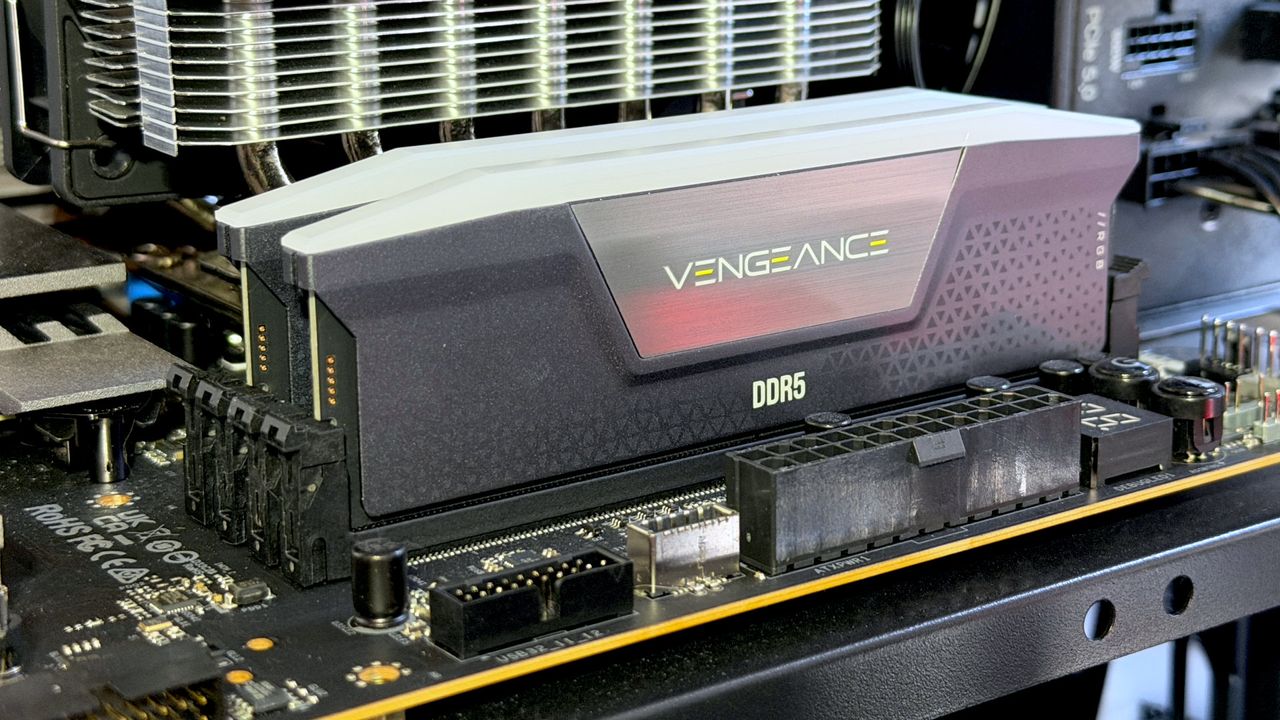
Is 16 GB of RAM Enough for PC Gaming in 2026?
The market has shifted dramatically, and with 32 GB DDR5 memory kits now sporting colossal price tags, many gamers feel that upgrading their system's CPU, motherboard, and memory is out of the question. The prevailing sentiment on forums suggests that 16 GB of DRAM simply isn't enough for a high-end rig in 2026, especially if you own a top-tier graphics card or play titles with super-heavy graphics settings.
However, this advice, while valid six months ago when DDR5 was cheaper, may not hold up to the current economic reality. A 16 GB kit of DDR5-6000 CL30 now costs around $230 at Newegg, compared to a steep $370 for 32 GB of the same memory. That extra $170 could be far better spent upgrading your graphics card rather than filling up your system RAM with capacity you might not need.
Despite the noise online insisting on a minimum of 32 GB, 16 GB of RAM is absolutely fine for PC gaming in 2026 for most users, though there are some caveats to that statement. To prove this, I tested how much performance difference exists between 16 GB and 32 GB when running the most memory-hungry games available today.
The Testing Methodology: Real-World Usage vs. Spec Sheets
To determine if the jump from 16 GB to 32 GB yields tangible benefits, I analyzed the memory usage of 27 big games no older than four years. All tests were run with graphics settings maxed out at 4K resolution, utilizing DLSS Performance mode to prevent frame rate slideshow issues on a PC equipped with 64 GB of DRAM for initial monitoring.
From this broad sample, I selected eight titles to focus on for the final comparison:
- Three games that used around 16 GB of memory.
- Four games utilizing more than 16 GB but staying below 32 GB.
- One title that consumed well over 32 GB.
The tests were conducted twice with strict time limits to ensure consistency:
- Duration: Five minutes of continuous gameplay per test.
- Hardware A: RTX 5090 (featuring a massive 32 GB of VRAM).
- Hardware B: RTX 5070 (with 12 GB of VRAM).
This dual-GPU approach was designed to isolate the impact of video memory capacity relative to system memory when games are consuming all available DRAM. I monitored not just average and 1% low frame rates, but also the average amount of system memory used during these intense runs.
Performance Results: Where the Bottlenecks Actually Lie
The data reveals a surprising trend: for most modern titles, the difference in performance between 16 GB and 32 GB is negligible when using high-end hardware like the RTX 5090. Even under RT Overdrive or full path tracing settings, the frame rates remained nearly identical regardless of system memory capacity.
Here are the key findings from our benchmarking:
- Cyberpunk 2077 (RT Overdrive): Achieved an average of 84 FPS with 32 GB and 83 FPS with 16 GB on the RTX 5090.
- Kingdom Come: Deliverance 2: Showed a difference of only one frame, hitting 112 FPS (32 GB) versus 111 FPS (16 GB).
- Black Myth: Wukong: The results were identical at 76 FPS average for both memory configurations.
In the case of Stalker 2, the 1% low frame rates actually improved slightly with less RAM, jumping from 44 FPS to 45 FPS. This suggests that in some scenarios, having excess system memory might not be as critical as previously thought, and other factors like VRAM capacity play a larger role.
When You Actually Need More Than 16 GB
While the numbers are compelling for pure gaming, there is a specific subset of use cases where 32 GB becomes necessary rather than optional. The test suite included titles that pushed well past standard limits, such as Microsoft Flight Simulator 2024 and Star Citizen.
If you engage in heavy multitasking—such as running game launchers, streaming software, browsers with dozens of tabs, or video editing while gaming—you will likely see the benefits of upgrading. However, for a dedicated gaming rig where the primary goal is high frame rates at 4K:
- VRAM Matters More: The RTX 5090's 32 GB VRAM helps offload texture data, reducing pressure on system RAM.
- Diminishing Returns: Once you hit the memory requirement of a game (usually around 16–18 GB for AAA titles), adding more provides zero performance gain.
- Cost Efficiency: The $170 savings from sticking with 16 GB can be reinvested into better thermal solutions, a faster SSD, or saving toward a future GPU upgrade.
Final Verdict: Don't Overpay for Unused Capacity
The consensus that you "must" buy 32 GB in 2026 is largely driven by outdated advice and the fear of missing out on potential bottlenecks that rarely materialize in practice. Unless you are running specific simulations like Flight Simulator or persistent worlds like Star Citizen, 16 GB remains a solid, cost-effective choice for high-end gaming.
By avoiding the premium price tag of DDR5 kits that offer little real-world benefit for standard gameplay, you can build a more balanced system. The data confirms that while there are caveats for specific heavy-load applications, 16 GB of RAM is absolutely fine for PC gaming in 2026 for the vast majority of enthusiasts.