The evolution of software engineering has always been defined by increasing layers of software abstraction. We have moved from the grueling manual manipulation of machine code to the structured logic of high-level languages like Python or C++. Now, the rise of the vibe coding app represents perhaps the most radical departure yet, where large language models are dissolving the barrier between human intent and functional execution.
This transition marks a pivotal moment in the industry. The ability to create software is migrating from those who master complex syntax to those who can effectively communicate ideas through natural language.
Taking Development Mobile: Lovable Hits iOS and Android
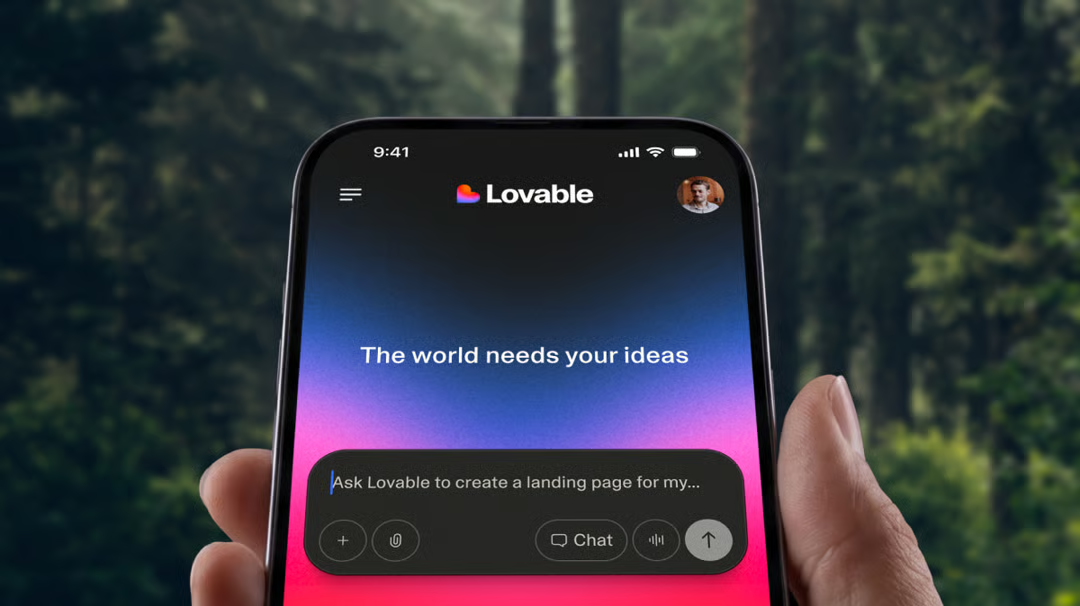
The recent launch of Lovable on both iOS and Android marks a significant expansion of this movement beyond the traditional desktop workstation. By bringing its no-code, AI-driven builder to mobile devices, Lovable is attempting to capture the ephemeral nature of human inspiration.
The core value proposition lies in the ability to translate spontaneous thoughts into structured prompts through voice or text interfaces. This allows users to initiate development projects at the exact moment an idea strikes. The new mobile architecture functions as a bridge between thought and deployment.
Once a user provides initial input via a prompt, the platform’s autonomous agent continues working in the background. It processes complex instructions without requiring constant manual oversight, allowing for a seamless workflow where heavy logic construction happens on the server side.
Key features of the new vibe coding app experience include:
- Cross-platform synchronization, allowing users to start a project on a smartphone and resume work on a desktop.
- Voice-to-code integration, utilizing natural language processing to capture instructions without typing.
- Real-time build notifications, alerting developers the moment an AI agent completes a new feature set.
- Cloud-based execution, ensuring computational power is not limited by mobile hardware.
Navigating the App Store Sandbox
This expansion arrives amidst significant tension between vibe-coding startups and platform gatekeepers, most notably Apple. The tech giant recently implemented stricter enforcement of developer guidelines, targeting tools that appear to bypass the traditional app review process by altering code dynamically.
While this crackdown affected established players like Replit and Vibecode, Lovable has adopted a strategic approach to ensure its presence remains stable on both the App Store and Google Play Store. The central conflict stems from security concerns regarding apps that change their fundamental functionality after installation.
Apple's review team relies on a static snapshot of an app's capabilities to vet it for safety. When an app can download new, unvetted logic at runtime, it presents a potential vector for malicious activity. To mitigate this risk, Lovable has pivoted its delivery method.
Rather than attempting to run generated code natively within the host application—a move that led to the temporary removal of apps like Anything—the platform now directs users to view their creations as web apps or websites through a mobile browser. This technical pivot demonstrates growing maturity in the ecosystem. By focusing on web-based outputs, Lovable sidesteps the most contentious aspects of Apple's security mandates while still delivering core utility.
A New Standard for Creation
The arrival of Lovable on mobile is more than just a feature update; it is a signal that the tools of creation are becoming as ubiquitous as the devices in our pockets. As AI agents become more capable of handling the "how" of programming, the industry's focus will inevitably shift toward the "what."
We are moving toward an era where software development is no longer a specialized craft performed in isolated environments. Instead, it is becoming a continuous, ambient process that happens whenever and wherever an idea occurs. If Lovable can successfully navigate the complex regulatory landscape of mobile ecosystems, the distinction between a consumer and a creator may soon vanish entirely.