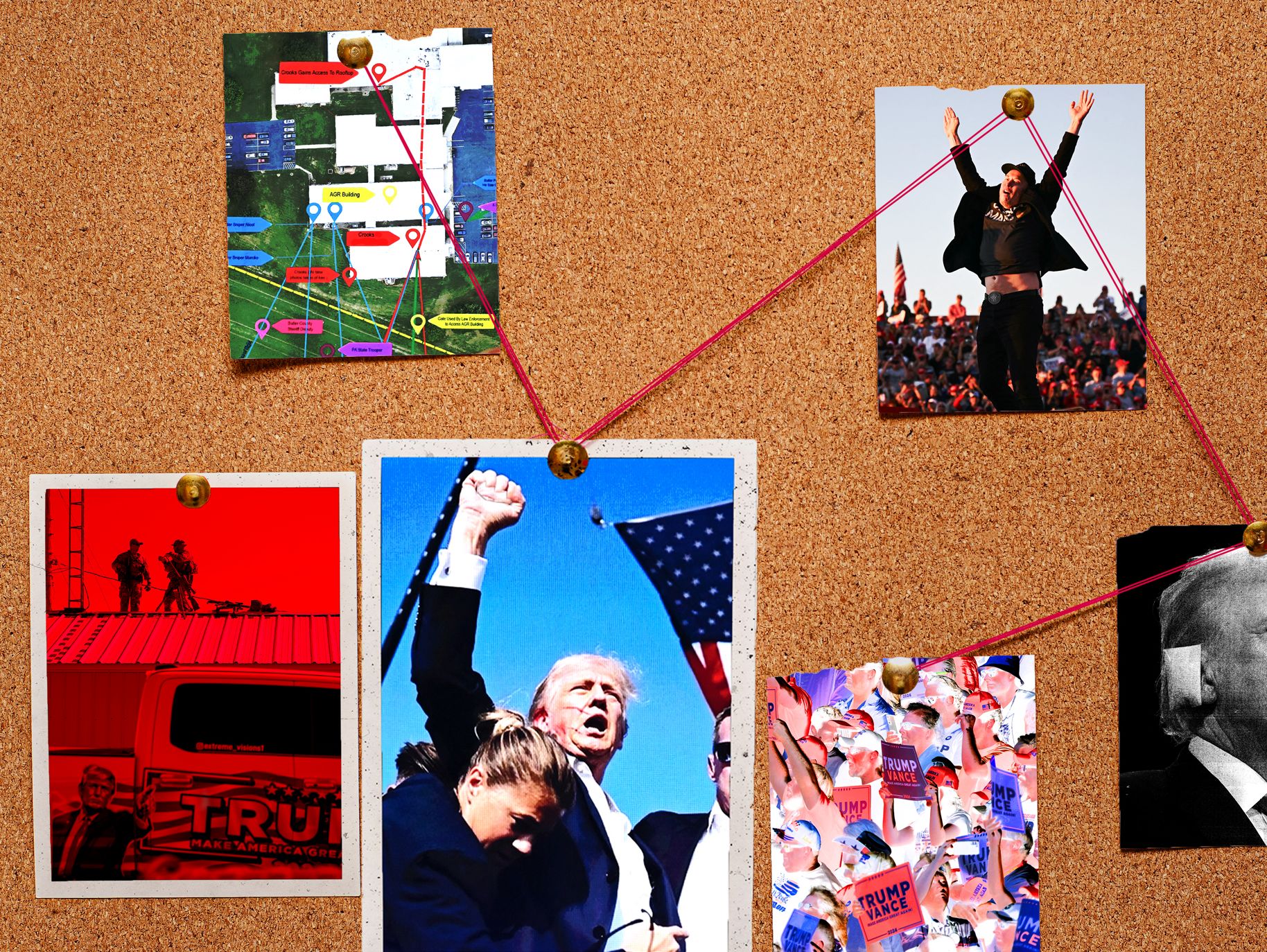
The erosion of shared reality within a political movement often begins when significant historical moments are recontextualized through the lens of deception. Following the attempt on Donald Trump's life in Butler, Pennsylvania, on July 13, 2024, the initial reaction among supporters was defined by religious fervor and a sense of divine protection. However, that narrative is rapidly fracturing as more followers become convinced the Trump assassination attempt was staged.
Why Some Believe the Trump Assassination Attempt Was Staged
This transition from viewing the event as a "miracle" to suspecting a "hoax" is being driven by what experts identify as critical information vacuums. A lack of transparent, finalized investigative data has allowed disinformation to fill the gaps. Former US National Counterterrorism Center director Joe Kent has been instrumental in this shift, appearing on platforms like Tucker Carlson’s podcast to suggest that investigations into the Butler shooter were prematurely terminated.
The discourse within conservative media circles has moved through several distinct stages of skepticism:
- Institutional Distrust: Figures such as Emerald Robinson and Tucker Carlson have leveraged existing distrust of the FBI to suggest the agency may have covered up the shooter's digital footprint.
- Theatrical Allegations: Influencers like Tim Dillon have popularized the idea that the event was orchestrated to manufacture political momentum for Trump’s candidacy.
- Digital Echo Chambers: On platforms like Telegram, accounts such as MJ Truth serve as aggregators for these theories, where the absence of a "smoking gun" is interpreted as proof of a deep-state cover-up.
As these information gaps persist, the movement's ability to maintain a unified front diminishes. The growing belief that the Trump assassination attempt was staged has replaced a singular narrative with a fragmented landscape of competing conspiracies.
Geopolitical Conspiracism and Eschatological Dread
The conspiracy theories surrounding the Butler shooting have begun to merge with older, more volatile narratives involving international geopolitics and religious prophecy. This fusion represents a significant escalation in the complexity of the disinformation being circulated. Some prominent commentators have attempted to link the event to foreign influence, specifically targeting the relationship between the Trump administration and Israeli political interests.
Candace Owens has notably contributed to this discourse, suggesting that the assassination attempt was tied to financial transactions involving donor Miriam Adelson. These claims rely on a logic of "quid pro quo" that lacks empirical backing but resonates with a base already suspicious of globalist influence.
Even more radical is the emergence of eschatological interpretations, where the event is viewed through the lens of biblical apocalypse. Far-right activist Ali Alexander has utilized religious imagery to suggest that Trump’s survival might not be a sign of divinity, but rather evidence of a "dark sign" or an identification with the Antichrist, citing specific passages from the Book of Revelation regarding a mortally wounded beast.
The Fragmentation of the Base
The implications of this shift extend far beyond mere political disagreement; they signal a fundamental breakdown in the cohesive identity of the MAGA movement. When a movement's primary leader becomes a subject of suspicion by his own most ardent followers, the structural integrity of that movement begins to dissolve.
We are witnessing a period where events intended to solidify a political figure's status as a martyr are instead being used to facilitate their delegitimization. If the core tenets of a movement—its heroes and its foundational traumas—are subject to constant re-evaluation through the lens of staged deception, the movement loses its ability to organize around a stable truth.