Microsoft has officially surpassed 20 million paid enterprise seats for its Copilot AI integration. This milestone signals a massive shift in how generative intelligence is being woven into professional workflows globally. The data confirms that Microsoft says it has over 20M paid Copilot users, and the engagement levels are much higher than skeptics predicted.
The Scale of 20M Paid Copilot Users and Enterprise Adoption
The growth trajectory for Microsoft’s AI offerings suggests that the "AI fatigue" narrative may be premature. During a recent quarterly earnings conference call, CEO Satya Nadella revealed that the company has effectively quadrupled the number of organizations paying for more than 50,000 Copilot seats. These large-scale deployments are becoming increasingly concentrated within global industrial and pharmaceutical giants.
Significant enterprise commitments have provided a stable foundation for this growth:
- Accenture recently announced a deal involving over 740,000 seats, representing Microsoft’s largest win to date.
- Organizations including Bayer, Johnson & Johnson, Mercedes, and Roche each maintain more than 90,000 seats.
- User engagement metrics show that queries per user have increased by nearly 20% quarter-over-quarter.
The most striking metric provided during the call was the comparison of usage frequency to legacy software. Microsoft reported that weekly engagement with Copilot has reached levels comparable to Outlook. This suggests the tool is transitioning from a secondary utility to a primary, daily habit for enterprise users.
From Chatbots to Agentic Workflows
A critical driver in this engagement surge is the evolution of the user interface from simple prompt-based chat to what Microsoft calls "Agent mode." This shift represents a move away from passive information retrieval toward active, multi-step task execution within the existing M365 ecosystem. As of last week, Agent mode has become the default experience across Word, Excel, and PowerPoint.
The Rise of Digital Delegates
This transition allows the AI to act as a digital delegate rather than just a text generator. Instead of merely summarizing a document, these agents can now take autonomous actions directly within files, navigating complex spreadsheets or formatting presentations.
By embedding these agentic capabilities directly into core applications, Microsoft is attempting to bridge the gap between conversational intelligence and functional productivity. This addresses the "copy-paste" friction that often prevented LLMs from being truly useful in professional environments.
Strategic Model Agnosticism
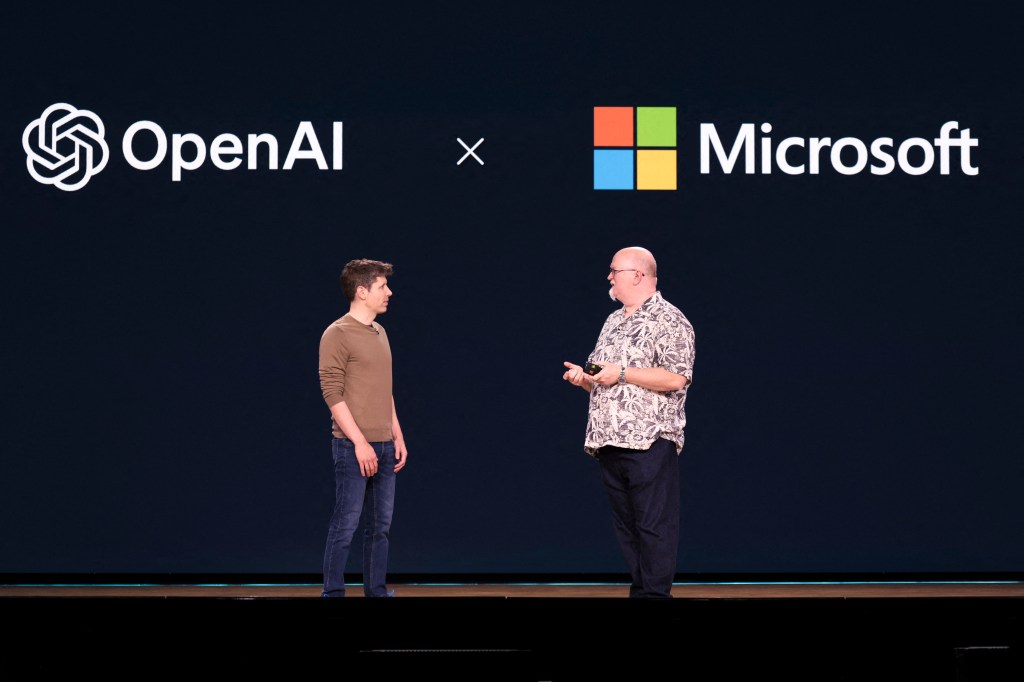
While much of the public discourse surrounding Copilot centers on its relationship with OpenAI, Microsoft appears to be engineering a more resilient, model-agnostic architecture. The company has moved toward an approach that allows users to access multiple underlying models within a single chat interface using intelligent auto-routing.
This strategy provides a significant hedge against the volatility of any single provider's development cycle:
- Microsoft 365 now supports integration with Anthropic's Claude, providing access to high-performing alternative architectures.
- The system uses "critique and counsel" mechanisms to generate optimal responses by leveraging the strengths of various models simultaneously.
This multi-model approach ensures that Copilot can maintain high performance even as the landscape of frontier models shifts rapidly.
The Verdict on AI Integration
The financial and operational metrics presented by Microsoft suggest that the era of "experimental" AI usage is concluding. It is being replaced by a period of deep, functional integration. For analysts like Morgan Stanley’s Keith Weiss, these numbers are "super impressive" and significantly exceed previous market expectations.
If Microsoft can continue to scale its agentic capabilities while maintaining a model-agnostic backbone, it will likely move from being a provider of tools to the primary orchestrator of the digital workspace. The challenge moving forward will be whether the infrastructure can handle the increasingly complex, multi-step autonomous tasks that these 20M paid Copilot users are beginning to demand.