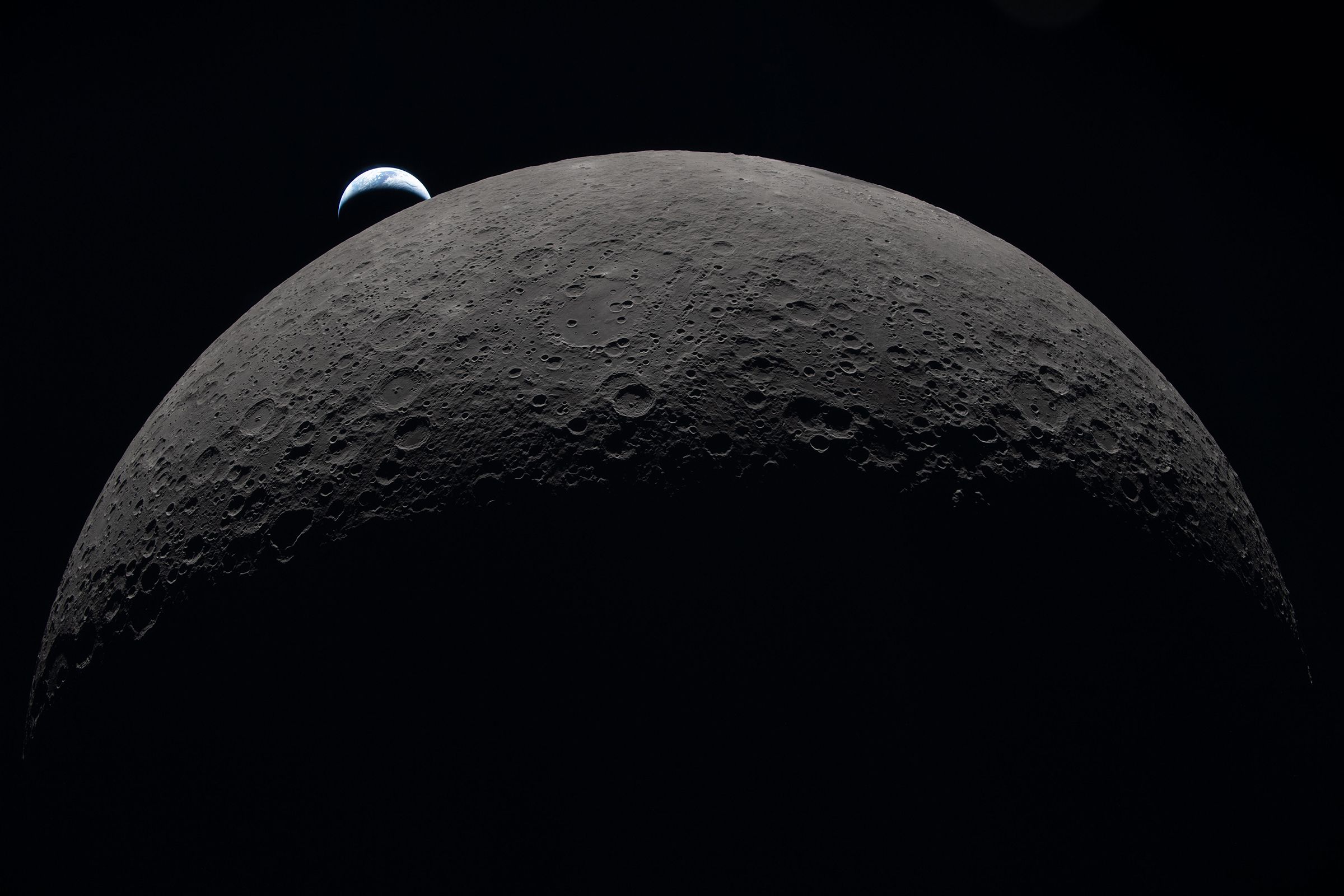
NASA Wants to Put Nuclear Reactors on the Moon
A faint hum vibrates through the lunar regolith as the first fission core ignites on the moon's dark side, casting a glow that outlasts the two-week night cycle by decades. This is not science fiction; it is the immediate future of American space strategy. The White House has officially directed NASA to collaborate with the Department of Defense and the Department of Energy to deploy nuclear reactors in lunar orbit and on the surface within six years, marking a decisive pivot from solar dependence to sustained atomic power.
For decades, lunar exploration has been shackled by the limitations of solar energy. While sunlight is theoretically available 24 hours a day on the sunlit side, the moon’s rotation creates a 14-Earth-day night where temperatures plummet and solar arrays go dark. Current missions rely on massive, heavy batteries to bridge this gap, adding critical mass that limits payload capacity and mission duration. The new federal roadmap explicitly rejects this intermittent model, aiming for fission reactors that can deliver continuous power regardless of the lunar day-night cycle or dust storms.
The White House Office of Science and Technology Policy (OSTP) unveiled guidelines emphasizing that "US space superiority" depends on reliable energy infrastructure. Solar panels are sufficient for short-term rovers, but they cannot support a permanent human presence. A medium-power reactor is slated for lunar orbit by 2028 to provide a steady stream of electricity for communication relay satellites and deep-space probes. This orbital infrastructure will serve as the backbone for a larger ground-based network planned for the lunar surface.
By 2030, the agency targets a functional large reactor on the moon capable of sustaining life support systems, habitat heating, and scientific instruments simultaneously. The Department of Energy is tasked with ensuring that fuel production capabilities and safety protocols can scale to meet these aggressive timelines. The shift represents a fundamental change in how humanity approaches off-world construction: moving from temporary outposts to permanently powered bases.
A Strategic Race for Lunar Dominance
The drive toward nuclear power is not merely an engineering challenge; it is a strategic imperative driven by the geopolitical landscape of space exploration. China and other emerging space powers are actively developing their own advanced energy capabilities, signaling that the moon will become the next arena for great power competition. The US response involves a parallel development track where NASA and the Pentagon collaborate to create nuclear electric propulsion systems alongside surface reactors.
This dual-use approach ensures that technologies developed for lunar bases can also be adapted for deep-space travel. Nuclear electric propulsion could allow spacecraft to carry significantly more payload over longer distances without depleting limited chemical fuel reserves. The OSTP document outlines specific performance metrics: reactors must generate at least 20 kilowatts of electricity (kWe) for three years in orbit, scaling up to 100 kWe on the lunar surface where power demands are higher.
The strategy relies on a competitive contractor model similar to the commercial space sector’s success with launch vehicles. Agencies will solicit bids from industry partners to design modular and scalable systems that can be produced in quantity. The Department of Energy must verify that the industrial base can manufacture up to four reactors within five years, a logistical hurdle that requires immediate investment and supply chain restructuring.
Key Technical Goals for Lunar Power
To meet these demands, the initiative focuses on several critical engineering milestones:
- Scalability: Systems designed to start at 20 kWe and expand to 100 kWe as base needs grow.
- Longevity: Reactors capable of operating for five years or more on the lunar surface without refueling.
- Propulsion Integration: Designs that allow reactor thermal energy to be converted into thrust for deep-space travel.
- Industrial Readiness: Verification that US industry can produce multiple units within a tight production window.
Technical Hurdles and Safety Imperatives
Deploying nuclear technology in space introduces complex engineering and safety challenges that have not been fully resolved for decades. Radiation shielding becomes a primary design constraint; the reactor must protect both astronauts and sensitive electronics from high-energy neutrons and gamma rays without adding prohibitive weight. The modular design requirement allows engineers to assemble reactors on-site or transport them in compact configurations, reducing launch risks compared to monolithic units.
Safety protocols for lunar fission are equally rigorous. Unlike terrestrial power plants, a reactor failure on the moon cannot be managed by emergency response teams in real-time; systems must be inherently fail-safe and capable of autonomous shutdown. The OSTP roadmap mandates that agencies identify obstacles related to fuel handling, thermal management, and containment before full-scale deployment begins.
The timeline is aggressive, with initial design concepts expected within one year of the directive. NASA Administrator Jared Isaacman has publicly stated that "the time has come" to begin this transition, signaling a departure from caution toward accelerated innovation. The success of this program will determine whether humanity can establish a lasting foothold on the moon or remain limited to fleeting visits.
The Path to Mars and Beyond
The ultimate ambition behind these lunar reactors is to use the moon as a proving ground for technologies required to reach Mars. A permanent lunar base powered by nuclear energy serves as an intermediate step, allowing engineers to test life support systems, fuel production methods, and radiation shielding in a low-gravity environment. If successful, this infrastructure will enable sustained missions to the Red Planet, transforming the moon from a distant destination into a vital stepping stone for humanity's expansion into the cosmos.