During NASA’s recent Artemis II mission, a transmission rate of 260 megabits per second successfully bridged the distance between lunar orbit and Earth. While much of the mission's focus remained on the crewed flight of the Orion spacecraft, the underlying data transfer proved that space-to-Earth laser comms are no longer restricted to multi-milliion dollar, bespoke government installations.
Breaking the Cost Barrier in Deep Space Communication
The success of this downlink highlights a fundamental shift in how deep space information can be retrieved. By utilizing a low-cost terminal developed through a collaboration between Observable Space and Quantum Opus, the mission demonstrated that high-throughput connections are achievable without the astronomical price tags traditionally associated with deep-space hardware.
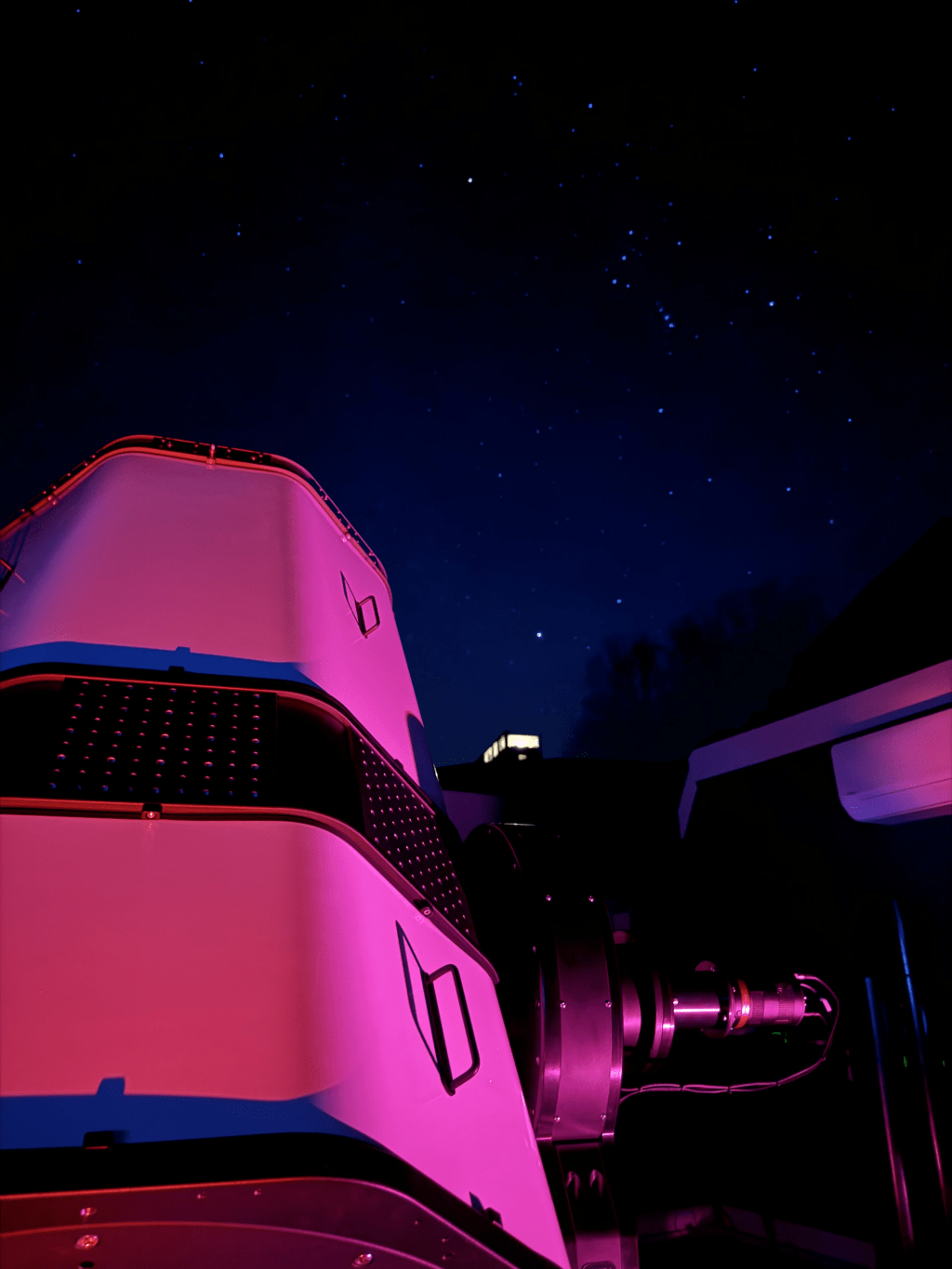
The experimental terminal, operated by the Australian National University, utilized a specialized combination of technologies to capture signals from the Orion spacecraft. It integrated Observable Space's software and telescope systems with a high-precision photonic sensor engineered by Quantum Opus.
This streamlined approach allowed the terminal to lock onto transmissions and decode data at speeds previously reserved for much larger, more expensive arrays. The economic implications of this breakthrough are massive; while traditional solutions often require tens of millions of dollars, this new terminal cost less than $5 million.
Key technical and economic milestones from the mission include:
- Throughput: Achieved a 260 Mbps downlink from lunar distance.
- Cost Efficiency: Delivered hardware at sub-$5 million pricing, significantly lower than traditional bespoke solutions.
- Technology Stack: Combined software-driven telescopes with advanced photonic sensors for high-fidelity decoding.
- Global Redundancy: Leveraged international ground stations to ensure data capture despite atmospheric variables.
Scaling the Future of Space-to-Earth Laser Comms
Despite the advantages of laser communication, significant technical hurdles remain regarding reliability and atmospheric interference. Unlike traditional Radio Frequency (RF) transmissions, which can penetrate much of the Earth's atmosphere with relative ease, optical signals are highly susceptible to disruption by cloud cover and weather patterns.
This vulnerability necessitates a distributed, global network of receiving stations. To mitigate these risks, ground station operators must establish a presence on multiple continents. The Artemis II mission demonstrated the necessity of this geographic diversity, as the Australian terminal provided essential coverage that complemented NASA's primary receivers in California and New Mexico.
This strategic positioning ensures that even if one part of the world is obscured by weather, another node in the network remains capable of capturing the data stream. This success serves as a proof of concept for a scalable, Earth-to-space downlink architecture.
Dan Roelker, CEO of Observable Space, posits that the industry is now positioned to expand this technology into a global network of receiving terminals. As the cost of optical terminals continues to drop, the ability to stream high-definition video from deep space will transform both scientific research and commercial space operations.
The transition from expensive, monolithic communication arrays to a distributed, low-cost network marks a pivotal moment in the commercialization of space. If the precedent set by Artemis II holds, the bottleneck for exploration will no longer be the ability to send data back to Earth, but rather the speed at which we can deploy the global infrastructure required for space-to-Earth laser comms.