The modern home office presents a paradox: tools designed to enhance productivity often compromise physical well-being. Standing desks, ergonomic chairs, and posture apps proliferate, yet many users remain sedentary for hours, conditioned by digital distractions into ignoring bodily signals. This tension between technological convenience and physiological neglect reaches its zenith in the story of how an unassuming desk gadget forced a recalibration of daily habits through silent, persistent observation rather than intrusive surveillance.
The Silent Sentinel: How Hardware Drives Change
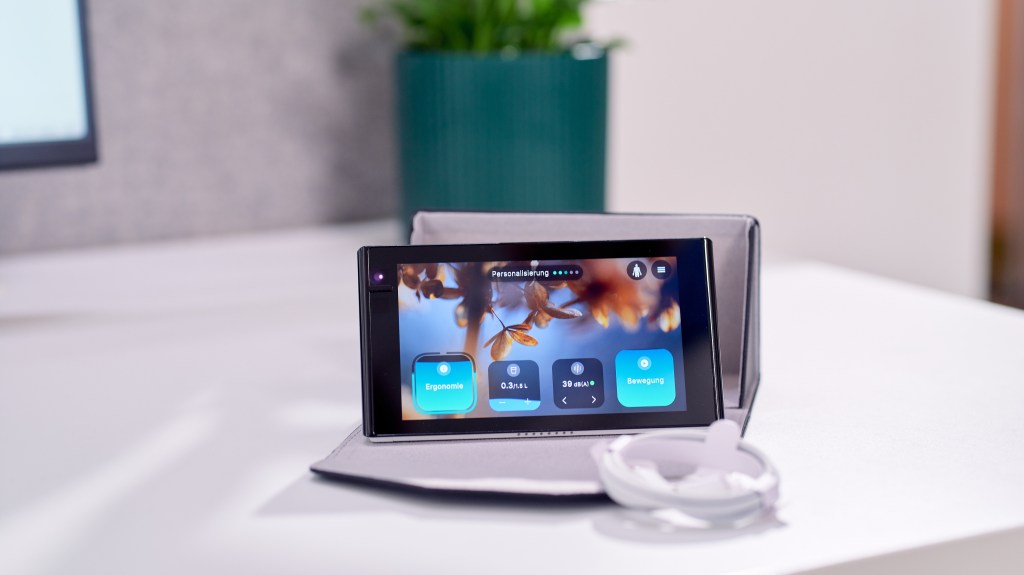
Traditional posture solutions rely on external cues from smartphones or wearables that users frequently dismiss as non-essential alerts. In contrast, Isa—a compact device from German startup Deep Care—adopts a minimalist approach rooted in physical presence. Placing the 5.5-inch IPS display atop a work surface, its Time-of-Flight (ToF) sensor continuously measures posture without requiring wearable technology. The result is a subtle yet effective interface that avoids digital fatigue while delivering actionable insights into sitting patterns.
Core Functionality and Sensory Precision
- Posture Tracking: The ToF sensor detects 3D body positioning within a 0.15m–1.8m range, enabling accurate assessment of slouching even during fluid movement.
- Environmental Monitoring: Integrated CO₂, humidity, light, and sound sensors provide context for overall workspace health beyond physical alignment.
- Hydration Awareness: A water-tank widget visually represents liquid intake, addressing a common oversight in wellness routines.
The device processes data locally via a quad-core 2GHz processor before optional Wi-Fi updates, ensuring functionality persists during network disruptions—a critical feature for remote workers facing intermittent connectivity issues. Its battery-independent operation under 2.5W further eliminates concerns about constant charging interruptions.
Behavioral Nudges Through Design
Isa leverages intuitive visual feedback without overwhelming users. The primary interface displays posture as a dynamic "squircle" that fills when alignment meets ergonomic standards, transitioning to yellow or red states when corrective action becomes necessary. Physical vibration replaces jarring auditory alerts, creating gentle reminders that align with natural human responsiveness.
The strategic placement of haptic feedback proves particularly effective: rather than relying on conscious attention, the device intervenes at subconscious levels, prompting posture adjustments before fatigue accumulates. This design philosophy reflects research indicating that tactile cues bypass cognitive resistance more readily than visual or auditory warnings.
Privacy-First Architecture
By omitting cameras entirely, Deep Care addresses growing privacy anxieties around workplace monitoring. Data processing occurs locally on-device whenever possible, reducing exposure vectors while maintaining functionality. Users can disable Wi-Fi connectivity to prevent data transmission entirely—a flexibility absent in many competing solutions.
However, limitations persist. The device occasionally misinterprets stationary periods caused by pets or passing objects as disengagement, requiring occasional manual overrides. Future firmware updates aim to incorporate gesture-based commands to distinguish human presence from ambient movement more reliably.
Business Model and Market Positioning
Priced at €299 with tiered subscriptions costing €4.99/month, Isa targets both individual professionals and organizational wellness programs. The core plan covers posture tracking and hydration monitoring; premium tiers expand capabilities to include environmental analytics and mental health proxies like breathing pattern estimation through chest movement analysis.
Early adoption reveals mixed sentiment among long-term remote workers. While some praise its non-intrusive methodology, others note the learning curve associated with interpreting abstract visual indicators. Deep Care’s focus on data sovereignty positions it uniquely in markets prioritizing GDPR compliance and employee autonomy over cloud-dependent analytics.
Path Forward: From Posture to Holistic Wellbeing
The company’s roadmap suggests deeper integration of biometric signals to predict stress responses based on cumulative postural strain and environmental factors. If successful, Isa could evolve beyond a desk gadget into a comprehensive wellness companion—though maintaining its current emphasis on simplicity remains crucial for user retention.
For those entrenched in sedentary workflows without immediate access to advanced ergonomic infrastructure, Isa demonstrates how physical artifacts can reclaim agency over digital distraction cycles. Its success lies not in replacing existing habits but in gently reintroducing awareness through unobtrusive presence—a lesson applicable far beyond office spaces.