The End of an Era for Overwatch’s Authenticity
For years, Blizzard guarded its iconic heroes with a protective fervor, keeping them close to the chest within the walls of its own ecosystem. But in a move that signals the end of that precious exclusivity, Overwatch has finally entered the fray of cross-media licensing with an official collaboration with Fortnite. This isn't just a cosmetic crossover; it represents a fundamental shift in how legacy IP is monetized in the modern live-service landscape.
The transition wasn't entirely sudden. Over the last three years, Blizzard gradually eroded the sanctity of its hero shooter by flooding the roster with brand partnerships like Transformers, G.I. Joe, and Porsche. These collaborations transformed character skins from creative cosplay concepts into near-exact replicas of characters from other franchises, blurring the lines between original design and licensed merchandising.
Now, that trend has culminated in the most aggressive platform for digital fashion: Fortnite.
Heroes in the Griddy: What’s in the Bundle?
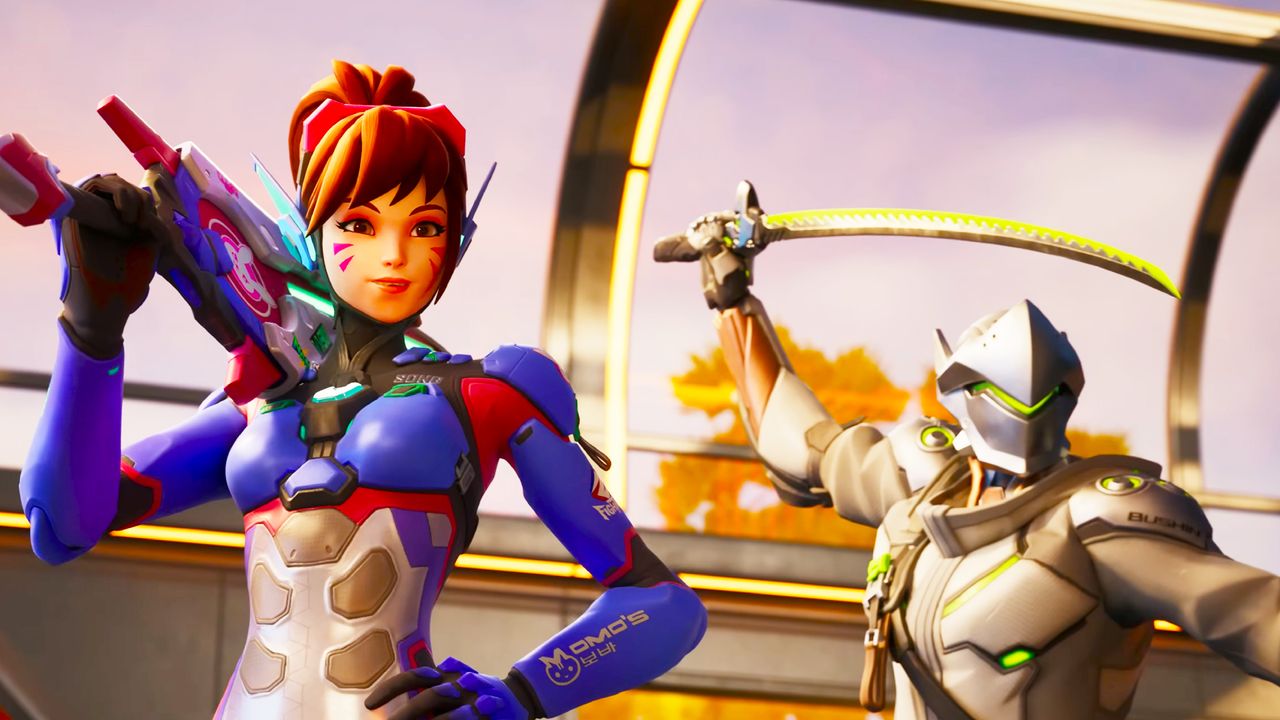
The long-rumored collaboration is now a reality, bringing Overwatch’s most recognizable figures into the Battle Royale arena. The roster includes Mercy, Genji, D.Va, and Tracer, each reimagined as premium cosmetics.
The inclusion of these characters feels less like a tribute and more like a commodification of their personalities:
- Mercy is seen performing the Griddy, a dance meme that clashes with her role as a healer.
- Genji dances to Cardi B, stripping away his ninja mystique for viral engagement.
- D.Va is depicted editing her way to victory, referencing her in-game mechanic in a meta-commentary on the platform itself.
- Tracer blinks across the Sandy Strip, her signature mobility repurposed for traversal in a different genre entirely.
Alongside the skins, players will find recreations of beloved maps such as Hanamura and King’s Row. For those seeking a taste of authenticity, Tracer’s twin pistols are available as loot items. Equipping them shifts the perspective into first-person, offering a fleeting glimpse of the Overwatch experience within the Fortnite framework.
The Soulless Nature of Modern Collabs
There is an undeniable dissonance in seeing Mercy, a support hero dedicated to healing, carrying an AK-47. Overwatch’s universe was built on a hopeful, albeit flawed, vision of the future. Dropping these heroes into a context where the sole objective is to kill until one stands last renders them as charmless, plastic toys.
This phenomenon is not unique to Overwatch. In an era where Destiny 2 features entire Star Wars expansions and Call of Duty: Black Ops 7 integrates stars from the Fallout TV show, nothing is off-limits. Yet, the execution often lacks the narrative weight that makes these crossovers memorable.
The dialogue in the promotional materials highlights this disconnect. Mercy’s iconic line, "Heroes never die," is delivered not as a narrative beat, but as a hollow reference. Similarly, D.Va’s "Nerf this!" loses its impact without her mech suit, becoming a nonsensical soundbite. These heroes are no longer characters with agency; they are puppets pulled by strings to generate engagement.
The Collab Slop Curse
This collaboration illustrates a troubling trend in gaming: the insatiable maw of cross-media licensing. It chews up once-memorable characters and spits them back out as barely recognizable cosmetics for $19.99.
Overwatch is just the latest major title to be swallowed by a model that prioritizes brand visibility over character integrity. As Fortnite continues to emulate the live-service model Blizzard pioneered, it has turned it into a business strategy that every major publisher now desperate pursues. The result is a gaming landscape where iconic heroes are no longer defined by their stories, but by their ability to fit into the next big collab.
This is the price of longevity in the modern industry. The heroes we love are safe, yes, but they are also hollowed out, ready for the next franchise to wear their skin.